

Ready & Packaged Foods
All →Vegetables & Legumes
All →Desserts & Confectionery
All →Meat & Protein
All →Grains & Bakery
All →Beverages
All →Milk & Dairy
All →

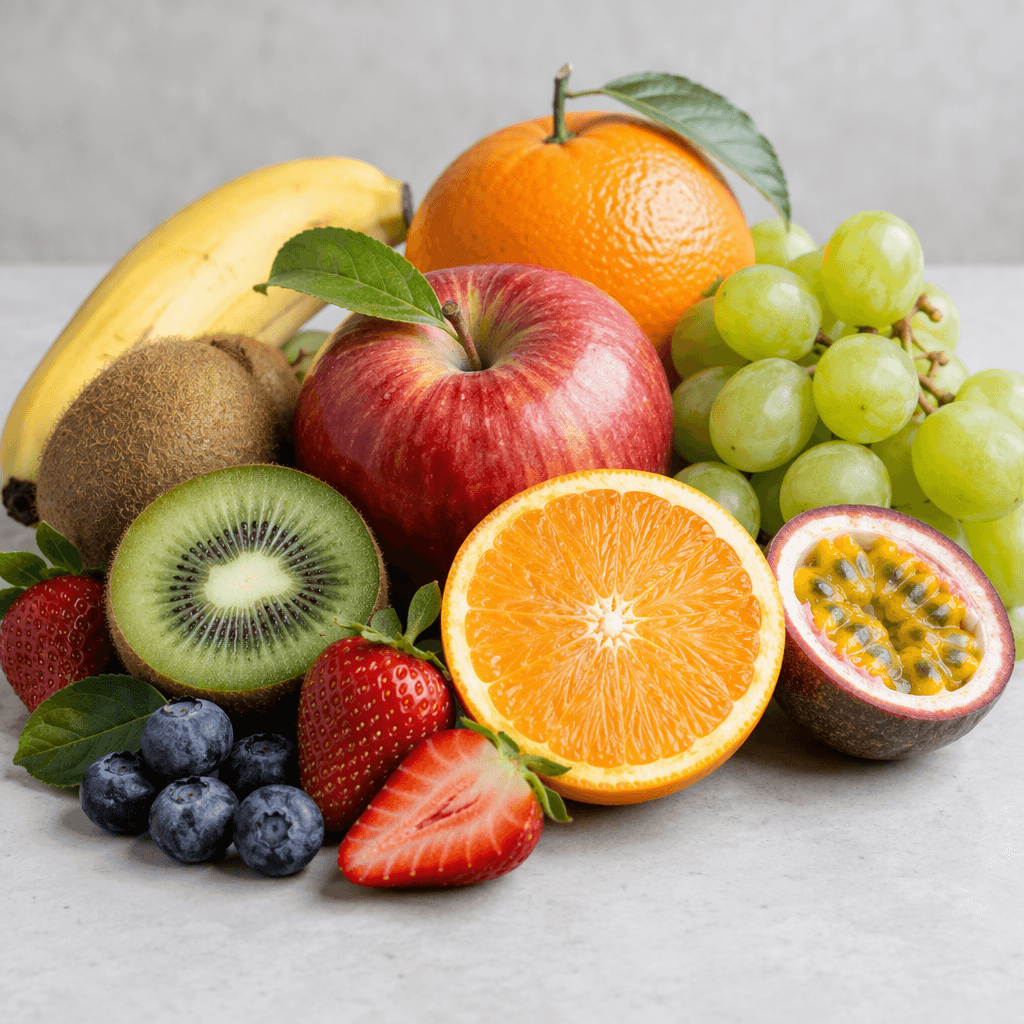
Fruit Calories
Rich in vitamins and fiber, low calorie
In season: Spring · Summer · Autumn · Winter
CALORIES
GI
POTASSIUM
FIBER
Quick answer
1 piece (medium) of Fruit (120 g) has 60 calories. That works out to 50 calories per 100 g. It contains 14.4 g of carbs, 0.8 g of protein, 0.2 g of fat and 2.6 g of fiber. Its 9.6 mg of Vitamin C covers 11% of the Daily Value. Its glycemic index is 40 (low), so it raises blood sugar slowly.
What is Fruit?
Fruit is the broad name for the seed-bearing produce of flowering plants, from apples and berries to citrus, grapes and tropical varieties. Some grow on trees or vines, others on shrubs or low plants, and their flavours range from tart to very sweet. Which kinds are familiar and in season depends on where you live.
Enjoy it fresh as a snack, alongside breakfast, or sliced into porridge, yoghurt and salads; it also features in desserts and savoury dishes around the world. Fruit generally provides water, fibre and vitamins, while remaining a relatively light choice. For an easy everyday option, choose ripe seasonal fruit and wash it before eating; pairing it with yoghurt or nuts makes a more filling snack.
Fruit Nutrition Facts
Selected: 100 g
50
KCAL / 100G
Carbs
12g
· 4% DV
Protein
0.7g
· 1% DV
Fat
0.2g
· 0% DV
Fiber
2.2g
· 8% DV
DV is the share of the daily value covered, on a 2,000 kcal reference diet.
Calories come from: Carbs 91% · Protein 5% · Fat 4%
Fruit Vitamins & Minerals
Vitamins
Vitamin C
8mg · 9% DV
B1
0.03mg · 3% DV
B6
0.05mg · 3% DV
B2
0.02mg · 2% DV
Minerals
Potassium ⭐
120mg · 4% DV
Magnesium
8mg · 2% DV
Phosphorus
12mg · 2% DV
Calcium
10mg · 1% DV
How Nutritious Is Fruit?
Nutrient density
High
How many vitamins, minerals and how much fiber this food carries per calorie. A high score means a lot of nutrition for few calories.
Satiety score
Medium
An EatBetter score computed from fiber, protein and calorie density. A high score means staying full longer on the same calories.
Both scores are calculated per 100 g and do not change with the selected portion. The satiety score is EatBetter's own calculation, not a clinical measure.
Fruit Glycemic Index
GLYCEMIC INDEX
GLYCEMIC LOAD
Accounts for portion size — a more realistic measure than GI alone.
How to Burn Off Fruit
To burn the 50 calories in 100 g:
🚶
Walking (5 km/h)
🏃
Running (8 km/h)
🚴
Cycling
🏊
Swimming
Times are calculated with the MET equation for a 70 kg adult. Actual burn varies with your weight, age and pace.
Is Fruit Processed?
NOVA 1
Unprocessed
1. Unprocessed
2. Minimally Processed
3. Processed
4. Ultra-Processed
NOVA classifies foods into 4 groups by industrial processing. NOVA 1 (unprocessed) is the healthiest.
Does Fruit Contain Allergens?
No known major allergens
Which Diets Is Fruit Good For?
Vegan
✓ Suitable
Vegetarian
✓ Suitable
Gluten-Free
✓ Suitable
Dairy-Free
— Not suitable
Mediterranean
✓ Suitable
Paleo
✓ Suitable
Whole30
— Not suitable
DASH
— Not suitable
Keto
— Not suitable
Low FODMAP
— Not suitable
Fruit Fat Profile
SATURATED
0.03g
MONOUNSATURATED
0.02g
POLYUNSATURATED
0.04g
Omega 6:3 ratio 3:1
Below the ideal 4:1 — a good omega balance.
Compare Fruit
Foods Similar to Fruit
Frequently Asked Questions About Fruit
Is fruit good for you?
Yes, fruit is a nutritious choice because it provides fiber and a range of vitamins and other plant compounds. Eating whole fruit also takes longer than drinking juice, and its fiber can help make it more satisfying. Choose a variety of fruits rather than relying on just one.
How should you wash fruit?
Rinse fruit under clean running water just before eating or preparing it. Rub firm-skinned fruit with your hands or a clean produce brush, then dry it with a clean towel. Do not use soap or household cleaners, which are not meant to be eaten.
How should fruit be stored?
Store fruit according to its type and ripeness: let firm, unripe fruit ripen at room temperature, then refrigerate it if it spoils quickly. Keep fruit that releases ethylene, such as apples and bananas, away from produce that ripens easily if you want it to last longer.
Does fruit ripen after it is picked?
Some fruit continues to ripen after picking, while other kinds mostly do not. Bananas, pears, and peaches can soften and develop more aroma at room temperature; citrus fruit and grapes generally will not become sweeter after harvest. Once ripe, refrigerate perishable fruit to slow further changes.
Can you freeze fruit?
Yes, most fruit can be frozen, though thawed fruit is often softer than fresh fruit. Wash and dry it, remove pits or inedible parts, and cut larger pieces before freezing. Use thawed fruit in smoothies, sauces, or baking, where the softer texture matters less.
Is whole fruit healthier than fruit juice?
Whole fruit is usually the better everyday choice because it retains its fiber and takes longer to eat. Juice is easier to drink quickly and may not feel as filling. For a snack, choose the fruit itself; use juice as a drink rather than a replacement for every serving.
Why does cut fruit turn brown?
Cut fruit turns brown when enzymes in its exposed flesh react with oxygen in the air. A little lemon or lime juice can slow the reaction, and storing cut fruit in a covered container reduces air exposure. Browning alone does not mean the fruit is spoiled.
Can you eat fruit skin?
Yes, the skin of many fruits, including apples and pears, is edible when washed well. Whether to eat it depends on the fruit and your preference; some skins are tough or not intended to be eaten. Peeling removes the skin, but also removes some of the fruit's fiber.
Can people with diabetes eat fruit?
Yes, many people with diabetes can include whole fruit in their meals. The type and portion can affect blood glucose, and whole fruit is generally a more practical choice than juice. If you use glucose-lowering medication, ask your healthcare professional how fruit fits your meal plan.
Can you eat fruit at night?
Yes, eating fruit at night is generally fine and does not cause weight gain simply because of the time. Choose a portion that feels comfortable; a large amount of food close to bedtime may bother some people with reflux or disrupt their sleep.
Have another question about Fruit?
Ask the AI nutrition coach — calories, portions, alternatives and more, answered in seconds in the app.

Scan calories with your camera
Instant AI nutrition analysis

Nutrition data compiled from USDA FoodData Central and scientific sources.