

Ready & Packaged Foods
All →Vegetables & Legumes
All →Desserts & Confectionery
All →Meat & Protein
All →Grains & Bakery
All →Beverages
All →Milk & Dairy
All →

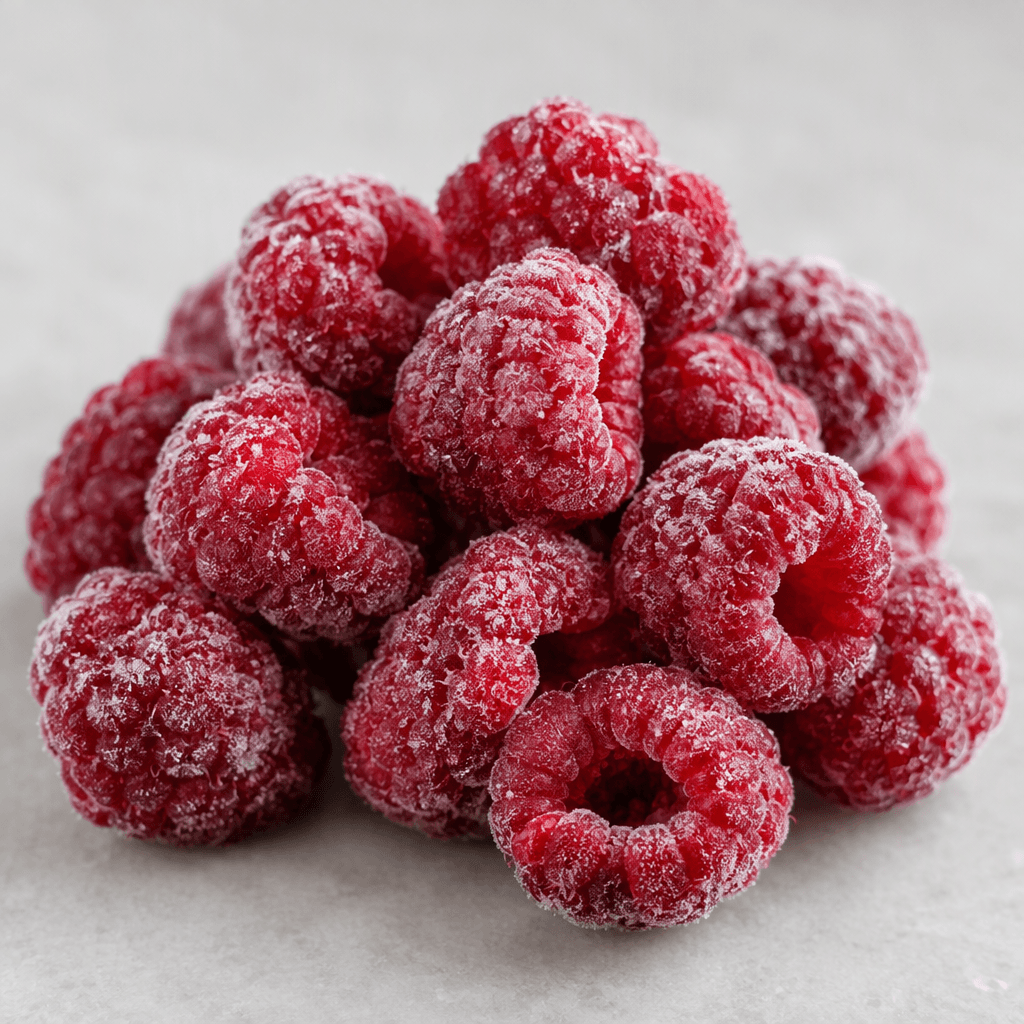
Frozen Raspberries Calories
Antioxidant, vitamin C, low calorie, fiber source
In season: Summer
CALORIES
GI
POTASSIUM
FIBER
Quick answer
1 cup (medium) of Frozen Raspberries (125 g) has 65 calories. That works out to 52 calories per 100 g. It contains 15 g of carbs, 1.5 g of protein, 0.4 g of fat and 8.1 g of fiber. Its 0.9 mg of Manganese covers 38% of the Daily Value. Its glycemic index is 32 (low), so it raises blood sugar slowly.
What is Frozen Raspberries?
Frozen raspberries are ripe raspberries picked and frozen for later use. The fruit grows in temperate regions and is enjoyed fresh, preserved or cooked. Their sweet-tart flavour and tender, slightly seedy texture work well whether thawed or still frozen. In places where raspberries are commonly grown, they often go into jams, pies and crumbles; elsewhere, frozen raspberries are an easy addition to smoothies, porridge, yoghurt and desserts. They provide fibre and vitamin C, while remaining relatively low in calories. For a quick breakfast topping, let a handful soften briefly and spoon it over plain yoghurt or oats.
Frozen Raspberries Nutrition Facts
Selected: 100 g
52
KCAL / 100G
Carbs
12g
· 4% DV
Protein
1.2g
· 2% DV
Fat
0.3g
· 0% DV
Fiber
6.5g
· 23% DV
DV is the share of the daily value covered, on a 2,000 kcal reference diet.
Calories come from: Carbs 86% · Protein 9% · Fat 5%
Frozen Raspberries Vitamins & Minerals
Vitamins
Vitamin C
26mg · 29% DV
Vitamin K
7.8µg · 7% DV
B5
0.3mg · 6% DV
Vitamin E
0.9mg · 6% DV
Minerals
Manganese
1mg · 43% DV
Iron
1mg · 6% DV
Magnesium
22mg · 5% DV
Phosphorus
29mg · 4% DV
How Nutritious Is Frozen Raspberries?
Nutrient density
Very high
How many vitamins, minerals and how much fiber this food carries per calorie. A high score means a lot of nutrition for few calories.
Satiety score
High
An EatBetter score computed from fiber, protein and calorie density. A high score means staying full longer on the same calories.
Both scores are calculated per 100 g and do not change with the selected portion. The satiety score is EatBetter's own calculation, not a clinical measure.
Frozen Raspberries Glycemic Index
GLYCEMIC INDEX
GLYCEMIC LOAD
Accounts for portion size — a more realistic measure than GI alone.
How to Burn Off Frozen Raspberries
To burn the 52 calories in 100 g:
🚶
Walking (5 km/h)
🏃
Running (8 km/h)
🚴
Cycling
🏊
Swimming
Times are calculated with the MET equation for a 70 kg adult. Actual burn varies with your weight, age and pace.
Is Frozen Raspberries Processed?
NOVA 2
Minimally Processed
1. Unprocessed
2. Minimally Processed
3. Processed
4. Ultra-Processed
NOVA classifies foods into 4 groups by industrial processing. NOVA 1 (unprocessed) is the healthiest.
Does Frozen Raspberries Contain Allergens?
No known major allergens
Which Diets Is Frozen Raspberries Good For?
Vegan
✓ Suitable
Vegetarian
✓ Suitable
Gluten-Free
✓ Suitable
Dairy-Free
— Not suitable
Mediterranean
✓ Suitable
Paleo
✓ Suitable
Whole30
— Not suitable
DASH
— Not suitable
Keto
— Not suitable
Low FODMAP
— Not suitable
Frozen Raspberries Fat Profile
SATURATED
0.02g
MONOUNSATURATED
0.06g
POLYUNSATURATED
0.16g
Omega 6:3 ratio 2:1
Below the ideal 4:1 — a good omega balance.
Compare Frozen Raspberries
Foods Similar to Frozen Raspberries
Frequently Asked Questions About Frozen Raspberries
Can you use frozen raspberries instead of fresh raspberries in baking?
Yes, frozen raspberries usually work in baking without thawing them first. Fold them into the batter gently while still frozen to limit streaking and excess moisture. They may make the finished bake slightly wetter than fresh berries, so follow the recipe’s texture cues.
Why do frozen raspberries turn mushy when thawed?
Frozen raspberries soften because ice crystals damage their delicate cells. Thaw only the amount you need in the refrigerator and expect some juice to collect. Their soft texture is normal and works well in sauces, smoothies, oatmeal, and yogurt.
Are frozen raspberries just whole fruit, or do they contain added sugar?
Plain frozen raspberries are typically whole berries that have been sorted and frozen, with no sugar or additives needed. Sweetened raspberry products and fruit mixes are different, so check the ingredients when you want berries without added sweeteners.
Do you need to wash frozen raspberries before eating them?
Usually, no: packaged frozen raspberries are generally washed or cleaned before freezing, and rinsing can make them softer. Follow any preparation instructions on the package. Freezing does not reliably destroy every germ, so cook the berries if food-safety guidance or a recall calls for it.
Can frozen raspberries go straight into a smoothie?
Yes, add frozen raspberries straight to a smoothie without thawing them. They chill and thicken the drink, so you may need a little more liquid or a stronger blender. For a smoother result, break up any frozen clumps before blending.
Can you refreeze frozen raspberries after thawing them?
Yes, raspberries thawed in the refrigerator can generally be refrozen if they have not been left at room temperature for long. Refreezing makes them softer and can affect their quality, so they are often better cooked into a sauce and frozen in portions.
Are frozen raspberries as nutritious as fresh raspberries?
Frozen raspberries retain much of their fiber and nutrients, and freezing soon after harvest helps preserve them. Some juice may escape as they thaw, so use that liquid in a smoothie or sauce rather than draining it away.
How do you stop frozen raspberries from bleeding into a cake?
Keep frozen raspberries frozen until the last moment and fold them into the batter gently. This limits the juice and color that spread through the cake. Avoid stirring vigorously, and do not thaw the berries first unless the recipe specifically asks you to.
Should frozen raspberries be cooked before eating?
No, frozen raspberries do not always need cooking, but freezing does not kill every virus or bacterium that may be present. Follow package directions and any food-safety alerts; cooking is the safer choice when official guidance recommends it.
How should you store an opened bag of frozen raspberries?
Keep an opened bag of frozen raspberries tightly sealed in the freezer. Limiting air and moisture helps prevent freezer burn and loss of flavor. Take out only what you need and return the rest to the freezer promptly.
Have another question about Frozen Raspberries?
Ask the AI nutrition coach — calories, portions, alternatives and more, answered in seconds in the app.

Scan calories with your camera
Instant AI nutrition analysis

Nutrition data compiled from USDA FoodData Central and scientific sources.