

Ready & Packaged Foods
All →Vegetables & Legumes
All →Desserts & Confectionery
All →Meat & Protein
All →Grains & Bakery
All →Beverages
All →Milk & Dairy
All →

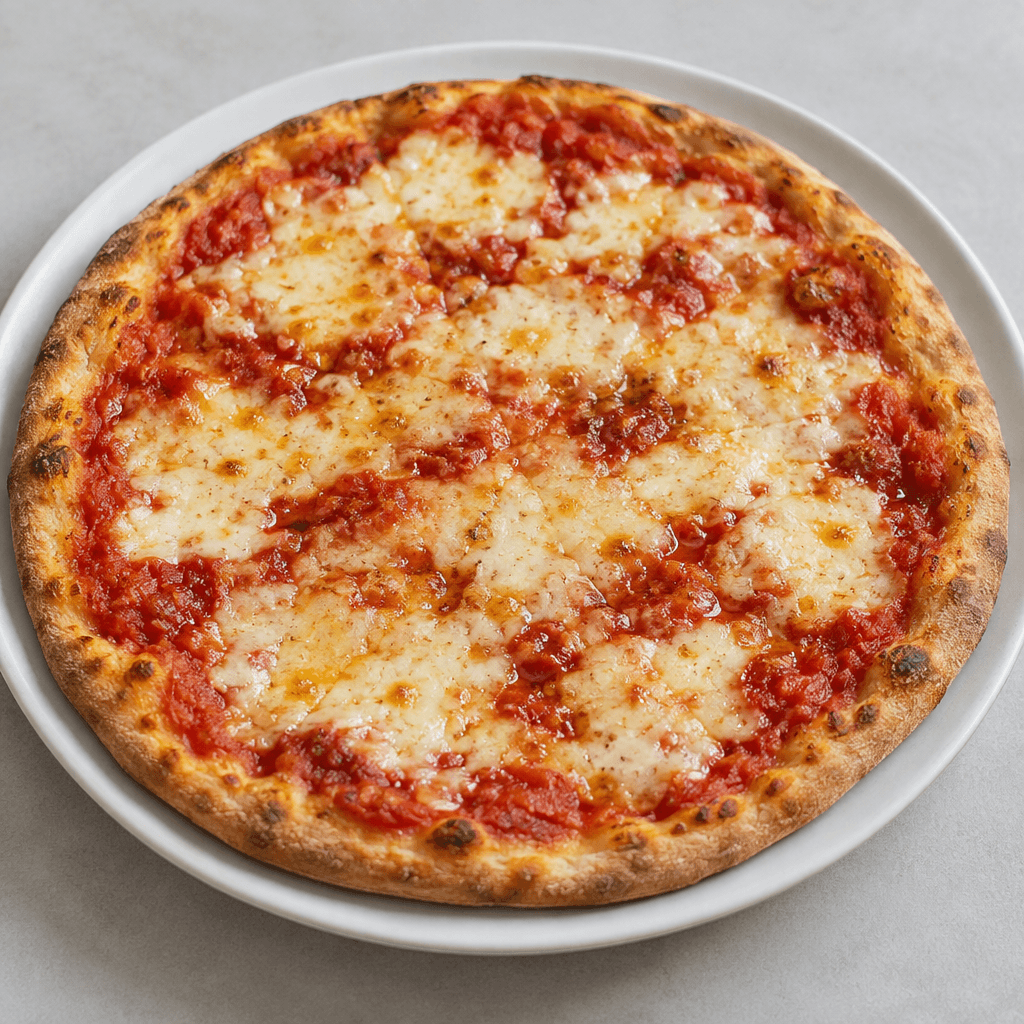
Frozen pizza Calories
Convenient, quick, various toppings, high calorie, processed food
In season: Spring · Summer · Autumn · Winter
CALORIES · 100 G
GI
POTASSIUM · 100 G
FIBER · 100 G
Quick answer
1 slice (medium) of Frozen pizza (90 g) has 225 calories. That works out to 250 calories per 100 g. It contains 28.8 g of carbs, 9 g of protein, 9 g of fat and 2.3 g of fiber. Its 0.5 µg of B12 covers 19% of the Daily Value. Its glycemic index is 70 (high), so it raises blood sugar quickly.
Frozen pizza Nutrition Facts
Selected: 1 slice (medium) · 90 g
225
KCAL / 90G
Carbs
28.8g
· 10% DV
Protein
9g
· 18% DV
Fat
9g
· 12% DV
Fiber
2.3g
· 8% DV
DV is the share of the daily value covered, on a 2,000 kcal reference diet.
Calories come from: Carbs 50% · Protein 16% · Fat 34%
Frozen pizza nutrition facts table · 1 slice (medium) (90 g)
| Nutrient | Amount | % DV |
|---|---|---|
| Calories | 225 kcal | |
| Total fat | 9 g | 12% |
| Saturated fat | 3.78 g | 19% |
| Trans fat | 0.14 g | |
| Sodium | 585 mg | 25% |
| Total carbohydrate | 28.8 g | 10% |
| Fiber | 2.3 g | 8% |
| Protein | 9 g | 18% |
Calories: Calories measure energy. Average daily need is 2,000 kcal. Excess calories are stored as fat, too few cause weight loss.
Carbs: Your body's primary energy source. The brain runs exclusively on carbs. Daily need: 275g.
Protein: Essential for muscle repair and cell growth. Daily need: 50g. Keeps you full and boosts metabolism.
Fat: Needed for hormone production and vitamin absorption. Daily need: 78g. Limit saturated fats, choose unsaturated.
Fiber: Critical for digestive health and satiety. Daily need: 28g. Stabilizes blood sugar, lowers cholesterol.

Log this food in EatBetter
100,000+ people use it
- Get your daily calorie target
- Snap your meal, log it in seconds
- See every vitamin and mineral

📸 Scan the code to get the app free.

How Many Calories in 1 Slice of Frozen pizza?
| Serving | Amount | Calories |
|---|---|---|
| 1 slice (medium) | 90 g | 225 kcal |
| 1 slice (extra small) | 45 g | 113 kcal |
| 1 slice (thin) | 60 g | 150 kcal |
| 1 piece (small) | 60 g | 150 kcal |
| 100 g | 100 g | 250 kcal |
| 1 slice (thick) | 120 g | 300 kcal |
| 1 serving (medium) | 150 g | 375 kcal |
| 1 piece (large) | 180 g | 450 kcal |
| 1 serving (large) | 250 g | 625 kcal |
| 1 pack (whole) | 350 g | 875 kcal |
Calculated from 250 calories per 100 g.
Frequently Asked Questions About Frozen pizza
How do you cook frozen pizza?
Cook frozen pizza according to the package directions in a fully preheated oven. Temperature and timing vary by brand and crust thickness, so check that the cheese is melted and the edges are browned before serving.
Should you thaw frozen pizza before baking it?
No, frozen pizza is usually baked straight from the freezer. Thawing can make the crust soft and affect how it cooks; follow the package directions unless they specifically tell you to thaw it first.
Can you cook frozen pizza in an air fryer?
Yes, frozen pizza can be cooked in an air fryer if it fits without being folded or crowded. Cook slices in a single layer, follow your appliance’s guidance, and check them as they cook because toppings can brown quickly.
How do you make frozen pizza crust crispy?
Preheat the oven thoroughly and place frozen pizza directly on the oven rack or on a preheated pizza stone for a crisper base. If you use a baking tray, check the underside near the end so the crust does not stay pale or soft.
Can you cook frozen pizza in the microwave?
Yes, but microwave-cooked frozen pizza usually has a softer crust than oven-baked pizza. Use a microwave only if the package or appliance instructions allow it; a microwave with a crisping function can improve the texture.
How can you make frozen pizza taste better?
Add a light topping of vegetables such as sliced peppers, mushrooms, or olives before baking, or finish it with fresh basil afterward. Avoid piling on wet or heavy toppings, which can leave the center soggy and prevent even cooking.
Can you refreeze frozen pizza after it has thawed?
Yes, if frozen pizza thawed in the refrigerator, you can refreeze it, although its crust and toppings may lose quality. Do not refreeze pizza that has been left at room temperature for an extended time; discard it instead.
How long does leftover frozen pizza last in the fridge?
Cooked frozen pizza keeps for about three to four days in the refrigerator when stored in a covered container. Refrigerate leftovers promptly, then reheat them until hot throughout; a skillet or oven keeps the crust crisper than a microwave.
Is frozen pizza healthy?
Frozen pizza can fit into a meal, but many varieties are high in sodium and saturated fat. Pairing a moderate portion with a salad or vegetables adds variety and makes the meal more balanced.
Can frozen pizza make you gain weight?
Frozen pizza does not cause weight gain on its own, but frequent large portions can add substantially to your overall energy intake. A moderate serving with vegetables on the side can help keep the meal satisfying without relying on extra slices.
Frozen pizza Vitamins & Minerals
Vitamins
B12
0.45µg · 19% DV
B2
0.16mg · 12% DV
B3
1.98mg · 12% DV
B1
0.14mg · 12% DV
Minerals
Sodium
585mg · 25% DV
Phosphorus
99mg · 14% DV
Selenium
6.3µg · 11% DV
Calcium
108mg · 11% DV
Potassium ⭐
144mg · 4% DV
Frozen pizza Glycemic Index
GLYCEMIC INDEX
GLYCEMIC LOAD
Accounts for portion size — a more realistic measure than GI alone.
How to Burn Off Frozen pizza
To burn the 225 calories in 1 slice (medium) (90 g):
🚶
Walking (5 km/h)
🏃
Running (8 km/h)
🚴
Cycling
🏊
Swimming
Times are calculated with the MET equation for a 70 kg adult. Actual burn varies with your weight, age and pace.
What is Frozen pizza?
Frozen pizza is a ready-to-bake version of the Italian dish, typically topped with tomato sauce and cheese before being frozen. Varieties range from simple cheese pizzas to versions with vegetables or meat, and the crust may be thin or thick.
Bake it until the edges are crisp and the cheese is bubbling. It’s a convenient quick meal in many countries, often served on its own or with a green salad. The crust supplies much of the carbohydrate, while cheese and other toppings contribute fat and some protein; 100 g provides about 250 calories. For a lighter meal, add vegetables or salad and keep the portion modest.
How Nutritious Is Frozen pizza?
Nutrient density
Low
How many vitamins, minerals and how much fiber this food carries per calorie. A high score means a lot of nutrition for few calories.
Satiety score
Medium
An EatBetter score computed from fiber, protein and calorie density. A high score means staying full longer on the same calories.
Both scores are calculated per 100 g and do not change with the selected portion. The satiety score is EatBetter's own calculation, not a clinical measure.
Is Frozen pizza Processed?
NOVA 4
Ultra-Processed
1. Unprocessed
2. Minimally Processed
3. Processed
4. Ultra-Processed
NOVA classifies foods into 4 groups by industrial processing. NOVA 1 (unprocessed) is the healthiest.
Does Frozen pizza Contain Allergens?
Contains these allergens:
Which Diets Is Frozen pizza Good For?
Vegan
— Not suitable
Vegetarian
— Not suitable
Gluten-Free
— Not suitable
Dairy-Free
— Not suitable
Mediterranean
— Not suitable
Paleo
— Not suitable
Whole30
— Not suitable
DASH
— Not suitable
Keto
— Not suitable
Low FODMAP
— Not suitable
Frozen pizza Fat Profile
SATURATED
3.78g
MONOUNSATURATED
2.79g
POLYUNSATURATED
1.08g
Omega 6:3 ratio 12.6:1
Above the ideal 4:1 (12.6:1).
Compare Frozen pizza
Foods Similar to Frozen pizza
Have another question about Frozen pizza?
Ask the AI nutrition coach — calories, portions, alternatives and more, answered in seconds in the app.

Scan calories with your camera
Instant AI nutrition analysis

Nutrition data compiled from USDA FoodData Central and scientific sources.