

Ready & Packaged Foods
All →Vegetables & Legumes
All →Desserts & Confectionery
All →Meat & Protein
All →Grains & Bakery
All →Beverages
All →Milk & Dairy
All →

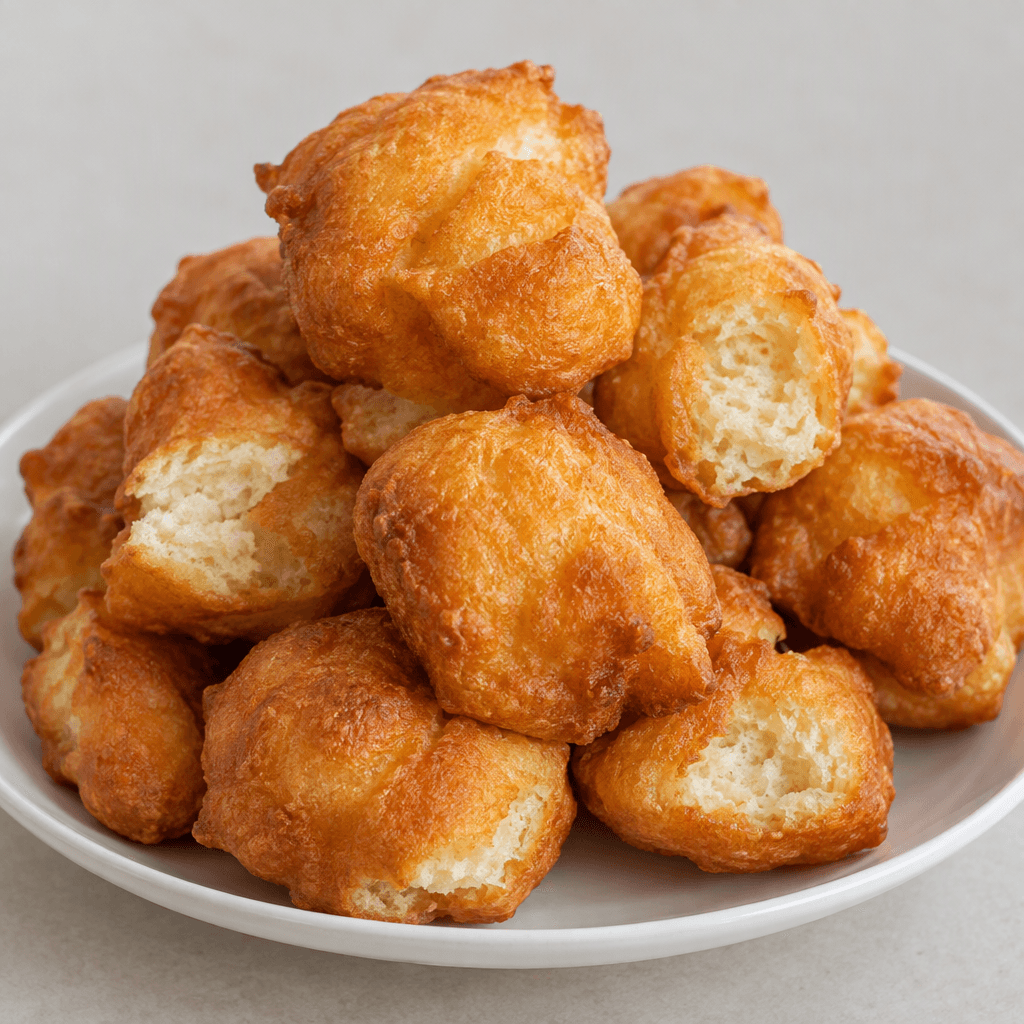
Fried Pisi Calories
Fried dough, traditional Turkish breakfast pastry
In season: Spring · Summer · Autumn · Winter
CALORIES
GI
POTASSIUM
FIBER
Quick answer
1 piece (medium) of Fried Pisi (45 g) has 153 calories. That works out to 340 calories per 100 g. It contains 21.6 g of carbs, 3.4 g of protein, 5.9 g of fat and 1 g of fiber. Its 0.1 mg of B1 covers 7% of the Daily Value. Its glycemic index is 75 (high), so it raises blood sugar quickly.
What is Fried Pisi?
Fried Pisi is made by shaping a simple dough, usually of flour, water, salt and yeast, then frying it until puffed and golden. It is a familiar Turkish breakfast pastry, with dough and shapes varying between households and regions.
The outside is lightly crisp while the inside stays soft and airy. In Turkey it is commonly served warm with tea, alongside cheese, olives and eggs, or with jam, honey or molasses. It also makes a satisfying snack beyond breakfast. As a fried, flour-based pastry, it is energy-dense and provides most of its energy from carbohydrates and fat. For a more substantial meal, pair it with eggs or cheese and fresh vegetables; letting it drain briefly after frying can reduce excess surface oil.
Fried Pisi Nutrition Facts
Selected: 100 g
340
KCAL / 100G
Carbs
48g
· 17% DV
Protein
7.5g
· 15% DV
Fat
13g
· 17% DV
Fiber
2.2g
· 8% DV
DV is the share of the daily value covered, on a 2,000 kcal reference diet.
Calories come from: Carbs 57% · Protein 9% · Fat 34%
Fried Pisi Vitamins & Minerals
Vitamins
B1
0.18mg · 15% DV
B3
1.8mg · 11% DV
B2
0.11mg · 8% DV
Biotin
2.5µg · 8% DV
Minerals
Sodium
350mg · 15% DV
Selenium
7µg · 13% DV
Phosphorus
55mg · 8% DV
Iron
1mg · 6% DV
How Nutritious Is Fried Pisi?
Nutrient density
Low
How many vitamins, minerals and how much fiber this food carries per calorie. A high score means a lot of nutrition for few calories.
Satiety score
Low
An EatBetter score computed from fiber, protein and calorie density. A high score means staying full longer on the same calories.
Both scores are calculated per 100 g and do not change with the selected portion. The satiety score is EatBetter's own calculation, not a clinical measure.
Fried Pisi Glycemic Index
GLYCEMIC INDEX
GLYCEMIC LOAD
Accounts for portion size — a more realistic measure than GI alone.
How to Burn Off Fried Pisi
To burn the 340 calories in 100 g:
🚶
Walking (5 km/h)
🏃
Running (8 km/h)
🚴
Cycling
🏊
Swimming
Times are calculated with the MET equation for a 70 kg adult. Actual burn varies with your weight, age and pace.
Is Fried Pisi Processed?
NOVA 3
Processed
1. Unprocessed
2. Minimally Processed
3. Processed
4. Ultra-Processed
NOVA classifies foods into 4 groups by industrial processing. NOVA 1 (unprocessed) is the healthiest.
Does Fried Pisi Contain Allergens?
Contains these allergens:
Which Diets Is Fried Pisi Good For?
Vegan
— Not suitable
Vegetarian
✓ Suitable
Gluten-Free
— Not suitable
Dairy-Free
— Not suitable
Mediterranean
— Not suitable
Paleo
— Not suitable
Whole30
— Not suitable
DASH
— Not suitable
Keto
— Not suitable
Low FODMAP
— Not suitable
Fried Pisi Fat Profile
SATURATED
2.6g
MONOUNSATURATED
6.2g
POLYUNSATURATED
2.2g
Omega 6:3 ratio 105:1
Above the ideal 4:1 (105:1).
Compare Fried Pisi
Foods Similar to Fried Pisi
Frequently Asked Questions About Fried Pisi
What is fried pisi?
Fried pisi is a Turkish fried-dough pastry, often served warm at breakfast. Yeasted dough is shaped into flat or irregular pieces and fried until puffed and golden; recipes vary between regions and households.
What ingredients go into fried pisi?
Fried pisi is commonly made with flour, yeast, water or milk, and salt. Some home recipes add yogurt or egg for a different texture, while quick versions use baking powder instead of yeast.
How do you make fried pisi from scratch?
To make fried pisi, knead flour with yeast, liquid, and salt, then let the dough rise. Shape it into pieces and fry in hot oil until both sides are golden; drain briefly before serving.
What oil is best for frying pisi?
A neutral oil with a high smoke point, such as sunflower or canola oil, works well for fried pisi. Use enough oil for even frying and avoid overheating it, which can darken the outside before the center cooks.
Can you freeze fried pisi?
Yes, cooked fried pisi can be frozen once completely cool. Freeze the pieces in a single layer first, then transfer them to a sealed freezer container; reheat from frozen in an oven until warmed through.
Can you bake or air-fry pisi instead of deep-frying it?
Yes, pisi can be baked or cooked in an air fryer, but it will not have quite the same crisp, evenly browned crust as deep-fried pisi. Lightly brush or spray the shaped dough with oil for better browning.
Why is my fried pisi dense instead of fluffy?
Fried pisi turns dense when the dough has not risen enough, is overworked, or is rolled too thin. Give yeasted dough time to rise and handle it gently when shaping so it can puff in the hot oil.
Can you fill fried pisi with cheese?
Yes, fried pisi can be filled with cheese before frying. Use a modest amount of firm, low-moisture cheese, seal the edges thoroughly, and avoid overfilling so the filling does not leak into the oil.
Where does fried pisi come from?
Fried pisi is a traditional Turkish fried dough, especially familiar as a homemade breakfast food. Similar fried breads appear in many cuisines, but Turkish pisi is typically served as a simple savory or sweet pastry rather than a syrup-soaked dessert.
How do you keep fried pisi crispy after cooking?
Keep fried pisi crisp by draining it briefly and placing it on a wire rack rather than stacking it or sealing it while hot. Trapped steam softens the crust, so serve it soon after frying.
Have another question about Fried Pisi?
Ask the AI nutrition coach — calories, portions, alternatives and more, answered in seconds in the app.

Scan calories with your camera
Instant AI nutrition analysis

Nutrition data compiled from USDA FoodData Central and scientific sources.