

Ready & Packaged Foods
All →Vegetables & Legumes
All →Desserts & Confectionery
All →Meat & Protein
All →Grains & Bakery
All →Beverages
All →Milk & Dairy
All →

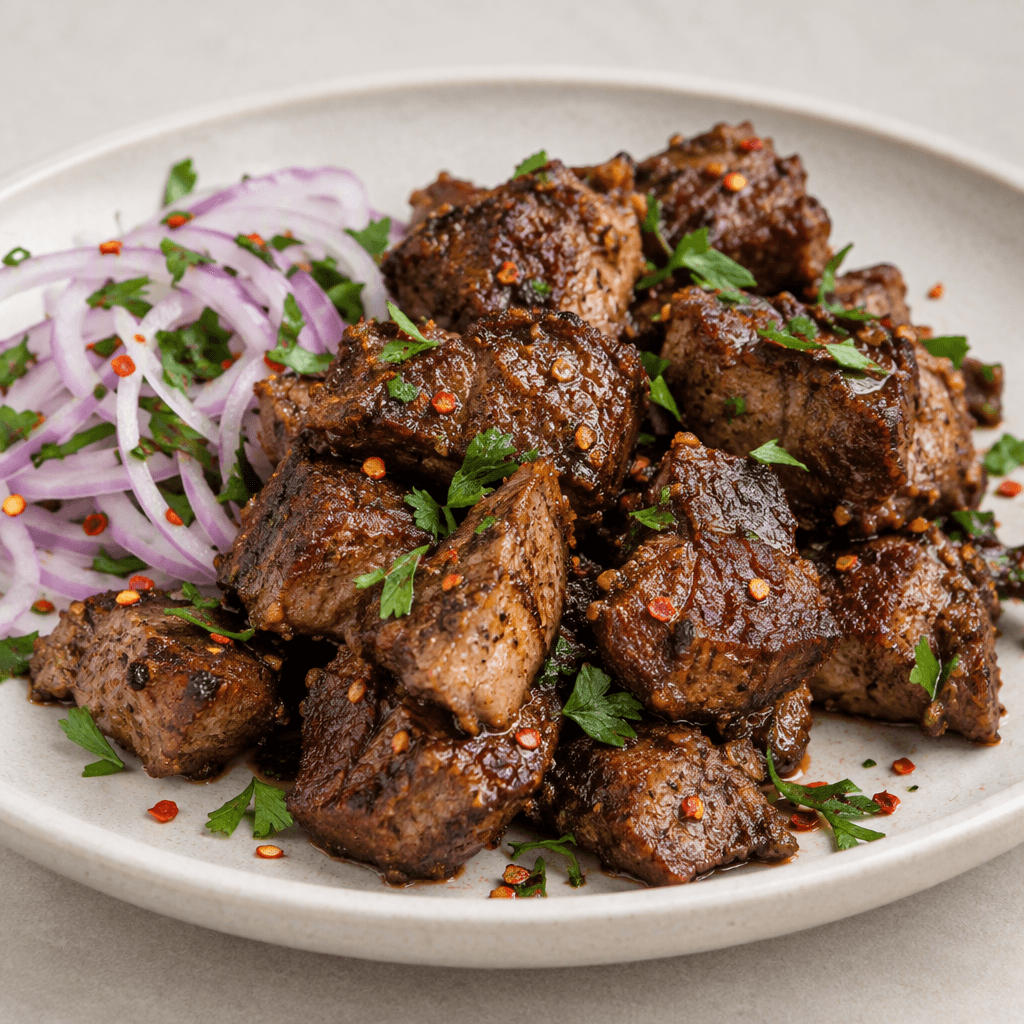
Fried Liver Calories
Rich in iron and B vitamins, fried protein source
In season: Spring · Summer · Autumn · Winter
CALORIES
GI
POTASSIUM
FIBER
Quick answer
1 piece (medium) of Fried Liver (120 g) has 264 calories. That works out to 220 calories per 100 g. It contains 8.6 g of carbs, 28.2 g of protein, 13 g of fat and 0 g of fiber. Its 84 µg of B12 covers 3500% of the Daily Value. Its glycemic index is 35 (low), so it raises blood sugar slowly.
What is Fried Liver?
Fried Liver is made by cutting lamb or beef liver into small pieces and cooking them in hot oil, often after a light dusting of flour. It is familiar in Turkish home cooking and restaurants, with regional versions such as Edirne-style tava ciğer. A good batch is browned and crisp outside while remaining tender inside.
It is usually served hot with thinly sliced onion, parsley and often sumac or chilli, alongside bread or rice. The liver makes it a protein-rich dish with iron and B vitamins, while frying gives it a satisfying richness. To keep the meal lighter, drain the pieces well and pair them with a generous fresh salad.
Fried Liver Nutrition Facts
Selected: 100 g
220
KCAL / 100G
Carbs
7.2g
· 3% DV
Protein
23.5g
· 47% DV
Fat
10.8g
· 14% DV
Fiber
0g
· 0% DV
DV is the share of the daily value covered, on a 2,000 kcal reference diet.
Calories come from: Carbs 13% · Protein 43% · Fat 44%
Fried Liver Vitamins & Minerals
Vitamins
B12
70µg · 2917% DV
Vitamin A
6500µg · 722% DV
Biotin
80µg · 267% DV
B2
2.9mg · 223% DV
Minerals
Selenium
55µg · 100% DV
Iron
9mg · 50% DV
Phosphorus
350mg · 50% DV
Zinc
4mg · 36% DV
How Nutritious Is Fried Liver?
Nutrient density
Very high
How many vitamins, minerals and how much fiber this food carries per calorie. A high score means a lot of nutrition for few calories.
Satiety score
Medium
An EatBetter score computed from fiber, protein and calorie density. A high score means staying full longer on the same calories.
Both scores are calculated per 100 g and do not change with the selected portion. The satiety score is EatBetter's own calculation, not a clinical measure.
Fried Liver Glycemic Index
GLYCEMIC INDEX
GLYCEMIC LOAD
Accounts for portion size — a more realistic measure than GI alone.
How to Burn Off Fried Liver
To burn the 220 calories in 100 g:
🚶
Walking (5 km/h)
🏃
Running (8 km/h)
🚴
Cycling
🏊
Swimming
Times are calculated with the MET equation for a 70 kg adult. Actual burn varies with your weight, age and pace.
Is Fried Liver Processed?
NOVA 3
Processed
1. Unprocessed
2. Minimally Processed
3. Processed
4. Ultra-Processed
NOVA classifies foods into 4 groups by industrial processing. NOVA 1 (unprocessed) is the healthiest.
Does Fried Liver Contain Allergens?
No known major allergens
Which Diets Is Fried Liver Good For?
Vegan
— Not suitable
Vegetarian
— Not suitable
Gluten-Free
✓ Suitable
Dairy-Free
— Not suitable
Mediterranean
✓ Suitable
Paleo
✓ Suitable
Whole30
— Not suitable
DASH
— Not suitable
Keto
✓ Suitable
Low FODMAP
— Not suitable
Fried Liver Fat Profile
SATURATED
3.2g
MONOUNSATURATED
4.1g
POLYUNSATURATED
2.1g
Omega 6:3 ratio 1.7:1
Below the ideal 4:1 — a good omega balance.
Compare Fried Liver
Foods Similar to Fried Liver
Frequently Asked Questions About Fried Liver
How do you make fried liver?
To make fried liver, trim away the membrane and veins, slice the liver into bite-sized pieces, coat lightly in flour, and fry in hot oil in small batches. Cook it briefly; leaving it in the pan too long makes it tough.
What kind of liver is best for fried liver?
Beef, calf, lamb, and pork liver can all be used for fried liver. Calf liver has a mild flavor and tender texture, while lamb liver tastes stronger; choose fresh liver with a clean smell and an even color.
Why is my fried liver tough?
Fried liver usually turns tough because it has been overcooked or cut into thick pieces. Slice it thinly and cook it quickly in a hot pan; frying in small batches helps the oil stay hot and prevents the liver from stewing.
How do you make fried liver crispy?
For crispy fried liver, pat the pieces dry, coat them lightly in flour, and fry them in hot oil in small batches. Shake off excess flour before frying, then drain the cooked pieces instead of piling them into a covered dish.
Should you soak liver in milk before making fried liver?
Soaking liver in milk is optional, but it can mellow its strong flavor. If you soak it, dry the pieces thoroughly before coating and frying; moisture makes the coating less crisp and can cause hot oil to splatter.
How do you know when fried liver is cooked?
Fried liver is ready when the outside is browned and the center is cooked through, not raw or cold. Thin pieces cook quickly, so check one as you go; overcooking makes liver dry and chewy.
What do you serve with fried liver?
Fried liver pairs well with sliced red onion, parsley, lemon, and crisp peppers. For a fuller meal, serve it with flatbread, potatoes, or rice; add juicy sides just before eating so they do not soften the coating.
Can you reheat fried liver without making it tough?
Yes, reheat fried liver gently in a skillet until just warmed through. Avoid prolonged cooking or high heat, which quickly dries it out; the coating will not be as crisp as when freshly fried.
How long does fried liver keep in the fridge?
Store fried liver in a covered container in the refrigerator within two hours of cooking, and eat it within three days. Reheat only the portion you plan to eat, and discard it if it has been left out for too long.
Is fried liver safe to eat during pregnancy?
It is safest to avoid or limit fried liver during pregnancy because liver is very high in preformed vitamin A, which can harm a developing baby in excess. Ask your healthcare professional for advice specific to your pregnancy, and avoid undercooked liver.
Have another question about Fried Liver?
Ask the AI nutrition coach — calories, portions, alternatives and more, answered in seconds in the app.

Scan calories with your camera
Instant AI nutrition analysis

Nutrition data compiled from USDA FoodData Central and scientific sources.