

Ready & Packaged Foods
All →Vegetables & Legumes
All →Desserts & Confectionery
All →Meat & Protein
All →Grains & Bakery
All →Beverages
All →Milk & Dairy
All →

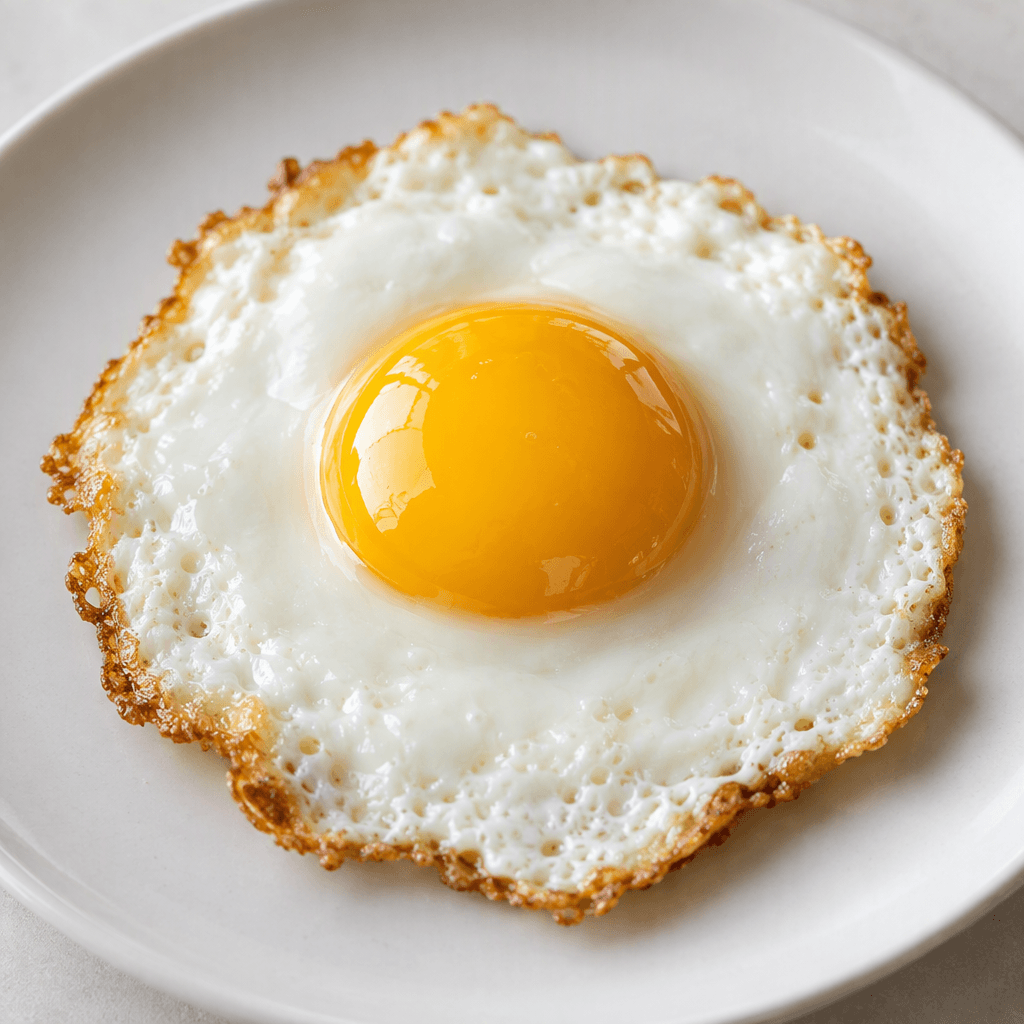
Fried egg (sunny side up) Calories
High-quality protein, vitamin B12, vitamin D, healthy fats
In season: Spring · Summer · Autumn · Winter
CALORIES
GI
POTASSIUM
FIBER
Quick answer
1 piece (medium) of Fried egg (sunny side up) (55 g) has 99 calories. That works out to 180 calories per 100 g. It contains 0.6 g of carbs, 6.9 g of protein, 7.8 g of fat and 0 g of fiber. Its 11 µg of Biotin covers 37% of the Daily Value. Its glycemic index is 0 (low), so it raises blood sugar slowly.
What is Fried egg (sunny side up)?
A fried egg (sunny side up) is cooked in a pan without turning it: the white sets while the yolk stays visible and, often, runny. It is a familiar breakfast and brunch dish in many places, made with just an egg and a little cooking fat.
The set white may have lightly crisp edges, while the yolk is rich and soft. Serve it on toast, with potatoes or vegetables, or alongside a larger breakfast; in Turkey, it is often part of a spread with bread, cheese, olives and tea. It provides high-quality protein and fat, with very little carbohydrate. For a lighter version, use a non-stick pan and only a small amount of oil.
Fried egg (sunny side up) Nutrition Facts
Selected: 100 g
180
KCAL / 100G
Carbs
1.1g
· 0% DV
Protein
12.5g
· 25% DV
Fat
14.2g
· 18% DV
Fiber
0g
· 0% DV
DV is the share of the daily value covered, on a 2,000 kcal reference diet.
Calories come from: Carbs 2% · Protein 27% · Fat 71%
Fried egg (sunny side up) Vitamins & Minerals
Vitamins
Biotin
20µg · 67% DV
B12
1.1µg · 46% DV
B2
0.45mg · 35% DV
B5
1.4mg · 28% DV
Minerals
Selenium
31µg · 56% DV
Phosphorus
190mg · 27% DV
Iodine
24µg · 16% DV
Zinc
1mg · 9% DV
How Nutritious Is Fried egg (sunny side up)?
Nutrient density
High
How many vitamins, minerals and how much fiber this food carries per calorie. A high score means a lot of nutrition for few calories.
Satiety score
Medium
An EatBetter score computed from fiber, protein and calorie density. A high score means staying full longer on the same calories.
Both scores are calculated per 100 g and do not change with the selected portion. The satiety score is EatBetter's own calculation, not a clinical measure.
Fried egg (sunny side up) Glycemic Index
GLYCEMIC INDEX
GLYCEMIC LOAD
Accounts for portion size — a more realistic measure than GI alone.
How to Burn Off Fried egg (sunny side up)
To burn the 180 calories in 100 g:
🚶
Walking (5 km/h)
🏃
Running (8 km/h)
🚴
Cycling
🏊
Swimming
Times are calculated with the MET equation for a 70 kg adult. Actual burn varies with your weight, age and pace.
Is Fried egg (sunny side up) Processed?
NOVA 2
Minimally Processed
1. Unprocessed
2. Minimally Processed
3. Processed
4. Ultra-Processed
NOVA classifies foods into 4 groups by industrial processing. NOVA 1 (unprocessed) is the healthiest.
Does Fried egg (sunny side up) Contain Allergens?
Contains these allergens:
Which Diets Is Fried egg (sunny side up) Good For?
Vegan
— Not suitable
Vegetarian
— Not suitable
Gluten-Free
✓ Suitable
Dairy-Free
— Not suitable
Mediterranean
✓ Suitable
Paleo
✓ Suitable
Whole30
— Not suitable
DASH
— Not suitable
Keto
✓ Suitable
Low FODMAP
— Not suitable
Fried egg (sunny side up) Fat Profile
SATURATED
3.3g
MONOUNSATURATED
5.3g
POLYUNSATURATED
2.1g
Omega 6:3 ratio 10:1
Above the ideal 4:1 (10:1).
Compare Fried egg (sunny side up)
Foods Similar to Fried egg (sunny side up)
Frequently Asked Questions About Fried egg (sunny side up)
How do you make a fried egg (sunny side up)?
Heat a lightly oiled pan over medium-low heat, crack in the egg, and cook until the white is set while the yolk stays visible. A lid can help cook the top of the white without flipping the fried egg (sunny side up).
Do you flip a fried egg (sunny side up)?
No, a fried egg (sunny side up) is cooked without flipping, so the yolk remains on top. If you want the upper surface of the white to set, briefly cover the pan rather than turning the egg over.
How do you keep the yolk runny in a fried egg (sunny side up)?
Cook a fried egg (sunny side up) over medium-low heat and take it off the stove as soon as the white is set. High heat can cook the yolk through before the white cooks evenly, so avoid rushing it.
Why does the white spread out when I cook a fried egg (sunny side up)?
The white of a fried egg (sunny side up) may spread more when the egg is older and its white has become thinner. Crack a fresh egg close to the pan, and let the white begin to set before moving the egg.
What oil is best for a fried egg (sunny side up)?
Olive oil, butter, or another cooking oil works for a fried egg (sunny side up). Butter adds a rich flavor but can brown quickly, so use moderate heat; a neutral oil is a good choice if you want the egg's flavor to stand out.
Why does a fried egg (sunny side up) stick to the pan?
A fried egg (sunny side up) often sticks when the pan is not adequately heated or has too little fat. Use a nonstick pan or a well-seasoned skillet, warm the oil first, and loosen the white gently once its underside has set.
What is the difference between a fried egg (sunny side up) and an over-easy egg?
A fried egg (sunny side up) is cooked on one side, leaving the yolk visible. An over-easy egg is flipped briefly, so its yolk is covered by cooked white even though it usually remains runny.
Is a runny fried egg (sunny side up) safe to eat?
A runny fried egg (sunny side up) carries more food-safety risk than an egg cooked until both the white and yolk are firm, because eggs can contain harmful bacteria. Pregnant people, young children, older adults, and people with weakened immune systems should choose fully cooked eggs.
How do you season a fried egg (sunny side up)?
Salt and black pepper are classic seasonings for a fried egg (sunny side up); add them after cooking if you want the yolk's surface to stay smooth. Hot sauce, chili flakes, or chopped herbs are easy ways to change the flavor.
Can you reheat a fried egg (sunny side up)?
Yes, you can reheat a fried egg (sunny side up) that has been promptly refrigerated, but the yolk will usually become firmer and the white can turn rubbery. It tastes best freshly cooked, so make only what you plan to eat.
Have another question about Fried egg (sunny side up)?
Ask the AI nutrition coach — calories, portions, alternatives and more, answered in seconds in the app.

Scan calories with your camera
Instant AI nutrition analysis

Nutrition data compiled from USDA FoodData Central and scientific sources.