

Ready & Packaged Foods
All →Vegetables & Legumes
All →Desserts & Confectionery
All →Meat & Protein
All →Grains & Bakery
All →Beverages
All →Milk & Dairy
All →

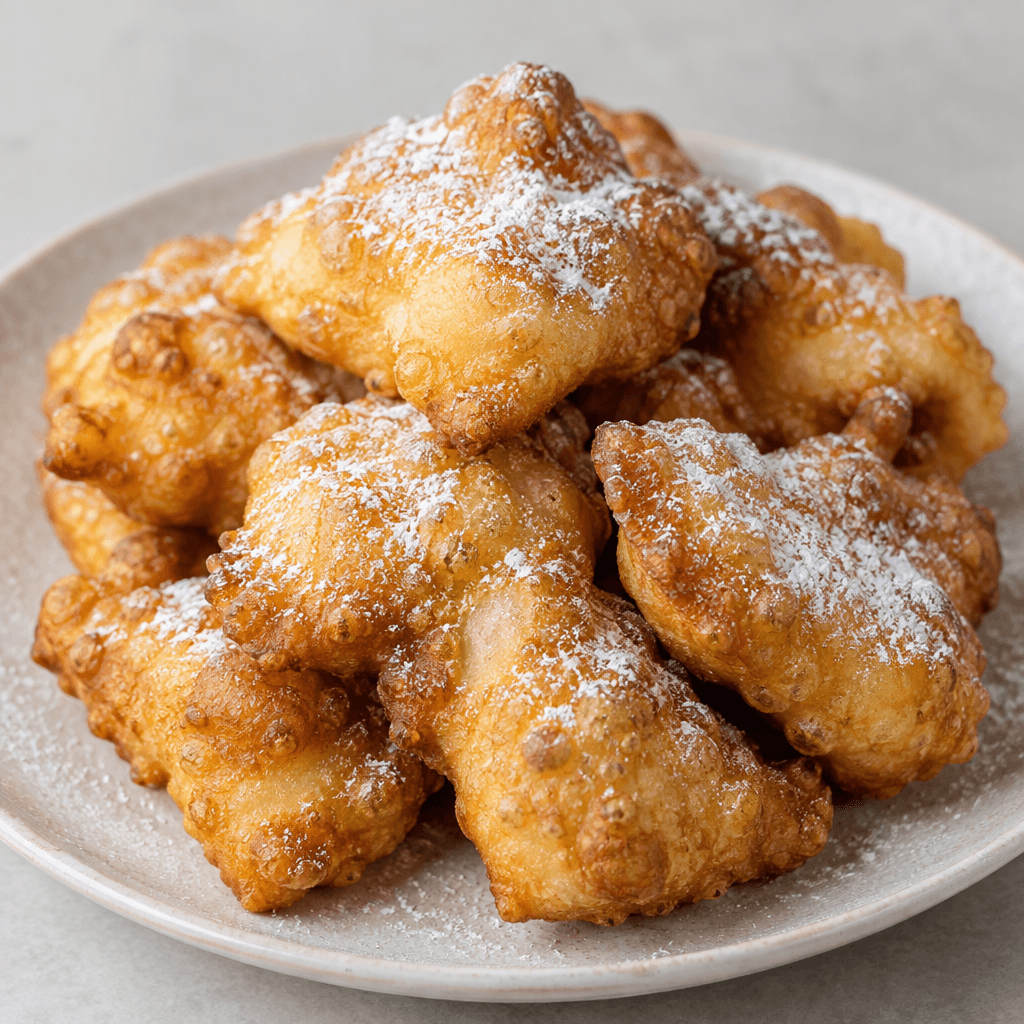
Fried Dough Pastry Calories
Fried dough pastry, energy-dense
CALORIES
GI
POTASSIUM
FIBER
Quick answer
1 piece (medium) of Fried Dough Pastry (70 g) has 288 calories. That works out to 412 calories per 100 g. It contains 34.2 g of carbs, 4.8 g of protein, 14.8 g of fat and 1.3 g of fiber. Its 9.8 µg of Selenium covers 18% of the Daily Value. Its glycemic index is 72 (high), so it raises blood sugar quickly.
What is Fried Dough Pastry?
Fried dough pastry is a Turkish-style treat made by frying dough until it puffs and turns golden. It may be served plain or with a light dusting of powdered sugar, as in the pictured version; recipes and shapes vary.
The surface is lightly crisp while the middle stays soft and airy. In Turkey, it works well as a snack with tea or as part of a breakfast spread, and it can also be enjoyed as a simple sweet. It is energy-dense: 100 g provides 412 calories. If you want a lighter serving, choose one small piece and pair it with fresh fruit rather than adding extra sugar.
Fried Dough Pastry Nutrition Facts
Selected: 100 g
412
KCAL / 100G
Carbs
48.9g
· 18% DV
Protein
6.8g
· 14% DV
Fat
21.1g
· 27% DV
Fiber
1.9g
· 7% DV
DV is the share of the daily value covered, on a 2,000 kcal reference diet.
Calories come from: Carbs 47% · Protein 7% · Fat 46%
Fried Dough Pastry Vitamins & Minerals
Vitamins
B1
0.29mg · 24% DV
B3
2.4mg · 15% DV
B2
0.18mg · 14% DV
Folate
58µg · 14% DV
Minerals
Selenium
14µg · 25% DV
Sodium
320mg · 14% DV
Iron
2mg · 11% DV
Phosphorus
78mg · 11% DV
How Nutritious Is Fried Dough Pastry?
Nutrient density
Low
How many vitamins, minerals and how much fiber this food carries per calorie. A high score means a lot of nutrition for few calories.
Satiety score
Low
An EatBetter score computed from fiber, protein and calorie density. A high score means staying full longer on the same calories.
Both scores are calculated per 100 g and do not change with the selected portion. The satiety score is EatBetter's own calculation, not a clinical measure.
Fried Dough Pastry Glycemic Index
GLYCEMIC INDEX
GLYCEMIC LOAD
Accounts for portion size — a more realistic measure than GI alone.
How to Burn Off Fried Dough Pastry
To burn the 412 calories in 100 g:
🚶
Walking (5 km/h)
🏃
Running (8 km/h)
🚴
Cycling
🏊
Swimming
Times are calculated with the MET equation for a 70 kg adult. Actual burn varies with your weight, age and pace.
Is Fried Dough Pastry Processed?
NOVA 3
Processed
1. Unprocessed
2. Minimally Processed
3. Processed
4. Ultra-Processed
NOVA classifies foods into 4 groups by industrial processing. NOVA 1 (unprocessed) is the healthiest.
Does Fried Dough Pastry Contain Allergens?
Contains these allergens:
Which Diets Is Fried Dough Pastry Good For?
Vegan
— Not suitable
Vegetarian
✓ Suitable
Gluten-Free
— Not suitable
Dairy-Free
— Not suitable
Mediterranean
— Not suitable
Paleo
— Not suitable
Whole30
— Not suitable
DASH
— Not suitable
Keto
— Not suitable
Low FODMAP
— Not suitable
Fried Dough Pastry Fat Profile
SATURATED
4.8g
MONOUNSATURATED
8.2g
POLYUNSATURATED
5.7g
Omega 6:3 ratio 108:1
Above the ideal 4:1 (108:1).
Compare Fried Dough Pastry
Foods Similar to Fried Dough Pastry
Frequently Asked Questions About Fried Dough Pastry
What is fried dough pastry?
Fried dough pastry is a sweet made by frying pieces of dough until golden and often finishing them with powdered sugar. Kolaç is the Turkish food name for this pastry; its shape and exact preparation can vary by recipe.
How do you make fried dough pastry at home?
Fried dough pastry is made by shaping prepared dough and frying it in hot oil until golden. Recipes vary in whether and how the dough is leavened; drain the pieces after frying and add powdered sugar while serving.
Why is fried dough pastry greasy?
Fried dough pastry can turn greasy if the oil is not hot enough or the dough stays in it too long. Fry in manageable batches so the oil temperature does not drop, then drain the finished pieces briefly on paper towels.
Is fried dough pastry the same as a doughnut?
No, fried dough pastry is not necessarily a doughnut. Doughnuts are usually shaped into rings or filled, while this pastry may be made as irregular pieces and served with powdered sugar; recipes and names vary across regions.
Where does fried dough pastry come from?
Fried dough pastry has no single origin: many cuisines have their own versions of fried dough. Kolaç is the Turkish name used for the pastry on this page, rather than a claim that every fried-dough dessert is the same dish.
What is served with fried dough pastry?
Fried dough pastry is often served with powdered sugar and a hot drink such as tea or coffee. It can also be paired with fruit or a dipping sauce, though extra toppings make the dessert sweeter.
Can fried dough pastry be made without powdered sugar?
Yes, fried dough pastry can be served without powdered sugar. The dough is still a fried pastry, and leaving off the topping makes it less sweet; some recipes instead pair it with a dip or serve it plain.
How should fried dough pastry be stored and reheated?
Store fried dough pastry only after it has cooled, in an airtight container at room temperature, and eat it soon for the best texture. Reheat it briefly in an oven to restore some crispness; add powdered sugar afterward.
Can you freeze fried dough pastry?
Yes, fried dough pastry can be frozen after it has cooled. Separate the pieces with baking paper in an airtight container, then thaw and warm them in the oven; add any powdered sugar after reheating.
Can fried dough pastry be baked instead of fried?
Yes, you can bake fried dough pastry, but it will not have the same crisp exterior or flavor as the fried version. Shape the dough for baking and follow a recipe designed for the oven, since the result may be softer.
Have another question about Fried Dough Pastry?
Ask the AI nutrition coach — calories, portions, alternatives and more, answered in seconds in the app.

Scan calories with your camera
Instant AI nutrition analysis

Nutrition data compiled from USDA FoodData Central and scientific sources.