

Ready & Packaged Foods
All →Vegetables & Legumes
All →Desserts & Confectionery
All →Meat & Protein
All →Grains & Bakery
All →Beverages
All →Milk & Dairy
All →

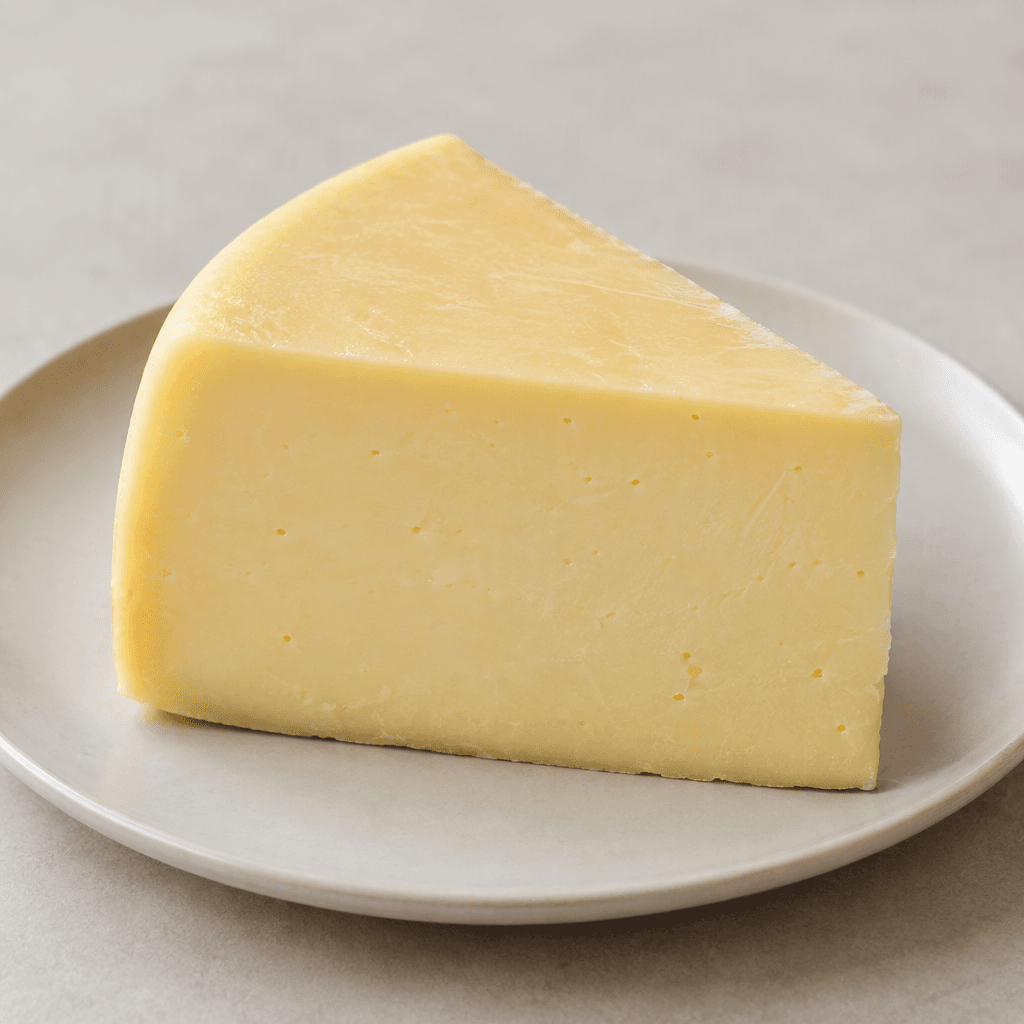
Fresh Kashar Cheese Calories
Soft, mildly salty, milky cheese
In season: Spring · Summer · Autumn · Winter
CALORIES
GI
POTASSIUM
FIBER
Quick answer
1 slice (medium) of Fresh Kashar Cheese (30 g) has 96 calories. That works out to 320 calories per 100 g. It contains 0.7 g of carbs, 6.6 g of protein, 7.5 g of fat and 0 g of fiber. Its 210 mg of Calcium covers 21% of the Daily Value. Its glycemic index is 30 (low), so it raises blood sugar slowly.
What is Fresh Kashar Cheese?
Fresh Kashar Cheese is a Turkish semi-hard cheese made from milk. Its curd is traditionally heated and kneaded before being shaped. Compared with aged kashar, it has a milder, milkier flavour and a supple but sliceable texture; it also melts smoothly when heated.
In Turkey, it is common at breakfast with bread, alongside tomatoes and olives, or melted into toasties, sandwiches and börek. Outside Turkey, try it anywhere you might use a mild melting cheese, while keeping in mind its distinctive Turkish character. It contributes protein as well as a notable amount of fat, so a thin slice with vegetables makes a lighter pairing.
Fresh Kashar Cheese Nutrition Facts
Selected: 100 g
320
KCAL / 100G
Carbs
2.2g
· 1% DV
Protein
22g
· 44% DV
Fat
25g
· 32% DV
Fiber
0g
· 0% DV
DV is the share of the daily value covered, on a 2,000 kcal reference diet.
Calories come from: Carbs 3% · Protein 27% · Fat 70%
Fresh Kashar Cheese Vitamins & Minerals
Vitamins
B12
1.2µg · 50% DV
B2
0.35mg · 27% DV
Vitamin A
220µg · 24% DV
B5
0.5mg · 10% DV
Minerals
Phosphorus
500mg · 71% DV
Calcium
700mg · 70% DV
Sodium
650mg · 28% DV
Zinc
3mg · 27% DV
How Nutritious Is Fresh Kashar Cheese?
Nutrient density
High
How many vitamins, minerals and how much fiber this food carries per calorie. A high score means a lot of nutrition for few calories.
Satiety score
Medium
An EatBetter score computed from fiber, protein and calorie density. A high score means staying full longer on the same calories.
Both scores are calculated per 100 g and do not change with the selected portion. The satiety score is EatBetter's own calculation, not a clinical measure.
Fresh Kashar Cheese Glycemic Index
GLYCEMIC INDEX
GLYCEMIC LOAD
Accounts for portion size — a more realistic measure than GI alone.
How to Burn Off Fresh Kashar Cheese
To burn the 320 calories in 100 g:
🚶
Walking (5 km/h)
🏃
Running (8 km/h)
🚴
Cycling
🏊
Swimming
Times are calculated with the MET equation for a 70 kg adult. Actual burn varies with your weight, age and pace.
Is Fresh Kashar Cheese Processed?
NOVA 2
Minimally Processed
1. Unprocessed
2. Minimally Processed
3. Processed
4. Ultra-Processed
NOVA classifies foods into 4 groups by industrial processing. NOVA 1 (unprocessed) is the healthiest.
Does Fresh Kashar Cheese Contain Allergens?
Contains these allergens:
Which Diets Is Fresh Kashar Cheese Good For?
Vegan
— Not suitable
Vegetarian
✓ Suitable
Gluten-Free
— Not suitable
Dairy-Free
— Not suitable
Mediterranean
✓ Suitable
Paleo
— Not suitable
Whole30
— Not suitable
DASH
— Not suitable
Keto
— Not suitable
Low FODMAP
— Not suitable
Fresh Kashar Cheese Fat Profile
SATURATED
16g
MONOUNSATURATED
7g
POLYUNSATURATED
0.5g
Omega 6:3 ratio 4.3:1
Above the ideal 4:1 (4.3:1).
Compare Fresh Kashar Cheese
Foods Similar to Fresh Kashar Cheese
Frequently Asked Questions About Fresh Kashar Cheese
What is fresh Kashar cheese?
Fresh Kashar is a Turkish semi-hard cheese made from cow’s milk, with a mild, milky flavor and a pliable texture. It is aged for less time than aged Kashar, so it is less sharp and is commonly eaten at breakfast or melted in cooked dishes.
How is fresh Kashar cheese different from aged Kashar?
Fresh Kashar is younger, softer, and milder, while aged Kashar is matured longer and becomes firmer, drier, and more intensely savory. The two are related cheeses, but aged Kashar’s stronger flavor makes it a better choice when you want a pronounced cheese taste.
Does fresh Kashar cheese melt well?
Yes, fresh Kashar melts readily and works well in toasties, baked dishes, and pide. It becomes soft and can stretch, though it may not form the same long, elastic strands as mozzarella. Grate it or slice it thinly for more even melting.
How should you store fresh Kashar cheese after opening?
Wrap fresh Kashar tightly or keep it in an airtight container in the refrigerator, and follow the date on its package. Discard it if it develops mold, a slimy surface, or an unusual smell; cutting away a moldy spot is not a reliable fix for this moist cheese.
Can you freeze fresh Kashar cheese?
Yes, fresh Kashar can be frozen, although thawing may make it crumbly and less pleasant to slice. Divide it into portions, seal them well, and thaw in the refrigerator. The changed texture is less noticeable when you grate the cheese into toasties or baked dishes.
What can you use instead of fresh Kashar cheese?
For a similar mild flavor and good melting, use mozzarella or a mild young provolone in place of fresh Kashar. The taste and stretch will differ, so choose mozzarella when you want a milder, more elastic topping and provolone when you want a fuller flavor.
Can you use fresh Kashar cheese on pizza?
Yes, fresh Kashar works on pizza: it melts smoothly and browns on top. Its flavor is usually saltier and more pronounced than mozzarella, so take that into account when adding cured meats or other salty toppings. Grating it helps it cover the pizza evenly.
Can you eat fresh Kashar cheese without cooking it?
Yes, fresh Kashar is ready to eat and does not need to be cooked. In Turkey it is often served in slices for breakfast, alongside bread, olives, or tomatoes. Keep it refrigerated between servings rather than leaving the whole piece out for hours.
Why does fresh Kashar cheese sometimes turn oily instead of stretching?
Fresh Kashar may release oil rather than stretch if it is heated too quickly or for too long; its moisture and make also affect how elastic it becomes. Use moderate heat and freshly grated cheese, and avoid expecting every Kashar to behave exactly like mozzarella.
Does fresh Kashar cheese contain lactose?
Fresh Kashar may contain lactose because it is a relatively young cheese, so people with lactose intolerance may have symptoms after eating it. Do not assume it is lactose-free unless the package says so; tolerance varies, and aged Kashar is not a guarantee of zero lactose either.
Have another question about Fresh Kashar Cheese?
Ask the AI nutrition coach — calories, portions, alternatives and more, answered in seconds in the app.

Scan calories with your camera
Instant AI nutrition analysis

Nutrition data compiled from USDA FoodData Central and scientific sources.