

Ready & Packaged Foods
All →Vegetables & Legumes
All →Desserts & Confectionery
All →Meat & Protein
All →Grains & Bakery
All →Beverages
All →Milk & Dairy
All →

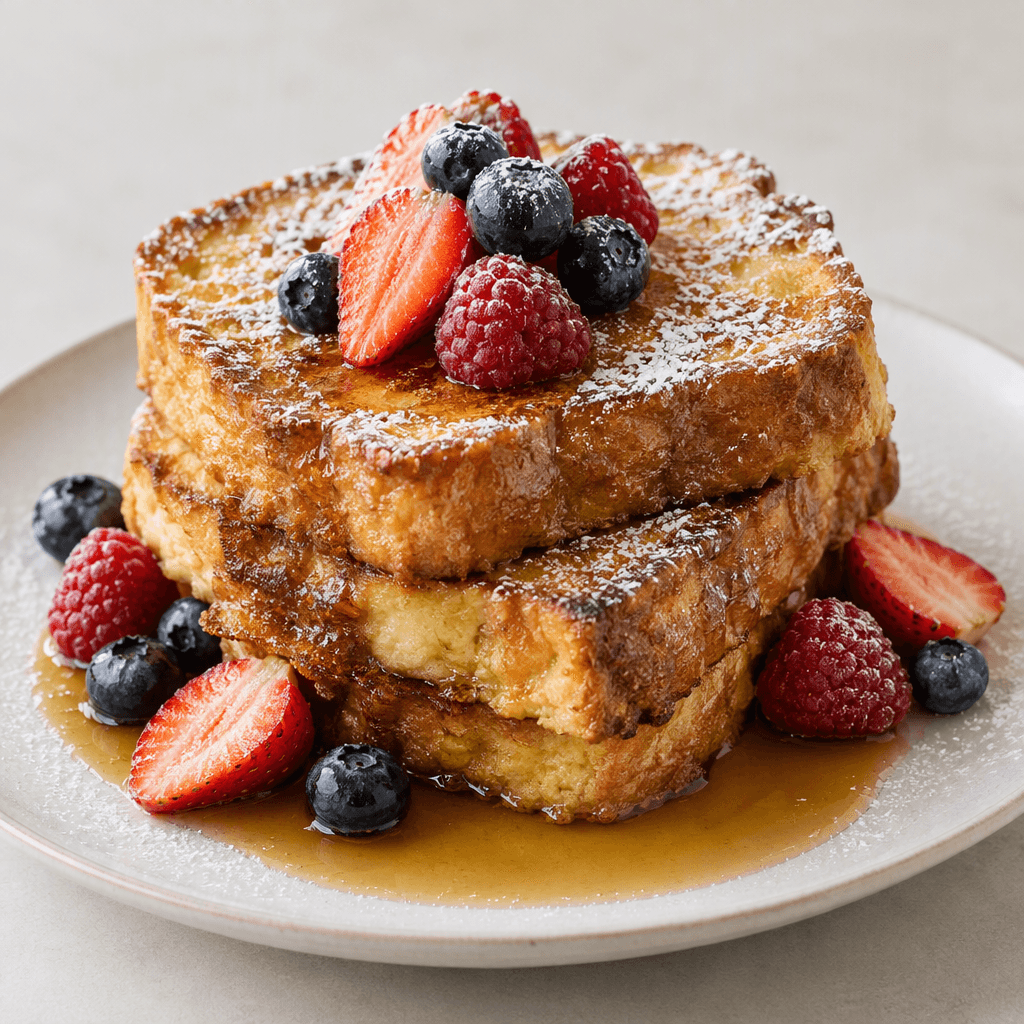
French Toast Calories
Bread dipped in egg and milk, pan-fried; classic breakfast
In season: Spring · Summer · Autumn · Winter
CALORIES
GI
POTASSIUM
FIBER
Quick answer
1 slice (medium) of French Toast (70 g) has 154 calories. That works out to 220 calories per 100 g. It contains 19.3 g of carbs, 5 g of protein, 5.7 g of fat and 0.8 g of fiber. Its 9.1 µg of Selenium covers 17% of the Daily Value. Its glycemic index is 65 (medium), so it raises blood sugar at a moderate pace.
What is French Toast?
French toast is made by dipping bread in a mixture of egg and milk, then frying it until golden. Versions of the dish are found across Europe; in France, pain perdu (“lost bread”) is a familiar way to use up stale slices. It is now a breakfast favourite in many places, with recipes ranging from simple to richly topped.
The edges turn lightly crisp while the middle stays soft and custardy. It is often served warm with syrup, powdered sugar or fresh fruit, and can make an easy weekend breakfast or brunch. Bread supplies most of its carbohydrates, while egg adds some protein; sweet toppings and extra butter can make a serving more substantial. For a lighter plate, use a modest amount of oil and add berries or other fresh fruit instead of a generous pour of syrup.
French Toast Nutrition Facts
Selected: 100 g
220
KCAL / 100G
Carbs
27.5g
· 10% DV
Protein
7.2g
· 14% DV
Fat
8.2g
· 11% DV
Fiber
1.2g
· 4% DV
DV is the share of the daily value covered, on a 2,000 kcal reference diet.
Calories come from: Carbs 52% · Protein 14% · Fat 34%
French Toast Vitamins & Minerals
Vitamins
Biotin
7µg · 23% DV
B12
0.35µg · 15% DV
B2
0.18mg · 14% DV
B5
0.5mg · 10% DV
Minerals
Selenium
13µg · 24% DV
Phosphorus
110mg · 16% DV
Sodium
340mg · 15% DV
Calcium
90mg · 9% DV
How Nutritious Is French Toast?
Nutrient density
Medium
How many vitamins, minerals and how much fiber this food carries per calorie. A high score means a lot of nutrition for few calories.
Satiety score
Medium
An EatBetter score computed from fiber, protein and calorie density. A high score means staying full longer on the same calories.
Both scores are calculated per 100 g and do not change with the selected portion. The satiety score is EatBetter's own calculation, not a clinical measure.
French Toast Glycemic Index
GLYCEMIC INDEX
GLYCEMIC LOAD
Accounts for portion size — a more realistic measure than GI alone.
How to Burn Off French Toast
To burn the 220 calories in 100 g:
🚶
Walking (5 km/h)
🏃
Running (8 km/h)
🚴
Cycling
🏊
Swimming
Times are calculated with the MET equation for a 70 kg adult. Actual burn varies with your weight, age and pace.
Is French Toast Processed?
NOVA 3
Processed
1. Unprocessed
2. Minimally Processed
3. Processed
4. Ultra-Processed
NOVA classifies foods into 4 groups by industrial processing. NOVA 1 (unprocessed) is the healthiest.
Does French Toast Contain Allergens?
Contains these allergens:
Which Diets Is French Toast Good For?
Vegan
— Not suitable
Vegetarian
✓ Suitable
Gluten-Free
— Not suitable
Dairy-Free
— Not suitable
Mediterranean
— Not suitable
Paleo
— Not suitable
Whole30
— Not suitable
DASH
— Not suitable
Keto
— Not suitable
Low FODMAP
— Not suitable
French Toast Fat Profile
SATURATED
2.5g
MONOUNSATURATED
2.6g
POLYUNSATURATED
1g
Omega 6:3 ratio 7.5:1
Above the ideal 4:1 (7.5:1).
Compare French Toast
Foods Similar to French Toast
Frequently Asked Questions About French Toast
How do you make French toast?
French toast is made by dipping bread in beaten eggs and milk, then cooking it in a lightly greased pan. Turn each slice when golden, and serve it with toppings such as fruit, syrup, or cinnamon.
What is the best bread for French toast?
Thick-cut brioche, challah, or sturdy white bread works well for French toast because it absorbs the egg mixture without falling apart. Slightly stale bread is especially useful; very thin, fresh slices can turn soggy.
Why does French toast turn soggy?
French toast turns soggy when the bread absorbs too much egg mixture or the pan is not hot enough to brown it. Use thicker, slightly dry slices, dip them briefly, and cook over moderate heat.
Can you make French toast with stale bread?
Yes, stale bread is excellent for French toast because it soaks up the egg mixture while holding its shape. Dip very dry slices a little longer, but take them out before they become saturated and difficult to handle.
Why is it called French toast?
French toast is called pain perdu in France, meaning “lost bread,” because the dish traditionally gave stale bread a second life. The English name does not mean that the dish was necessarily invented in France.
What is the difference between French toast and eggy bread?
French toast is commonly sweetened or served with sweet toppings, while eggy bread is often a savory preparation. The names overlap in some places, but the egg-and-bread method is similar; milk and seasonings vary by recipe.
Can French toast be made without milk?
Yes, French toast can be made without milk. Beat the eggs on their own or use a plant-based drink instead; dip the bread briefly so it gets coated without becoming fragile.
How do you make French toast crispy?
For crisp-edged French toast, use thick, slightly stale bread and avoid soaking it for too long. Cook the slices in a preheated pan with a little butter, turning them once the first side is browned.
Can you freeze French toast?
Yes, cooked French toast can be frozen after it has cooled. Freeze the slices in a single layer first, then store them in a sealed container with parchment between slices; reheat directly from frozen until hot.
How do you reheat French toast without making it soggy?
Reheat French toast in a toaster oven, oven, or air fryer so the outside can crisp up again. A microwave warms it quickly but tends to soften the surface; add syrup and fresh fruit after reheating.
Have another question about French Toast?
Ask the AI nutrition coach — calories, portions, alternatives and more, answered in seconds in the app.

Scan calories with your camera
Instant AI nutrition analysis

Nutrition data compiled from USDA FoodData Central and scientific sources.