

Ready & Packaged Foods
All →Vegetables & Legumes
All →Desserts & Confectionery
All →Meat & Protein
All →Grains & Bakery
All →Beverages
All →Milk & Dairy
All →

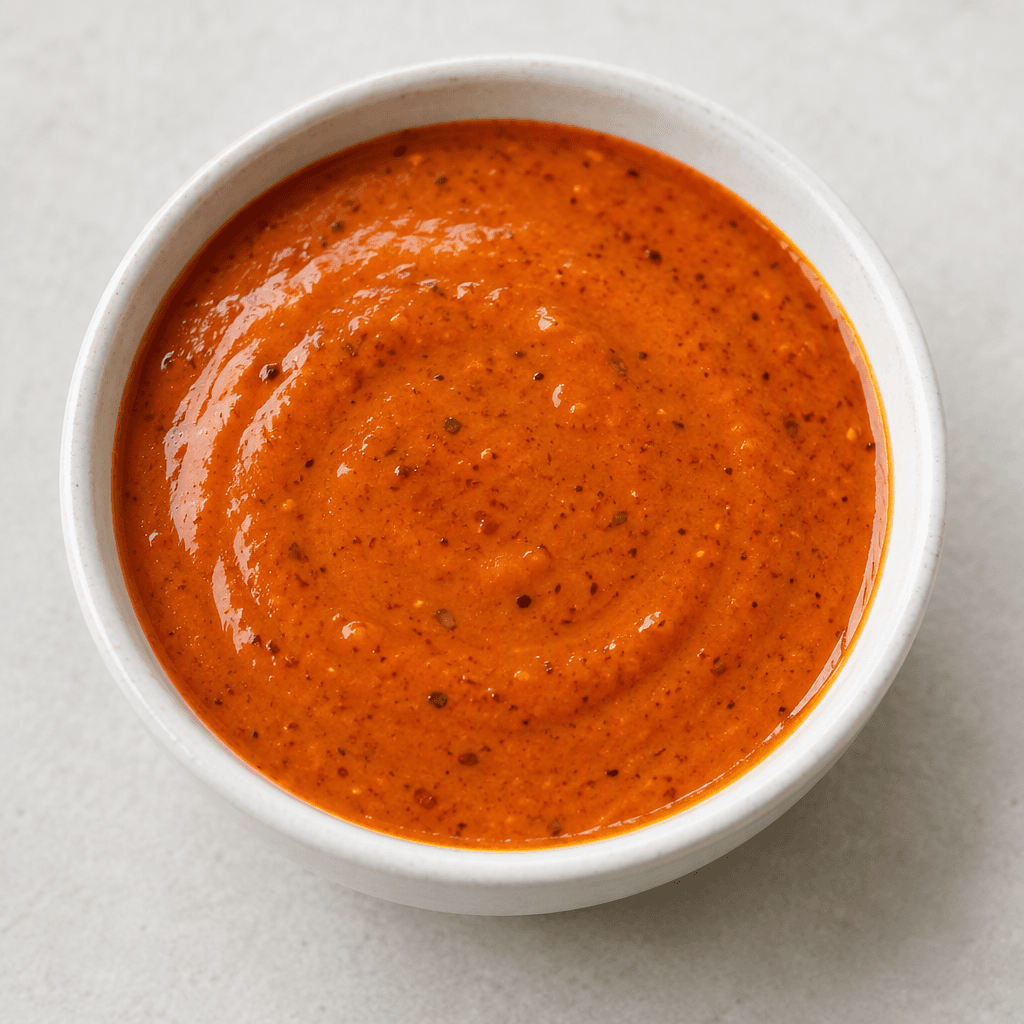
French salad dressing Calories
Oil-based, mildly sweet-tangy salad dressing
CALORIES
GI
POTASSIUM
FIBER
Quick answer
2 tablespoon (medium) of French salad dressing (30 g) has 137 calories. That works out to 457 calories per 100 g. It contains 6.1 g of carbs, 0.1 g of protein, 12.6 g of fat and 0.1 g of fiber. Its 312 mg of Sodium covers 14% of the Daily Value. Its glycemic index is 35 (low), so it raises blood sugar slowly.
What is French salad dressing?
French salad dressing is an oil-based, mildly sweet-tangy dressing, usually built around oil and vinegar with seasonings. Despite its name, the smooth orange-red style is especially familiar in North America; recipes vary, and it is not simply the same as a classic French vinaigrette.
It is commonly spooned over leafy salads or served alongside raw vegetables, and can also add a punchy note to sandwiches. Its nutritional character is largely shaped by oil, with some carbohydrate contributing to its sweetness. Use a modest pour if you want the vegetables to stay centre stage, or thin it with a little vinegar or lemon juice.
French salad dressing Nutrition Facts
Selected: 100 g
457
KCAL / 100G
Carbs
20.3g
· 7% DV
Protein
0.4g
· 1% DV
Fat
42.1g
· 54% DV
Fiber
0.2g
· 1% DV
DV is the share of the daily value covered, on a 2,000 kcal reference diet.
Calories come from: Carbs 18% · Protein 0% · Fat 82%
French salad dressing Vitamins & Minerals
Vitamins
Vitamin E
6.1mg · 41% DV
Vitamin K
38µg · 32% DV
B1
0.02mg · 2% DV
B2
0.02mg · 2% DV
Minerals
Sodium
1040mg · 45% DV
Phosphorus
18mg · 3% DV
Potassium ⭐
96mg · 3% DV
Magnesium
7mg · 2% DV
How Nutritious Is French salad dressing?
Nutrient density
Low
How many vitamins, minerals and how much fiber this food carries per calorie. A high score means a lot of nutrition for few calories.
Satiety score
Low
An EatBetter score computed from fiber, protein and calorie density. A high score means staying full longer on the same calories.
Both scores are calculated per 100 g and do not change with the selected portion. The satiety score is EatBetter's own calculation, not a clinical measure.
French salad dressing Glycemic Index
GLYCEMIC INDEX
GLYCEMIC LOAD
Accounts for portion size — a more realistic measure than GI alone.
How to Burn Off French salad dressing
To burn the 457 calories in 100 g:
🚶
Walking (5 km/h)
🏃
Running (8 km/h)
🚴
Cycling
🏊
Swimming
Times are calculated with the MET equation for a 70 kg adult. Actual burn varies with your weight, age and pace.
Is French salad dressing Processed?
NOVA 3
Processed
1. Unprocessed
2. Minimally Processed
3. Processed
4. Ultra-Processed
NOVA classifies foods into 4 groups by industrial processing. NOVA 1 (unprocessed) is the healthiest.
Does French salad dressing Contain Allergens?
No known major allergens
Which Diets Is French salad dressing Good For?
Vegan
✓ Suitable
Vegetarian
✓ Suitable
Gluten-Free
✓ Suitable
Dairy-Free
— Not suitable
Mediterranean
✓ Suitable
Paleo
— Not suitable
Whole30
— Not suitable
DASH
— Not suitable
Keto
— Not suitable
Low FODMAP
— Not suitable
French salad dressing Fat Profile
SATURATED
6.1g
MONOUNSATURATED
24.7g
POLYUNSATURATED
10.4g
Omega 6:3 ratio 32.7:1
Above the ideal 4:1 (32.7:1).
Compare French salad dressing
Foods Similar to French salad dressing
Frequently Asked Questions About French salad dressing
What is French salad dressing?
French salad dressing is a tangy, mildly sweet dressing that is often orange-red and thicker than a simple oil-and-vinegar vinaigrette. In many English-speaking markets, the name refers to a tomato- or paprika-colored style, though recipes vary by region and brand.
What is in French salad dressing?
French salad dressing commonly combines oil, vinegar, a sweetener, and seasonings; mustard or tomato-based ingredients may provide extra flavor and color. There is no single fixed recipe, so bottled versions and homemade recipes can taste quite different.
How do you make French salad dressing at home?
To make French salad dressing, whisk oil with vinegar, a little sweetener, mustard, and seasonings; add ketchup or tomato paste for a deeper orange-red color. Whisk gradually or shake everything in a sealed jar until the mixture looks evenly combined.
What is the difference between French and Catalina dressing?
French salad dressing and Catalina dressing are closely related, but Catalina is usually brighter red, sweeter, and more sharply tangy. The names and recipes overlap across brands, so the ingredient list and flavor description are more useful than the label alone.
What is the difference between French salad dressing and Italian dressing?
French salad dressing is typically smoother, sweeter, and often tomato-colored, while Italian dressing is usually a sharper oil-and-vinegar blend with herbs and visible seasoning. Either can vary by recipe, but they give salads noticeably different flavor profiles.
What salads go well with French salad dressing?
French salad dressing works well with crisp green salads, shredded cabbage, carrots, and potato salads. Its lightly sweet, tangy flavor complements crunchy vegetables; toss it with the salad shortly before serving so delicate leaves do not wilt.
Can French salad dressing be used as a marinade?
Yes, French salad dressing can flavor chicken or vegetables as a quick marinade because its vinegar and seasonings add tang. Keep raw-meat marinade separate from food being served, and discard any dressing that has touched raw chicken.
How should you store French salad dressing after opening?
Refrigerate opened French salad dressing in its closed bottle and follow the storage directions on the package. Homemade dressing should also be kept covered in the refrigerator; shake or stir it before serving because its oil and liquid can separate.
Can you heat French salad dressing?
French salad dressing is best used cold or at room temperature, rather than cooked as a sauce. You can toss it with warm potatoes or vegetables after they have cooled slightly, which helps preserve its tangy flavor and prevents the dressing from breaking down in a hot pan.
Is French salad dressing healthy?
French salad dressing can add flavor to vegetables, but its oil and often-added sweetener make portion size relevant. Using a modest amount or making it at home lets you adjust the sweetness and acidity without turning the salad into a heavily dressed dish.
Have another question about French salad dressing?
Ask the AI nutrition coach — calories, portions, alternatives and more, answered in seconds in the app.

Scan calories with your camera
Instant AI nutrition analysis

Nutrition data compiled from USDA FoodData Central and scientific sources.