

Ready & Packaged Foods
All →Vegetables & Legumes
All →Desserts & Confectionery
All →Meat & Protein
All →Grains & Bakery
All →Beverages
All →Milk & Dairy
All →

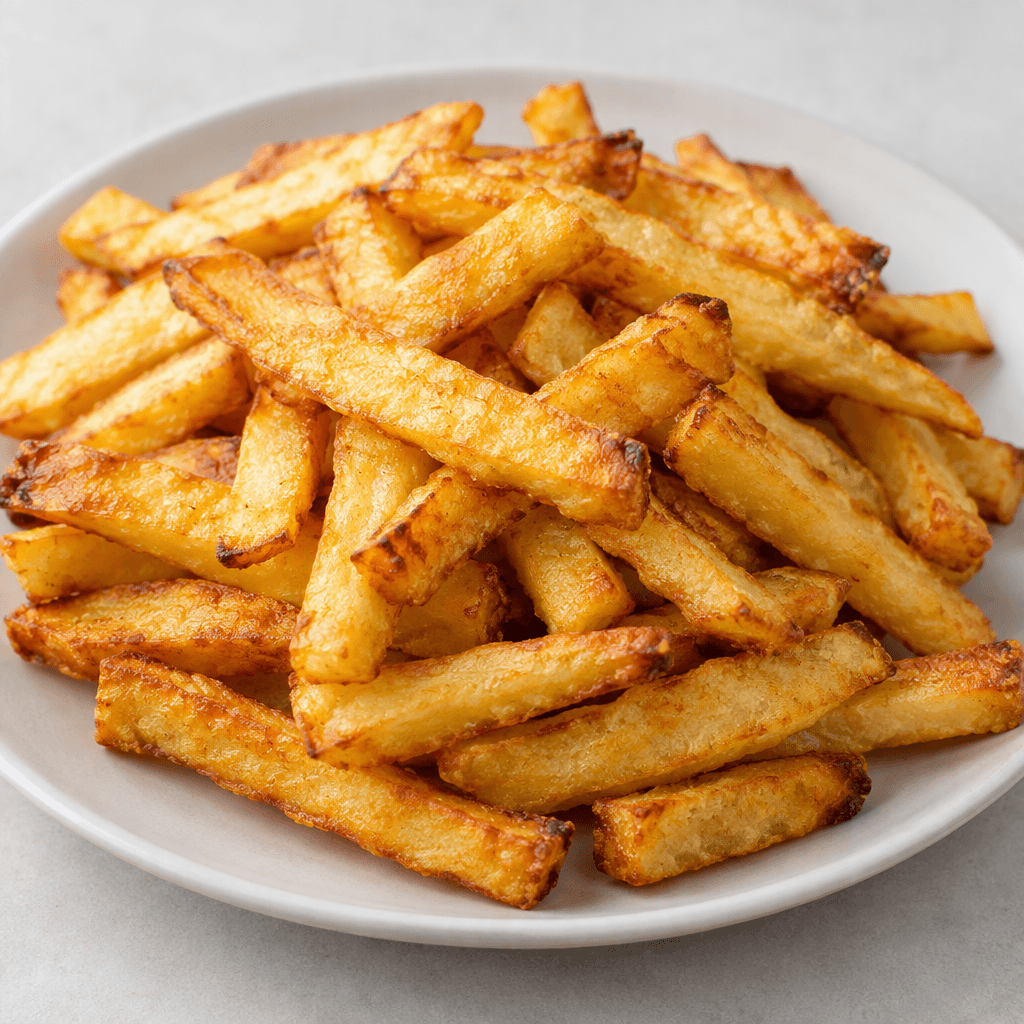
French Fries (Oil Fried) Calories
Oil-fried potato fries, high in calories and fat
In season: Spring · Summer · Autumn · Winter
CALORIES
GI
POTASSIUM
FIBER
Quick answer
100 g of French Fries (Oil Fried) has 312 calories. It contains 41.4 g of carbs, 3.4 g of protein, 15 g of fat and 3.8 g of fiber. Its 0.1 mg of Copper covers 14% of the Daily Value. Its glycemic index is 75 (high), so it raises blood sugar quickly.
What is French Fries (Oil Fried)?
French fries (oil fried) are potatoes cut into batons or wedges and cooked in hot oil until golden and crisp outside, with a tender centre. Their history is often linked to Belgium and France, and they have become a familiar side dish around the world.
They’re commonly served alongside burgers, sandwiches or grilled food, or enjoyed as a snack with ketchup and other dips. The crisp, savoury exterior contrasts with the soft potato inside. Because they’re fried, they’re relatively high in energy and fat: a 100 g serving provides 312 calories and 15 g of fat. For a lighter plate, try a smaller portion with a fresh salad, or bake the potatoes with less oil.
French Fries (Oil Fried) Nutrition Facts
Selected: 100 g
312
KCAL / 100G
Carbs
41.4g
· 15% DV
Protein
3.4g
· 7% DV
Fat
15g
· 19% DV
Fiber
3.8g
· 14% DV
DV is the share of the daily value covered, on a 2,000 kcal reference diet.
Calories come from: Carbs 53% · Protein 4% · Fat 43%
French Fries (Oil Fried) Vitamins & Minerals
Vitamins
B6
0.22mg · 13% DV
B3
1.6mg · 10% DV
Vitamin E
1.4mg · 9% DV
B1
0.09mg · 8% DV
Minerals
Potassium ⭐
429mg · 13% DV
Sodium
210mg · 9% DV
Phosphorus
57mg · 8% DV
Iron
1mg · 6% DV
How Nutritious Is French Fries (Oil Fried)?
Nutrient density
Low
How many vitamins, minerals and how much fiber this food carries per calorie. A high score means a lot of nutrition for few calories.
Satiety score
Low
An EatBetter score computed from fiber, protein and calorie density. A high score means staying full longer on the same calories.
Both scores are calculated per 100 g and do not change with the selected portion. The satiety score is EatBetter's own calculation, not a clinical measure.
French Fries (Oil Fried) Glycemic Index
GLYCEMIC INDEX
GLYCEMIC LOAD
Accounts for portion size — a more realistic measure than GI alone.
How to Burn Off French Fries (Oil Fried)
To burn the 312 calories in 100 g:
🚶
Walking (5 km/h)
🏃
Running (8 km/h)
🚴
Cycling
🏊
Swimming
Times are calculated with the MET equation for a 70 kg adult. Actual burn varies with your weight, age and pace.
Is French Fries (Oil Fried) Processed?
NOVA 3
Processed
1. Unprocessed
2. Minimally Processed
3. Processed
4. Ultra-Processed
NOVA classifies foods into 4 groups by industrial processing. NOVA 1 (unprocessed) is the healthiest.
Does French Fries (Oil Fried) Contain Allergens?
No known major allergens
Which Diets Is French Fries (Oil Fried) Good For?
Vegan
✓ Suitable
Vegetarian
✓ Suitable
Gluten-Free
— Not suitable
Dairy-Free
— Not suitable
Mediterranean
— Not suitable
Paleo
— Not suitable
Whole30
— Not suitable
DASH
— Not suitable
Keto
— Not suitable
Low FODMAP
— Not suitable
French Fries (Oil Fried) Fat Profile
SATURATED
2.3g
MONOUNSATURATED
6.1g
POLYUNSATURATED
4.2g
Omega 6:3 ratio 80:1
Above the ideal 4:1 (80:1).
Compare French Fries (Oil Fried)
Foods Similar to French Fries (Oil Fried)
Frequently Asked Questions About French Fries (Oil Fried)
How do you make oil-fried French fries crispy?
For crispy oil-fried French fries, cut the potatoes evenly, rinse off surface starch, and dry them thoroughly before frying. Cook them in hot oil without crowding the pan, then drain in a single layer so trapped steam does not soften the crust.
Why do oil-fried French fries turn soggy?
Oil-fried French fries often turn soggy when the oil is not hot enough, the potatoes are wet, or too many fries are added at once. Piling cooked fries together also traps steam, so spread them out after frying.
What potatoes are best for oil-fried French fries?
High-starch potatoes are usually best for oil-fried French fries because they develop a crisp outside and a fluffy center. Russet potatoes are a common choice in the United States; in other regions, look for potatoes sold specifically as suitable for frying.
Should you soak potatoes before making oil-fried French fries?
Soaking is optional, but rinsing or soaking cut potatoes in cold water removes some surface starch and can help oil-fried French fries crisp up. Dry the potatoes thoroughly before they go into the oil, since water can cause splattering and interfere with browning.
Should you double-fry oil-fried French fries?
Double-frying can make oil-fried French fries especially crisp. Fry the potatoes once until tender but not deeply browned, let them rest, then fry them again until golden and crisp. Avoid leaving the potatoes unattended while they cook.
How do you stop oil-fried French fries from absorbing too much oil?
To limit oil absorption, dry the potatoes well, fry them in sufficiently hot oil, and cook in small batches. Drain the finished oil-fried French fries on a rack or absorbent paper in a single layer rather than leaving them piled in a bowl.
Can you make oil-fried French fries in an air fryer?
Yes, but fries made in an air fryer are not technically oil-fried French fries because they cook with circulating hot air and much less oil. Toss cut potatoes lightly with oil, arrange them in a single layer, and shake or turn them during cooking.
How do you reheat oil-fried French fries so they stay crispy?
Reheat oil-fried French fries in an oven or air fryer, spread out in a single layer, until hot and crisp. A microwave is convenient but tends to make fries soft. Avoid reheating them repeatedly, which further reduces their texture.
Can you freeze oil-fried French fries?
Yes, you can freeze cooked oil-fried French fries, although they may lose some crispness. Cool them completely, freeze them spread apart on a tray, then transfer them to a sealed freezer bag. Reheat from frozen in an oven or air fryer.
Are oil-fried French fries bad for you?
Oil-fried French fries can fit into a varied diet, but eating them frequently or in large portions adds a substantial amount of fat to meals. Having them occasionally and pairing them with vegetables or another less-fried option makes for a more balanced plate.
Have another question about French Fries (Oil Fried)?
Ask the AI nutrition coach — calories, portions, alternatives and more, answered in seconds in the app.

Scan calories with your camera
Instant AI nutrition analysis

Nutrition data compiled from USDA FoodData Central and scientific sources.