

Ready & Packaged Foods
All →Vegetables & Legumes
All →Desserts & Confectionery
All →Meat & Protein
All →Grains & Bakery
All →Beverages
All →Milk & Dairy
All →

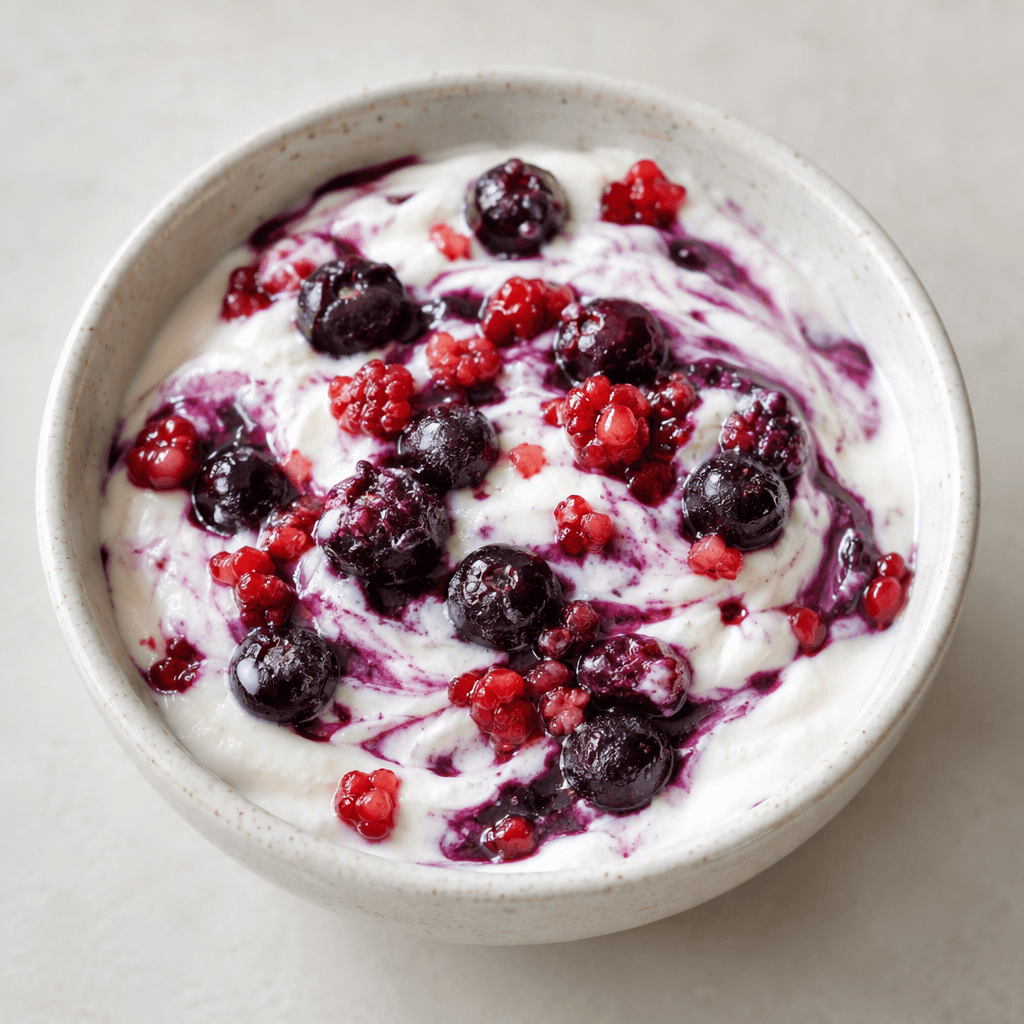
Forest Fruit Probiotic Yogurt Calories
Probiotic, forest fruit, source of protein and calcium
In season: Spring · Summer · Autumn · Winter
CALORIES
GI
POTASSIUM
FIBER
Quick answer
1 cup (medium) of Forest Fruit Probiotic Yogurt (150 g) has 128 calories. That works out to 85 calories per 100 g. It contains 18 g of carbs, 6.3 g of protein, 3.3 g of fat and 1.7 g of fiber. Its 0.7 µg of B12 covers 28% of the Daily Value. Its glycemic index is 45 (medium), so it raises blood sugar at a moderate pace.
What is Forest Fruit Probiotic Yogurt?
Forest Fruit Probiotic Yogurt is a cultured dairy yogurt with a berry flavour, often made with fruit pieces or a dark fruit swirl and sold in individual cups. Its thick, smooth texture balances yogurt’s gentle tang with a sweet-tart taste reminiscent of berries such as blackberry and blueberry.
It works as a quick breakfast or snack, eaten on its own or spooned over granola, oats or fresh fruit. The yogurt provides protein and calcium; one 100 g serving has 4.2 g of protein. Flavoured varieties can be sweeter than plain yogurt, so combine it with unsweetened yogurt or oats if you prefer a less-sweet bowl.
Forest Fruit Probiotic Yogurt Nutrition Facts
Selected: 100 g
85
KCAL / 100G
Carbs
12g
· 4% DV
Protein
4.2g
· 8% DV
Fat
2.2g
· 3% DV
Fiber
1.1g
· 4% DV
DV is the share of the daily value covered, on a 2,000 kcal reference diet.
Calories come from: Carbs 57% · Protein 20% · Fat 23%
Forest Fruit Probiotic Yogurt Vitamins & Minerals
Vitamins
B12
0.45µg · 19% DV
B2
0.18mg · 14% DV
B5
0.48mg · 10% DV
Biotin
2.2µg · 7% DV
Minerals
Phosphorus
92mg · 13% DV
Calcium
120mg · 12% DV
Zinc
1mg · 9% DV
Iodine
7µg · 5% DV
How Nutritious Is Forest Fruit Probiotic Yogurt?
Nutrient density
Medium
How many vitamins, minerals and how much fiber this food carries per calorie. A high score means a lot of nutrition for few calories.
Satiety score
Medium
An EatBetter score computed from fiber, protein and calorie density. A high score means staying full longer on the same calories.
Both scores are calculated per 100 g and do not change with the selected portion. The satiety score is EatBetter's own calculation, not a clinical measure.
Forest Fruit Probiotic Yogurt Glycemic Index
GLYCEMIC INDEX
GLYCEMIC LOAD
Accounts for portion size — a more realistic measure than GI alone.
How to Burn Off Forest Fruit Probiotic Yogurt
To burn the 85 calories in 100 g:
🚶
Walking (5 km/h)
🏃
Running (8 km/h)
🚴
Cycling
🏊
Swimming
Times are calculated with the MET equation for a 70 kg adult. Actual burn varies with your weight, age and pace.
Is Forest Fruit Probiotic Yogurt Processed?
NOVA 3
Processed
1. Unprocessed
2. Minimally Processed
3. Processed
4. Ultra-Processed
NOVA classifies foods into 4 groups by industrial processing. NOVA 1 (unprocessed) is the healthiest.
Does Forest Fruit Probiotic Yogurt Contain Allergens?
Contains these allergens:
Which Diets Is Forest Fruit Probiotic Yogurt Good For?
Vegan
— Not suitable
Vegetarian
✓ Suitable
Gluten-Free
— Not suitable
Dairy-Free
— Not suitable
Mediterranean
✓ Suitable
Paleo
— Not suitable
Whole30
— Not suitable
DASH
— Not suitable
Keto
— Not suitable
Low FODMAP
— Not suitable
Forest Fruit Probiotic Yogurt Fat Profile
SATURATED
1.3g
MONOUNSATURATED
0.5g
POLYUNSATURATED
0.09g
Omega 6:3 ratio 2:1
Below the ideal 4:1 — a good omega balance.
Compare Forest Fruit Probiotic Yogurt
Foods Similar to Forest Fruit Probiotic Yogurt
Frequently Asked Questions About Forest Fruit Probiotic Yogurt
Does Forest Fruit Probiotic Yogurt contain live cultures?
Usually, yes, if the product has not been heat-treated after fermentation. Processing can affect whether the cultures remain alive, so a “probiotic” description alone does not tell you which strains or how many viable cultures are present.
Is Forest Fruit Probiotic Yogurt healthier than regular yogurt?
Not automatically. Forest Fruit Probiotic Yogurt may provide specific live cultures, but it can also contain added sugar from its fruit preparation. Compare its ingredients and culture information with plain yogurt rather than assuming the probiotic version is better for every purpose.
Does Forest Fruit Probiotic Yogurt have added sugar?
Many versions do, because fruit preparations are often sweetened in addition to containing naturally occurring fruit sugars. The amount varies by product; check the ingredient list for sugar, syrup, or sweetened fruit rather than relying on the forest-fruit flavor name.
Can Forest Fruit Probiotic Yogurt help with constipation?
It may help some people, but Forest Fruit Probiotic Yogurt is not a dependable treatment for constipation. Effects vary with the probiotic strains, while fluids and fibre-rich foods also matter; persistent constipation should be discussed with a healthcare professional.
Does the fruit in Forest Fruit Probiotic Yogurt reduce its probiotic benefits?
No, fruit itself does not necessarily remove probiotic cultures. The bigger factor is whether the finished Forest Fruit Probiotic Yogurt is heat-treated and how it is stored; heat after fermentation can reduce the number of live cultures.
Can Forest Fruit Probiotic Yogurt be used in smoothies?
Yes, Forest Fruit Probiotic Yogurt works well in smoothies and adds a tangy, berry flavour. Blend it with fresh or frozen fruit, and avoid heating the mixture if you want to preserve as many of its live cultures as possible.
Is Forest Fruit Probiotic Yogurt a good snack before bed?
Yes, you can have Forest Fruit Probiotic Yogurt before bed if it sits comfortably with you. Its fruit preparation may be sweetened, so a less sweet option can be preferable if you are limiting added sugars in the evening.
How long does Forest Fruit Probiotic Yogurt last after opening?
Keep opened Forest Fruit Probiotic Yogurt sealed in the refrigerator and follow the storage instructions on its package. Use a clean spoon, return it to the fridge promptly, and discard it if its smell, appearance, or texture changes.
Can you make Forest Fruit Probiotic Yogurt at home?
Yes. Ferment milk using a live-culture yogurt starter, chill the finished yogurt, then stir in prepared forest fruit. Adding the fruit after fermentation helps preserve its fresh flavour and avoids interfering with the starter cultures.
Can Forest Fruit Probiotic Yogurt be frozen?
Yes, but freezing can make Forest Fruit Probiotic Yogurt watery or grainy after thawing, and may reduce some live cultures. Thaw it in the refrigerator, stir it well, and do not refreeze it.
Have another question about Forest Fruit Probiotic Yogurt?
Ask the AI nutrition coach — calories, portions, alternatives and more, answered in seconds in the app.

Scan calories with your camera
Instant AI nutrition analysis

Nutrition data compiled from USDA FoodData Central and scientific sources.