

Ready & Packaged Foods
All →Vegetables & Legumes
All →Desserts & Confectionery
All →Meat & Protein
All →Grains & Bakery
All →Beverages
All →Milk & Dairy
All →

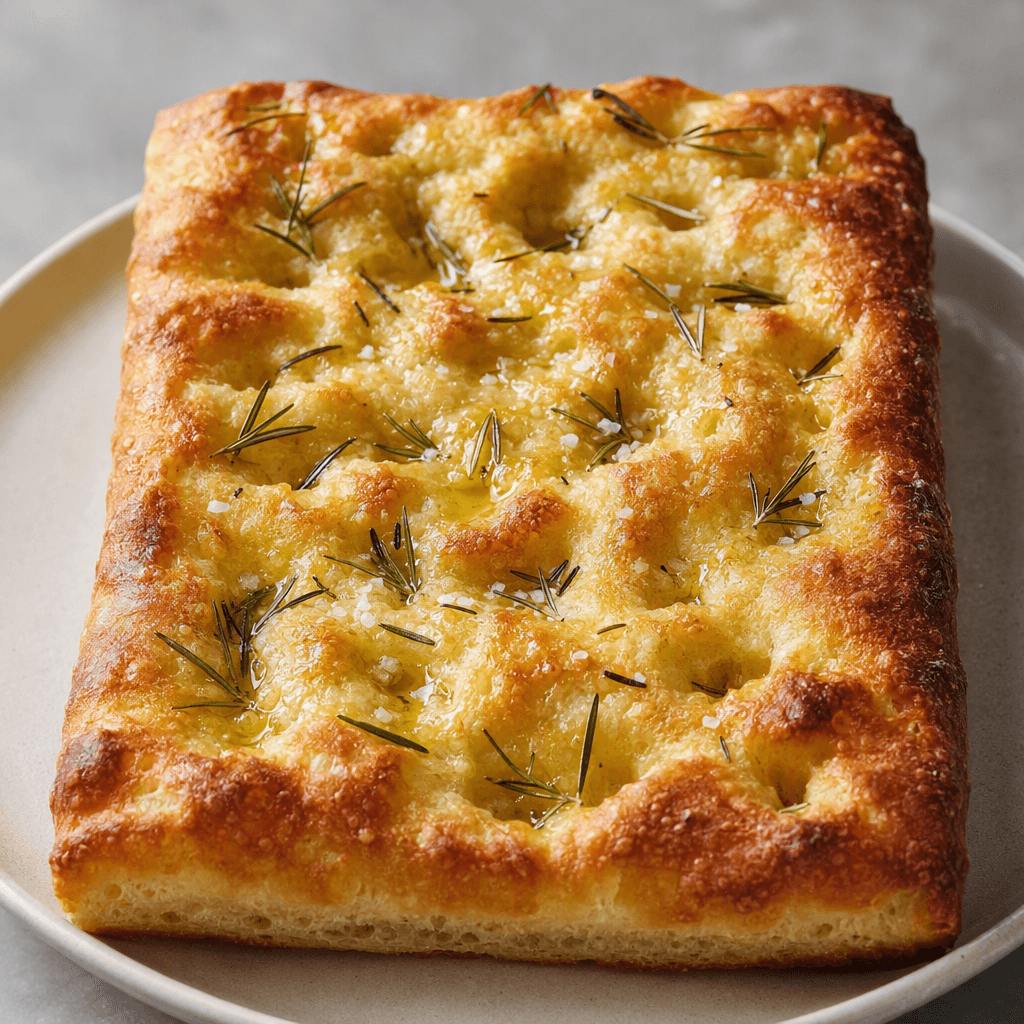
Focaccia Calories
Olive oil-rich, soft Italian bread
In season: Spring · Summer · Autumn · Winter
CALORIES
GI
POTASSIUM
FIBER
Quick answer
1 slice (medium) of Focaccia (60 g) has 162 calories. That works out to 270 calories per 100 g. It contains 28.8 g of carbs, 4.9 g of protein, 3.3 g of fat and 1.3 g of fiber. Its 342 mg of Sodium covers 15% of the Daily Value. Its glycemic index is 70 (high), so it raises blood sugar quickly.
What is Focaccia?
Focaccia is an Italian yeast bread made with flour, water and olive oil. Its dough is pressed into a shallow pan, then dimpled so oil settles into the surface; rosemary and coarse salt are classic toppings, though regional versions may include other herbs or additions.
The crumb is soft and airy, with a lightly crisp, golden crust. In Italy it is eaten as a snack, alongside a meal, or split to make a sandwich. Elsewhere, it works well with soup, salad or a spread of cheeses, and can stand in for ordinary table bread. Olive oil gives it a richer character, while most of its energy comes from carbohydrates; pair a slice with vegetables or a protein-rich topping for a more balanced meal.
Focaccia Nutrition Facts
Selected: 100 g
270
KCAL / 100G
Carbs
48g
· 17% DV
Protein
8.2g
· 16% DV
Fat
5.5g
· 7% DV
Fiber
2.2g
· 8% DV
DV is the share of the daily value covered, on a 2,000 kcal reference diet.
Calories come from: Carbs 70% · Protein 12% · Fat 18%
Focaccia Vitamins & Minerals
Vitamins
B1
0.22mg · 18% DV
B3
2.2mg · 14% DV
Folate
30µg · 8% DV
B2
0.09mg · 7% DV
Minerals
Sodium
570mg · 25% DV
Selenium
10µg · 18% DV
Iron
2mg · 11% DV
Phosphorus
70mg · 10% DV
How Nutritious Is Focaccia?
Nutrient density
Low
How many vitamins, minerals and how much fiber this food carries per calorie. A high score means a lot of nutrition for few calories.
Satiety score
Medium
An EatBetter score computed from fiber, protein and calorie density. A high score means staying full longer on the same calories.
Both scores are calculated per 100 g and do not change with the selected portion. The satiety score is EatBetter's own calculation, not a clinical measure.
Focaccia Glycemic Index
GLYCEMIC INDEX
GLYCEMIC LOAD
Accounts for portion size — a more realistic measure than GI alone.
How to Burn Off Focaccia
To burn the 270 calories in 100 g:
🚶
Walking (5 km/h)
🏃
Running (8 km/h)
🚴
Cycling
🏊
Swimming
Times are calculated with the MET equation for a 70 kg adult. Actual burn varies with your weight, age and pace.
Is Focaccia Processed?
NOVA 3
Processed
1. Unprocessed
2. Minimally Processed
3. Processed
4. Ultra-Processed
NOVA classifies foods into 4 groups by industrial processing. NOVA 1 (unprocessed) is the healthiest.
Does Focaccia Contain Allergens?
Contains these allergens:
Which Diets Is Focaccia Good For?
Vegan
— Not suitable
Vegetarian
✓ Suitable
Gluten-Free
— Not suitable
Dairy-Free
— Not suitable
Mediterranean
✓ Suitable
Paleo
— Not suitable
Whole30
— Not suitable
DASH
— Not suitable
Keto
— Not suitable
Low FODMAP
— Not suitable
Focaccia Fat Profile
SATURATED
0.8g
MONOUNSATURATED
3.2g
POLYUNSATURATED
1.1g
Omega 6:3 ratio 30:1
Above the ideal 4:1 (30:1).
Compare Focaccia
Foods Similar to Focaccia
Frequently Asked Questions About Focaccia
What is focaccia?
Focaccia is an Italian yeast-risen flatbread known for its olive-oil-rich dough and dimpled surface. It is often topped with rosemary and coarse salt, though versions with vegetables, olives, or other herbs are also common.
How do you pronounce focaccia?
Focaccia is commonly pronounced “foh-KAH-chuh,” with the stress on the middle syllable. The Italian spelling has two c’s, which together make a “ch” sound before the i.
Is focaccia the same as pizza?
No. Focaccia is usually thicker and more bread-like, and it is often topped simply with olive oil, herbs, and salt. Pizza commonly has a thinner base with sauce and more substantial toppings, although the dough styles can overlap.
Why does focaccia have dimples?
The dimples are pressed into focaccia dough with fingertips before baking. They help hold olive oil and toppings on the surface and give the bread its characteristic texture and appearance.
What toppings are traditionally used on focaccia?
Rosemary, olive oil, and coarse salt are classic focaccia toppings. Depending on the region and recipe, focaccia may also include olives, cherry tomatoes, onions, or other herbs; toppings are usually pressed into the dimples.
How is focaccia traditionally served?
Focaccia is served as bread alongside a meal, especially with soup, salad, or antipasti, and it can also be eaten on its own. In Italy, some regional versions are enjoyed as a snack or street food.
Can you make focaccia without kneading it?
Yes. Focaccia dough can be made with little or no kneading because resting allows the flour to hydrate and the dough to develop structure. Handle it gently when transferring it to the pan so its airy texture is not lost.
How do you keep focaccia from drying out?
Let focaccia cool completely, then keep it in an airtight container at room temperature. Avoid leaving it exposed to air, which dries the crumb; for longer storage, freeze it rather than keeping it in the refrigerator.
Can focaccia be used to make sandwiches?
Yes. Slice focaccia horizontally and fill it with ingredients such as roasted vegetables, cheese, or cured meats. Its thick, flavorful crumb works well for sandwiches, though a very oily or heavily topped piece may be easier to eat as an open sandwich.
How do you reheat focaccia?
Reheat focaccia in an oven until warmed through; this helps revive its lightly crisp exterior better than a microwave. If it has been frozen, let it thaw first or warm it directly in the oven until soft in the center.
Have another question about Focaccia?
Ask the AI nutrition coach — calories, portions, alternatives and more, answered in seconds in the app.

Scan calories with your camera
Instant AI nutrition analysis

Nutrition data compiled from USDA FoodData Central and scientific sources.