

Ready & Packaged Foods
All →Vegetables & Legumes
All →Desserts & Confectionery
All →Meat & Protein
All →Grains & Bakery
All →Beverages
All →Milk & Dairy
All →

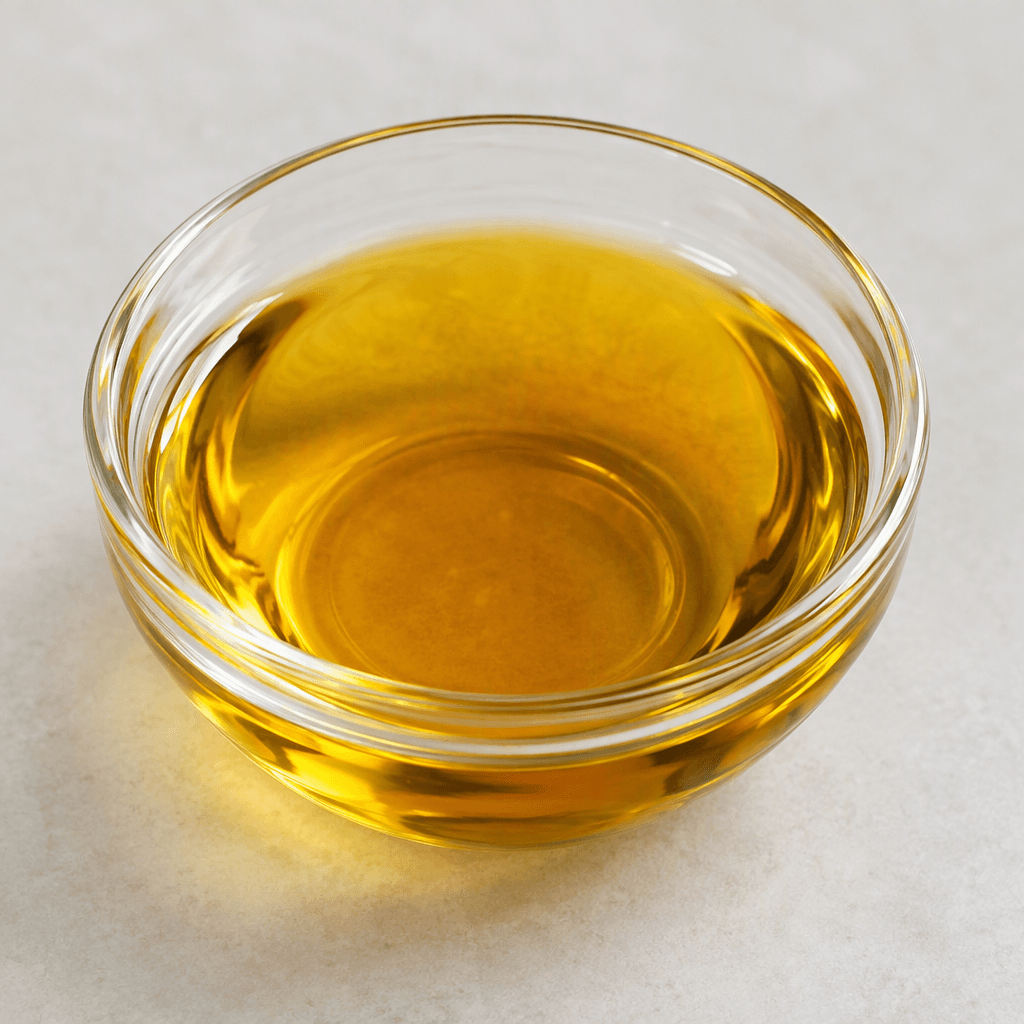
Flaxseed Oil Calories
Rich in omega-3, plant-based oil, vegan
In season: Spring · Summer · Autumn · Winter
CALORIES
GI
POTASSIUM
FIBER
Quick answer
1 tablespoon (medium) of Flaxseed Oil (14 g) has 119 calories. That works out to 884 calories per 100 g. It contains 0 g of carbs, 0 g of protein, 13.5 g of fat and 0 g of fiber. Its 0.7 mg of Vitamin E covers 5% of the Daily Value. Its glycemic index is 0 (low), so it raises blood sugar slowly.
What is Flaxseed Oil?
Flaxseed oil is pressed from mature flax seeds and has a clear, golden-amber appearance. Its flavour is mild, with a lightly nutty, grassy note, and it is usually used cold because heating can dull its delicate taste. Stir it into salad dressings, drizzle it over cooked vegetables once they have cooled, or add a little to porridge or a smoothie.
It is entirely fat and provides plant-based omega-3, so even a small amount makes a dish richer. It is not a good choice for frying. Keep the bottle away from heat and light, and refrigerate it after opening to help preserve its freshness.
Flaxseed Oil Nutrition Facts
Selected: 100 g
884
KCAL / 100G
Carbs
0g
· 0% DV
Protein
0g
· 0% DV
Fat
100g
· 128% DV
Fiber
0g
· 0% DV
DV is the share of the daily value covered, on a 2,000 kcal reference diet.
Calories come from: Carbs 0% · Protein 0% · Fat 100%
Flaxseed Oil Vitamins & Minerals
Vitamins
Vitamin E
5.3mg · 35% DV
Vitamin K
9.3µg · 8% DV
Vitamin A
0µg · 0% DV
B1
0mg · 0% DV
Minerals
Calcium
1mg · 0% DV
Iron
0mg · 0% DV
Magnesium
0mg · 0% DV
Zinc
0mg · 0% DV
How Nutritious Is Flaxseed Oil?
Nutrient density
Medium
How many vitamins, minerals and how much fiber this food carries per calorie. A high score means a lot of nutrition for few calories.
Satiety score
Low
An EatBetter score computed from fiber, protein and calorie density. A high score means staying full longer on the same calories.
Both scores are calculated per 100 g and do not change with the selected portion. The satiety score is EatBetter's own calculation, not a clinical measure.
Flaxseed Oil Glycemic Index
GLYCEMIC INDEX
GLYCEMIC LOAD
Accounts for portion size — a more realistic measure than GI alone.
How to Burn Off Flaxseed Oil
To burn the 884 calories in 100 g:
🚶
Walking (5 km/h)
🏃
Running (8 km/h)
🚴
Cycling
🏊
Swimming
Times are calculated with the MET equation for a 70 kg adult. Actual burn varies with your weight, age and pace.
Is Flaxseed Oil Processed?
NOVA 2
Minimally Processed
1. Unprocessed
2. Minimally Processed
3. Processed
4. Ultra-Processed
NOVA classifies foods into 4 groups by industrial processing. NOVA 1 (unprocessed) is the healthiest.
Does Flaxseed Oil Contain Allergens?
No known major allergens
Which Diets Is Flaxseed Oil Good For?
Vegan
✓ Suitable
Vegetarian
✓ Suitable
Gluten-Free
✓ Suitable
Dairy-Free
— Not suitable
Mediterranean
✓ Suitable
Paleo
✓ Suitable
Whole30
— Not suitable
DASH
— Not suitable
Keto
✓ Suitable
Low FODMAP
— Not suitable
Flaxseed Oil Fat Profile
SATURATED
9g
MONOUNSATURATED
19g
POLYUNSATURATED
68g
Omega 6:3 ratio 0.2:1
Below the ideal 4:1 — a good omega balance.
Compare Flaxseed Oil
Foods Similar to Flaxseed Oil
Frequently Asked Questions About Flaxseed Oil
Is flaxseed oil the same as linseed oil?
Yes, flaxseed oil and linseed oil come from the same plant. The name “linseed oil” can also refer to products intended for paints or wood treatment, so only use oil clearly sold as food-grade for eating.
Can you cook with flaxseed oil?
Use flaxseed oil cold or add it after cooking, rather than heating it. Its delicate fats break down at high temperatures, and it has a low smoke point, so it is not a good choice for frying.
How should you store flaxseed oil after opening?
Keep flaxseed oil tightly sealed in the refrigerator after opening, away from light and heat. Refrigeration slows oxidation, which can quickly make this delicate oil taste unpleasant.
Does flaxseed oil contain omega-3?
Yes, flaxseed oil is rich in ALA, a plant-based omega-3 fatty acid. It does not naturally provide the EPA and DHA found in oily fish, and the body converts only some ALA into those fats.
Can flaxseed oil replace fish oil?
Not as a direct equivalent. Flaxseed oil provides ALA, while fish oil supplies EPA and DHA; the body converts ALA into EPA and DHA only to a limited extent. The best choice depends on why you take an omega-3 product.
Is flaxseed oil as nutritious as ground flaxseed?
No. Flaxseed oil contains the seed’s fat, including ALA, but lacks most of its fibre and lignans. Ground flaxseed is the better choice if you want those components as well as the oil.
Does flaxseed oil help with constipation?
Flaxseed oil is not a reliable fibre-based remedy for constipation because the oil contains no fibre. Ground flaxseed provides fibre; increase it gradually and drink enough fluids to help it work comfortably.
Does flaxseed oil help with weight loss?
No, flaxseed oil does not cause weight loss by itself. It is energy-dense, so adding it to your usual meals can increase overall intake; using a measured amount in place of another fat is more practical.
How can you tell if flaxseed oil has gone rancid?
Rancid flaxseed oil often smells sharp, stale, or paint-like and tastes distinctly bitter. Fresh oil has a mild, characteristic flavour; discard it if the smell or taste has turned unpleasant.
Is flaxseed oil safe during pregnancy?
Small amounts used as food are different from concentrated supplements. Because pregnancy guidance for supplements can vary with personal circumstances, ask your healthcare professional before taking flaxseed oil in supplement-sized amounts.
Have another question about Flaxseed Oil?
Ask the AI nutrition coach — calories, portions, alternatives and more, answered in seconds in the app.

Scan calories with your camera
Instant AI nutrition analysis

Nutrition data compiled from USDA FoodData Central and scientific sources.