

Ready & Packaged Foods
All →Vegetables & Legumes
All →Desserts & Confectionery
All →Meat & Protein
All →Grains & Bakery
All →Beverages
All →Milk & Dairy
All →

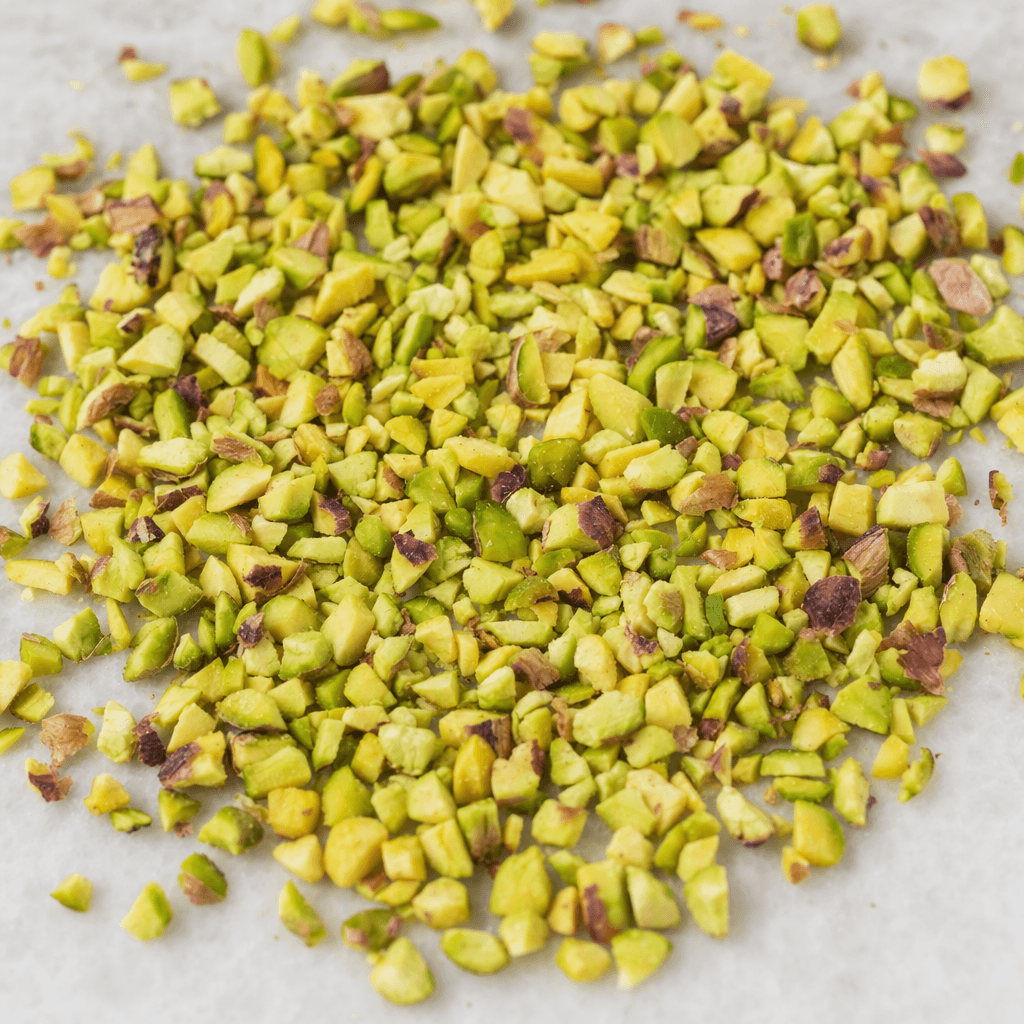
Pistachio pieces Calories
Source of protein and healthy fats, rich in fiber, contains vitamins and minerals
In season: Autumn · Winter
CALORIES
GI
POTASSIUM
FIBER
Quick answer
1 tablespoon (medium) of Pistachio pieces (12 g) has 67 calories. That works out to 560 calories per 100 g. It contains 3.3 g of carbs, 2.4 g of protein, 5.4 g of fat and 1.2 g of fiber. Its 0.2 mg of Copper covers 17% of the Daily Value. Its glycemic index is 15 (low), so it raises blood sugar slowly.
What is Pistachio pieces?
Pistachio pieces are kernels of the pistachio tree broken or chopped into small bits. Their vivid green colour and distinctive, gently sweet flavour make them a familiar ingredient in sweets from Turkey and the Middle East. Depending on how they are prepared, they may be raw or roasted; the pieces usually add a pleasant crunch.
Sprinkle them over baklava, ice cream, cakes or porridge, or use them to finish salads and savoury dishes. Pistachio pieces provide protein and fibre alongside substantial amounts of fat, so a small spoonful brings plenty of flavour and texture. For an easy everyday pairing, try them with yoghurt and fruit, or add just a little to a dessert as a garnish.
Pistachio pieces Nutrition Facts
Selected: 100 g
560
KCAL / 100G
Carbs
27.5g
· 10% DV
Protein
20.3g
· 41% DV
Fat
45.4g
· 58% DV
Fiber
10.3g
· 37% DV
DV is the share of the daily value covered, on a 2,000 kcal reference diet.
Calories come from: Carbs 18% · Protein 14% · Fat 68%
Pistachio pieces Vitamins & Minerals
Vitamins
B6
1.7mg · 100% DV
B1
0.87mg · 73% DV
Vitamin E
2.3mg · 15% DV
Folate
51µg · 13% DV
Minerals
Copper
1mg · 111% DV
Phosphorus
490mg · 70% DV
Manganese
1mg · 43% DV
Potassium ⭐
1020mg · 30% DV
How Nutritious Is Pistachio pieces?
Nutrient density
Very high
How many vitamins, minerals and how much fiber this food carries per calorie. A high score means a lot of nutrition for few calories.
Satiety score
High
An EatBetter score computed from fiber, protein and calorie density. A high score means staying full longer on the same calories.
Both scores are calculated per 100 g and do not change with the selected portion. The satiety score is EatBetter's own calculation, not a clinical measure.
Pistachio pieces Glycemic Index
GLYCEMIC INDEX
GLYCEMIC LOAD
Accounts for portion size — a more realistic measure than GI alone.
How to Burn Off Pistachio pieces
To burn the 560 calories in 100 g:
🚶
Walking (5 km/h)
🏃
Running (8 km/h)
🚴
Cycling
🏊
Swimming
Times are calculated with the MET equation for a 70 kg adult. Actual burn varies with your weight, age and pace.
Is Pistachio pieces Processed?
NOVA 2
Minimally Processed
1. Unprocessed
2. Minimally Processed
3. Processed
4. Ultra-Processed
NOVA classifies foods into 4 groups by industrial processing. NOVA 1 (unprocessed) is the healthiest.
Does Pistachio pieces Contain Allergens?
Contains these allergens:
Which Diets Is Pistachio pieces Good For?
Vegan
✓ Suitable
Vegetarian
✓ Suitable
Gluten-Free
✓ Suitable
Dairy-Free
— Not suitable
Mediterranean
✓ Suitable
Paleo
✓ Suitable
Whole30
— Not suitable
DASH
— Not suitable
Keto
✓ Suitable
Low FODMAP
— Not suitable
Pistachio pieces Fat Profile
SATURATED
5.6g
MONOUNSATURATED
23.3g
POLYUNSATURATED
13.7g
Omega 6:3 ratio 56.3:1
Above the ideal 4:1 (56.3:1).
Compare Pistachio pieces
Foods Similar to Pistachio pieces
Frequently Asked Questions About Pistachio pieces
What can you use pistachio pieces for?
Pistachio pieces work well as a crunchy topping for salads, oatmeal, yogurt, and desserts. Add them just before serving when you want them to stay crisp, or stir them into cookie and cake batter for texture throughout.
Can pistachio pieces be used in pesto?
Yes, pistachio pieces can be blended into pesto in place of some or all of the usual nuts. They make a coarser pesto if pulsed briefly; blend longer with oil and herbs for a smoother sauce.
How do you keep pistachio pieces green in desserts?
Add pistachio pieces as a finishing garnish to help preserve their green color. Long exposure to heat can dull the color, so for cakes and pastries, scatter them on after baking rather than baking them on top.
How should you store pistachio pieces after opening?
Keep pistachio pieces in a tightly sealed container in a cool, dry, dark place. Their natural oils can pick up odors and turn stale, so avoid storing them near heat, sunlight, or strongly scented foods.
Can you freeze pistachio pieces?
Yes, pistachio pieces freeze well when sealed in an airtight, freezer-safe container. Take out only what you need and let it come to room temperature before using; keeping the container closed while it warms helps limit condensation.
Can you grind pistachio pieces into pistachio butter?
Yes, you can grind pistachio pieces into pistachio butter, though a small quantity may not blend smoothly in a large food processor. Process them until the oils release, scraping down the sides as needed.
Should you toast pistachio pieces before baking?
You do not have to toast pistachio pieces before baking, but a brief dry-toasting can deepen their nutty flavor. Cool them before adding to batter, and watch closely because small pieces can scorch quickly.
Can pistachio pieces replace whole pistachios in a recipe?
Yes, pistachio pieces can replace chopped whole pistachios in most recipes. They are less suitable when the recipe depends on whole nuts for appearance or a distinct bite, and small pieces may distribute more evenly through batters.
Are the skins on pistachio pieces safe to eat?
Yes, the thin reddish-brown skin on pistachio pieces is edible and does not need to be removed. It may add a slightly different texture, but it is fine to leave on when using the pieces in cooking or as a topping.
Do pistachio pieces help you feel full?
They can help make a snack or meal more filling because pistachio pieces provide fiber, protein, and fat. Add them to fruit or yogurt for more staying power, while keeping in mind that toppings can add up quickly.
Have another question about Pistachio pieces?
Ask the AI nutrition coach — calories, portions, alternatives and more, answered in seconds in the app.

Scan calories with your camera
Instant AI nutrition analysis

Nutrition data compiled from USDA FoodData Central and scientific sources.