

Ready & Packaged Foods
All →Vegetables & Legumes
All →Desserts & Confectionery
All →Meat & Protein
All →Grains & Bakery
All →Beverages
All →Milk & Dairy
All →

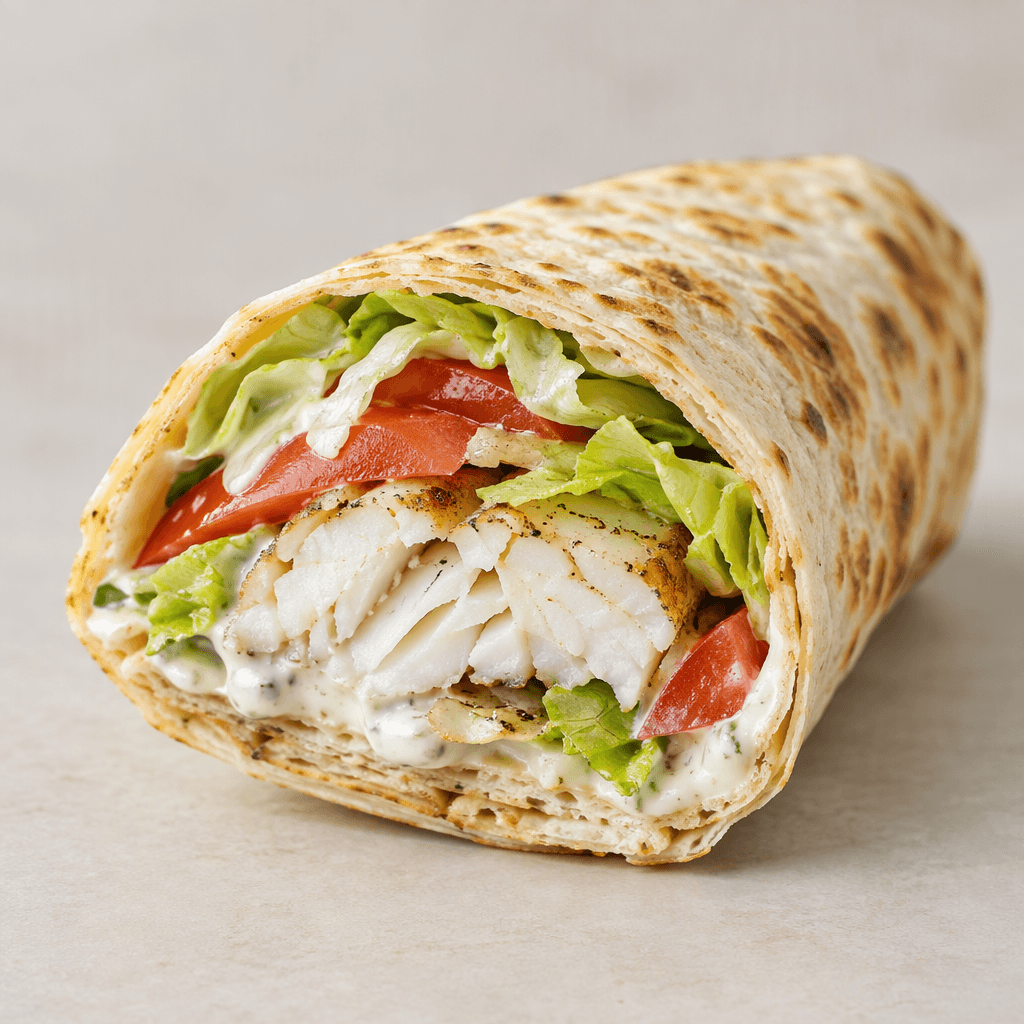
Fish Wrap Calories
Protein and omega-3 source, convenient wrap with vegetables.
In season: Spring · Summer · Autumn · Winter
CALORIES
GI
POTASSIUM
FIBER
Quick answer
1 piece (medium) of Fish Wrap (180 g) has 324 calories. That works out to 180 calories per 100 g. It contains 37.8 g of carbs, 19.8 g of protein, 9.9 g of fat and 4 g of fiber. Its 2 µg of B12 covers 83% of the Daily Value. Its glycemic index is 60 (medium), so it raises blood sugar at a moderate pace.
What is Fish Wrap?
A Fish Wrap puts cooked fish—often flaky white fish—inside soft flatbread with vegetables such as lettuce and tomato, sometimes finished with a creamy sauce. It follows the familiar Turkish-style dürüm format: a filling rolled snugly in bread, with recipes varying by the fish and toppings used.
The lightly toasted bread contrasts with tender fish and crisp vegetables, making it an easy lunch or casual dinner. In Turkey it may be served as a quick meal from a fish shop or street-food counter; elsewhere, it works well as a portable alternative to a sandwich. It provides protein, with 11 g per 100 g, and fish can contribute omega-3 fats. Ask for sauce on the side or add extra salad for a lighter, fresher wrap.
Fish Wrap Nutrition Facts
Selected: 100 g
180
KCAL / 100G
Carbs
21g
· 8% DV
Protein
11g
· 22% DV
Fat
5.5g
· 7% DV
Fiber
2.2g
· 8% DV
DV is the share of the daily value covered, on a 2,000 kcal reference diet.
Calories come from: Carbs 47% · Protein 25% · Fat 28%
Fish Wrap Vitamins & Minerals
Vitamins
B12
1.1µg · 46% DV
B3
2.1mg · 13% DV
B5
0.6mg · 12% DV
B6
0.18mg · 11% DV
Minerals
Selenium
13µg · 24% DV
Sodium
330mg · 14% DV
Phosphorus
95mg · 14% DV
Iodine
18µg · 12% DV
How Nutritious Is Fish Wrap?
Nutrient density
High
How many vitamins, minerals and how much fiber this food carries per calorie. A high score means a lot of nutrition for few calories.
Satiety score
Medium
An EatBetter score computed from fiber, protein and calorie density. A high score means staying full longer on the same calories.
Both scores are calculated per 100 g and do not change with the selected portion. The satiety score is EatBetter's own calculation, not a clinical measure.
Fish Wrap Glycemic Index
GLYCEMIC INDEX
GLYCEMIC LOAD
Accounts for portion size — a more realistic measure than GI alone.
How to Burn Off Fish Wrap
To burn the 180 calories in 100 g:
🚶
Walking (5 km/h)
🏃
Running (8 km/h)
🚴
Cycling
🏊
Swimming
Times are calculated with the MET equation for a 70 kg adult. Actual burn varies with your weight, age and pace.
Is Fish Wrap Processed?
NOVA 3
Processed
1. Unprocessed
2. Minimally Processed
3. Processed
4. Ultra-Processed
NOVA classifies foods into 4 groups by industrial processing. NOVA 1 (unprocessed) is the healthiest.
Does Fish Wrap Contain Allergens?
Contains these allergens:
Which Diets Is Fish Wrap Good For?
Vegan
— Not suitable
Vegetarian
— Not suitable
Gluten-Free
— Not suitable
Dairy-Free
— Not suitable
Mediterranean
✓ Suitable
Paleo
— Not suitable
Whole30
— Not suitable
DASH
— Not suitable
Keto
— Not suitable
Low FODMAP
— Not suitable
Fish Wrap Fat Profile
SATURATED
1.2g
MONOUNSATURATED
2.1g
POLYUNSATURATED
1.1g
Omega 6:3 ratio 0.4:1
Below the ideal 4:1 — a good omega balance.
Compare Fish Wrap
Foods Similar to Fish Wrap
Frequently Asked Questions About Fish Wrap
What fish is best for a fish wrap?
Mild, flaky fish such as cod, haddock, tilapia, or pollock works well in a fish wrap because it pairs easily with vegetables and sauces. Salmon also works if you prefer a richer flavor; remove any bones before assembling the wrap.
How do you cook fish for a fish wrap?
Cook the fish for a fish wrap by baking, pan-searing, or grilling it until opaque and easy to flake. Season it with salt, pepper, and lemon, then break it into large pieces so it stays substantial inside the wrap.
What sauce goes well in a fish wrap?
A fish wrap goes well with lemon-dill yogurt sauce, tartar sauce, or a simple mayonnaise-based sauce. Add the sauce sparingly so it complements the fish without making the flatbread soggy.
How do you stop a fish wrap from getting soggy?
To keep a fish wrap from getting soggy, let cooked fish cool slightly before assembling and keep wet sauces away from the flatbread until serving. Pat watery vegetables dry, and wrap it just before you plan to eat.
Can you make a fish wrap with leftover fish?
Yes, leftover cooked fish can be used in a fish wrap if it has been refrigerated promptly and kept cold. Flake it gently, remove any bones, and warm it only if desired; avoid reheating it repeatedly.
What should you serve with a fish wrap?
Serve a fish wrap with a crunchy salad, roasted vegetables, or a light soup for a simple meal. Slaw and lemon wedges are also good matches, while chips or fries make it a more filling, casual lunch.
Can you freeze a fish wrap?
A fully assembled fish wrap generally does not freeze well because lettuce, tomato, and creamy sauces become watery or limp after thawing. Freeze cooked fish separately instead, then thaw it safely and assemble the wrap with fresh fillings.
Is a fish wrap a healthy meal?
A fish wrap can be a balanced meal when it includes cooked fish and vegetables. Grilled or baked fish and a modest amount of sauce keep it lighter than a version made with battered, fried fish and a heavy dressing.
Can you prepare a fish wrap ahead of time?
You can prepare the fish for a fish wrap ahead of time, but assemble the wrap close to serving so the flatbread stays firm. Store the cooked fish and chopped vegetables separately in the refrigerator, and add sauce at the end.
How is a fish wrap different from a fish taco?
A fish wrap is usually rolled closed in a larger, soft flatbread, while fish tacos are served in smaller tortillas that are folded rather than fully wrapped. The fillings can overlap, but tacos are often served open with toppings added on top.
Have another question about Fish Wrap?
Ask the AI nutrition coach — calories, portions, alternatives and more, answered in seconds in the app.

Scan calories with your camera
Instant AI nutrition analysis

Nutrition data compiled from USDA FoodData Central and scientific sources.