

Ready & Packaged Foods
All →Vegetables & Legumes
All →Desserts & Confectionery
All →Meat & Protein
All →Grains & Bakery
All →Beverages
All →Milk & Dairy
All →

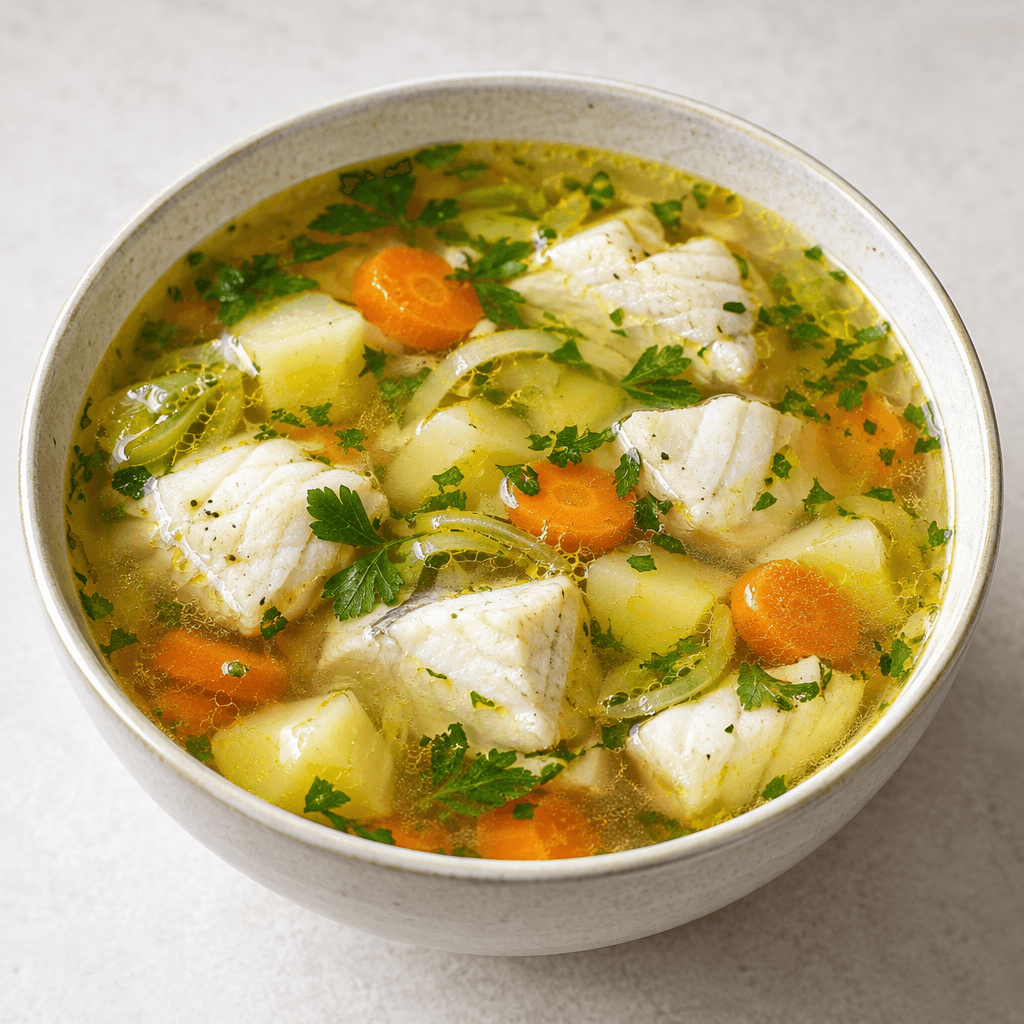
Fish Soup Calories
Protein and omega-3 source, low calorie, warm and nourishing
In season: Winter · Autumn
CALORIES
GI
POTASSIUM
FIBER
Quick answer
1 cup (medium) of Fish Soup (250 g) has 113 calories. That works out to 45 calories per 100 g. It contains 6.3 g of carbs, 11.3 g of protein, 3.8 g of fat and 0.8 g of fiber. Its 1.8 µg of B12 covers 73% of the Daily Value. Its glycemic index is 35 (low), so it raises blood sugar slowly.
What is Fish Soup?
Fish Soup is a simple, warming dish made by simmering pieces of fish in broth, often with vegetables such as carrot, potato or onion and a handful of herbs. Recipes vary widely: coastal cooks may use the fish and stock available locally, while other versions build flavour with a more generously seasoned broth.
The clear, savoury liquid and tender fish make it a natural starter or light main, often served hot with bread and a squeeze of lemon. It is relatively light while still contributing protein; a 100 g portion provides 4.5 g. Add extra vegetables for more texture, or pair a bowl with salad and bread when you want a fuller meal.
Fish Soup Nutrition Facts
Selected: 100 g
45
KCAL / 100G
Carbs
2.5g
· 1% DV
Protein
4.5g
· 9% DV
Fat
1.5g
· 2% DV
Fiber
0.3g
· 1% DV
DV is the share of the daily value covered, on a 2,000 kcal reference diet.
Calories come from: Carbs 24% · Protein 43% · Fat 33%

Log this food in EatBetter
100,000+ people use it
- Get your daily calorie target
- Snap your meal, log it in seconds
- See every vitamin and mineral

📸 Scan the code to get the app free.

Fish Soup Vitamins & Minerals
Vitamins
B12
0.7µg · 29% DV
Vitamin D
1.2µg · 6% DV
B3
0.9mg · 6% DV
B6
0.09mg · 5% DV
Minerals
Selenium
9µg · 16% DV
Iodine
16µg · 11% DV
Sodium
210mg · 9% DV
Phosphorus
55mg · 8% DV
Potassium ⭐
120mg · 4% DV
How Nutritious Is Fish Soup?
Nutrient density
High
How many vitamins, minerals and how much fiber this food carries per calorie. A high score means a lot of nutrition for few calories.
Satiety score
Medium
An EatBetter score computed from fiber, protein and calorie density. A high score means staying full longer on the same calories.
Both scores are calculated per 100 g and do not change with the selected portion. The satiety score is EatBetter's own calculation, not a clinical measure.
Fish Soup Glycemic Index
GLYCEMIC INDEX
GLYCEMIC LOAD
Accounts for portion size — a more realistic measure than GI alone.
How to Burn Off Fish Soup
To burn the 45 calories in 100 g:
🚶
Walking (5 km/h)
🏃
Running (8 km/h)
🚴
Cycling
🏊
Swimming
Times are calculated with the MET equation for a 70 kg adult. Actual burn varies with your weight, age and pace.
Is Fish Soup Processed?
NOVA 2
Minimally Processed
1. Unprocessed
2. Minimally Processed
3. Processed
4. Ultra-Processed
NOVA classifies foods into 4 groups by industrial processing. NOVA 1 (unprocessed) is the healthiest.
Does Fish Soup Contain Allergens?
Contains these allergens:
Which Diets Is Fish Soup Good For?
Vegan
— Not suitable
Vegetarian
— Not suitable
Gluten-Free
✓ Suitable
Dairy-Free
— Not suitable
Mediterranean
✓ Suitable
Paleo
— Not suitable
Whole30
— Not suitable
DASH
— Not suitable
Keto
— Not suitable
Low FODMAP
— Not suitable
Fish Soup Fat Profile
SATURATED
0.3g
MONOUNSATURATED
0.4g
POLYUNSATURATED
0.3g
Omega 6:3 ratio 0.2:1
Below the ideal 4:1 — a good omega balance.
Compare Fish Soup
Foods Similar to Fish Soup
Frequently Asked Questions About Fish Soup
How do you make fish soup?
Fish soup is made by simmering fish stock with vegetables and adding the fish near the end. Simmer fish bones or a fish head with aromatics, strain the stock well, cook the vegetables in it, then add boneless fish pieces until just cooked.
What is the best fish for fish soup?
Firm white fish that holds its shape works especially well in fish soup, such as cod, haddock, or sea bass. Fatty fish can also be used, but its stronger flavor may dominate a delicate broth; add fillets late to keep them from breaking apart.
What vegetables go in fish soup?
Carrot, onion, celery, and potato are common vegetables in fish soup. Leeks, tomatoes, or fennel suit some regional versions too. Cut the vegetables evenly so they cook at the same rate, and add delicate herbs near the end.
How do you keep fish from falling apart in fish soup?
Add the fish near the end of cooking and keep the soup at a gentle simmer. Stirring vigorously or boiling the fish for too long breaks the flakes apart; cut the fish into large pieces and serve once it is just cooked through.
How do you remove bones from fish soup?
Strain the broth through a fine-mesh sieve after simmering any fish heads or bones, then check the picked fish meat carefully before adding it back. A second pass through a clean sieve helps catch small fragments in a clear fish soup.
Can you freeze fish soup?
Yes, fish soup can be frozen, though potatoes and cream or egg-based thickeners may become grainy after thawing. Cool it promptly, freeze it in an airtight container, and reheat it gently; if possible, freeze the broth and add freshly cooked fish later.
What do you serve with fish soup?
Crusty bread, a green salad, or lemon wedges pair well with fish soup. For a broth-based bowl, bread is useful for soaking up the stock; with a richer or creamy version, a light salad keeps the meal balanced.
Can fish soup be made without cream?
Yes, fish soup can be made without cream. A clear stock with vegetables is a traditional, flavorful option; for a thicker texture, blend some cooked vegetables into the broth or use a light egg-and-lemon liaison instead.
How long does fish soup last in the fridge?
Fish soup keeps for about three to four days in the refrigerator when cooled promptly and stored covered at 40°F (4°C) or colder. Reheat only the portion you need until steaming hot, and discard it if it was left out for over two hours.
Why does fish soup curdle?
Fish soup usually curdles when a dairy or egg-based thickener is heated too quickly or boiled. Temper eggs by whisking in a little hot broth first, then stir the mixture into the pot over low heat without letting the soup boil.
Have another question about Fish Soup?
Ask the AI nutrition coach — calories, portions, alternatives and more, answered in seconds in the app.

Scan calories with your camera
Instant AI nutrition analysis

Nutrition data compiled from USDA FoodData Central and scientific sources.