

Ready & Packaged Foods
All →Vegetables & Legumes
All →Desserts & Confectionery
All →Meat & Protein
All →Grains & Bakery
All →Beverages
All →Milk & Dairy
All →

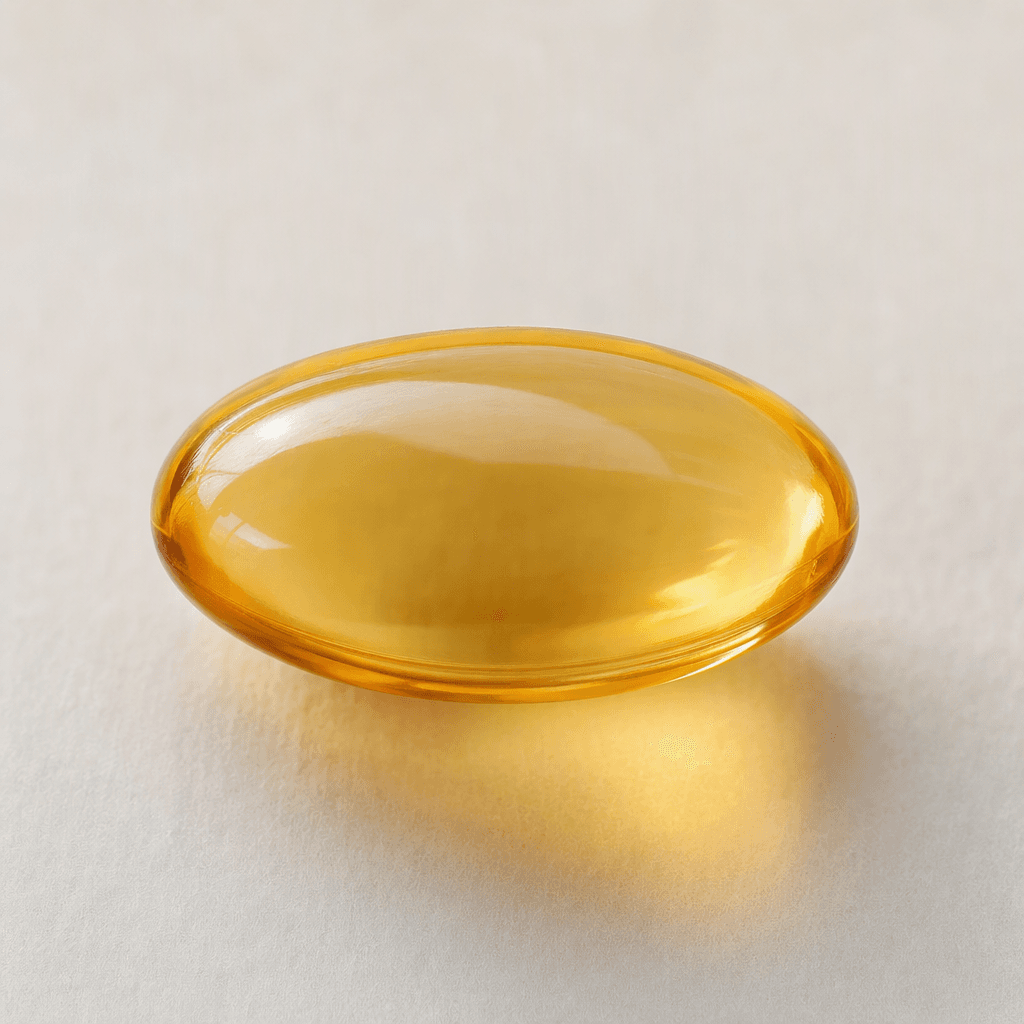
Fish Oil (500 mg) Calories
Omega-3 source, heart health, anti-inflammatory
CALORIES · 100 G
GI
POTASSIUM · 100 G
FIBER · 100 G
Quick answer
1 piece (small) of Fish Oil (500 mg) (1 g) has 5 calories. That works out to 900 calories per 100 g. It contains 0 g of carbs, 0 g of protein, 0.5 g of fat and 0 g of fiber. Its glycemic index is 0 (low), so it raises blood sugar slowly.
Fish Oil (500 mg) Nutrition Facts
Selected: 1 piece (small) · 0.5 g
5
KCAL / 0.5G
Carbs
0g
· 0% DV
Protein
0g
· 0% DV
Fat
0.5g
· 1% DV
Fiber
0g
· 0% DV
DV is the share of the daily value covered, on a 2,000 kcal reference diet.
Calories come from: Carbs 0% · Protein 0% · Fat 100%
Fish Oil (500 mg) nutrition facts table · 1 piece (small) (0.5 g)
| Nutrient | Amount | % DV |
|---|---|---|
| Calories | 5 kcal | |
| Total fat | 0.5 g | 1% |
| Saturated fat | 0.11 g | 1% |
| Trans fat | 0 g | |
| Sodium | 0.01 mg | 0% |
| Total carbohydrate | 0 g | 0% |
| Fiber | 0 g | 0% |
| Protein | 0 g | 0% |
Calories: Calories measure energy. Average daily need is 2,000 kcal. Excess calories are stored as fat, too few cause weight loss.
Carbs: Your body's primary energy source. The brain runs exclusively on carbs. Daily need: 275g.
Protein: Essential for muscle repair and cell growth. Daily need: 50g. Keeps you full and boosts metabolism.
Fat: Needed for hormone production and vitamin absorption. Daily need: 78g. Limit saturated fats, choose unsaturated.
Fiber: Critical for digestive health and satiety. Daily need: 28g. Stabilizes blood sugar, lowers cholesterol.

Log this food in EatBetter
100,000+ people use it
- Get your daily calorie target
- Snap your meal, log it in seconds
- See every vitamin and mineral

📸 Scan the code to get the app free.

How Many Calories in 1 Small Fish Oil (500 mg)?
| Serving | Amount | Calories |
|---|---|---|
| 1 piece (small) | 0.5 g | 5 kcal |
| 2 piece (small) | 1 g | 9 kcal |
| 1 teaspoon (medium) | 4.5 g | 41 kcal |
| 1 tablespoon (medium) | 13.5 g | 122 kcal |
| 1 pack (medium) | 30 g | 270 kcal |
| 100 g | 100 g | 900 kcal |
| 1 bottle (large) | 100 g | 900 kcal |
Calculated from 900 calories per 100 g.
Frequently Asked Questions About Fish Oil (500 mg)
Is fish oil good for your heart?
Fish oil provides EPA and DHA, omega-3 fats that can lower high triglyceride levels at appropriate doses. A standard fish oil supplement is not a substitute for heart medication or other care prescribed for cardiovascular disease.
How do I choose a fish oil supplement?
Compare the listed EPA and DHA amounts, not just the total fish oil amount on the front of the package. A 500 mg fish oil capsule does not necessarily provide 500 mg of omega-3s.
Can fish oil cause fishy burps or reflux?
Yes, fish oil can cause fishy-tasting burps, heartburn, or nausea in some people. Taking it with a meal rather than on an empty stomach may help; stop using it if symptoms are severe or persistent.
Is fish oil the same as cod liver oil?
No. Fish oil is generally made from the body of oily fish, while cod liver oil comes from cod livers and naturally contains vitamins A and D. Those vitamins can add up if you take other supplements.
Should I take fish oil in the morning or at night?
There is no special morning or nighttime advantage for most people. Taking fish oil with a meal at a time you can remember may improve tolerability; avoid taking it just before lying down if it gives you reflux.
Can fish oil help with joint pain?
Fish oil may modestly ease some symptoms of inflammatory joint conditions for some people, but it is not a proven cure and does not replace treatment. Effects are not immediate, and supplements can interact with medicines.
Can you take fish oil with blood thinners?
Fish oil may affect bleeding risk, particularly at higher doses or alongside certain medicines. If you take an anticoagulant or antiplatelet drug, ask your clinician before starting fish oil; do not change prescribed medication on your own.
Can you take fish oil on an empty stomach?
You can, but taking fish oil without food may make nausea or fishy burps more likely. A meal is usually easier on the stomach and can help with absorption, especially when it contains some fat.
Does fish oil go bad?
Yes, fish oil can oxidize and become rancid, especially if exposed to heat, air, or light. Keep the container tightly closed and follow its storage instructions; discard capsules that are past their expiry date or smell strongly rancid.
Does fish oil help dry eyes?
Fish oil has been studied for dry eye, but research has not shown reliable relief for everyone. Persistent dryness, pain, or changes in vision need proper assessment rather than relying on a fish oil supplement.
Fish Oil (500 mg) Vitamins & Minerals
Vitamins
Vitamin D
0.05µg · 0% DV
Vitamin E
0.03mg · 0% DV
Vitamin A
0.15µg · 0% DV
B1
0mg · 0% DV
Minerals
Zinc
0mg · 0% DV
Iron
0mg · 0% DV
Magnesium
0.01mg · 0% DV
Phosphorus
0.01mg · 0% DV
Sodium
0.01mg · 0% DV
Potassium ⭐
0mg · 0% DV
Fish Oil (500 mg) Glycemic Index
GLYCEMIC INDEX
GLYCEMIC LOAD
Accounts for portion size — a more realistic measure than GI alone.
How to Burn Off Fish Oil (500 mg)
To burn the 5 calories in 1 piece (small) (0.5 g):
🚶
Walking (5 km/h)
🏃
Running (8 km/h)
🚴
Cycling
🏊
Swimming
Times are calculated with the MET equation for a 70 kg adult. Actual burn varies with your weight, age and pace.
What is Fish Oil (500 mg)?
Fish Oil (500 mg) is oil obtained from fish, often oily varieties, and commonly sold in small softgel capsules. It is a supplement rather than a cooking oil or a dish; the source fish and the amount of omega-3 can vary between products.
In many places, people swallow the capsule with water, often alongside a meal. Some notice a fishy aftertaste, so taking it with food may be more comfortable. Nutritionally, it is essentially all fat, with no protein or carbohydrate listed. Follow the directions on the product label, and treat it as an addition to meals—not a substitute for eating fish or a varied diet.
How Nutritious Is Fish Oil (500 mg)?
Nutrient density
High
How many vitamins, minerals and how much fiber this food carries per calorie. A high score means a lot of nutrition for few calories.
Satiety score
Low
An EatBetter score computed from fiber, protein and calorie density. A high score means staying full longer on the same calories.
Both scores are calculated per 100 g and do not change with the selected portion. The satiety score is EatBetter's own calculation, not a clinical measure.
Is Fish Oil (500 mg) Processed?
NOVA 3
Processed
1. Unprocessed
2. Minimally Processed
3. Processed
4. Ultra-Processed
NOVA classifies foods into 4 groups by industrial processing. NOVA 1 (unprocessed) is the healthiest.
Does Fish Oil (500 mg) Contain Allergens?
No known major allergens
Which Diets Is Fish Oil (500 mg) Good For?
Vegan
— Not suitable
Vegetarian
— Not suitable
Gluten-Free
✓ Suitable
Dairy-Free
— Not suitable
Mediterranean
✓ Suitable
Paleo
✓ Suitable
Whole30
— Not suitable
DASH
— Not suitable
Keto
✓ Suitable
Low FODMAP
— Not suitable
Fish Oil (500 mg) Fat Profile
SATURATED
0.11g
MONOUNSATURATED
0.24g
POLYUNSATURATED
0.16g
Omega 6:3 ratio 0.1:1
Below the ideal 4:1 — a good omega balance.
Compare Fish Oil (500 mg)
Foods Similar to Fish Oil (500 mg)
Have another question about Fish Oil (500 mg)?
Ask the AI nutrition coach — calories, portions, alternatives and more, answered in seconds in the app.

Scan calories with your camera
Instant AI nutrition analysis

Nutrition data compiled from USDA FoodData Central and scientific sources.