

Ready & Packaged Foods
All →Vegetables & Legumes
All →Desserts & Confectionery
All →Meat & Protein
All →Grains & Bakery
All →Beverages
All →Milk & Dairy
All →

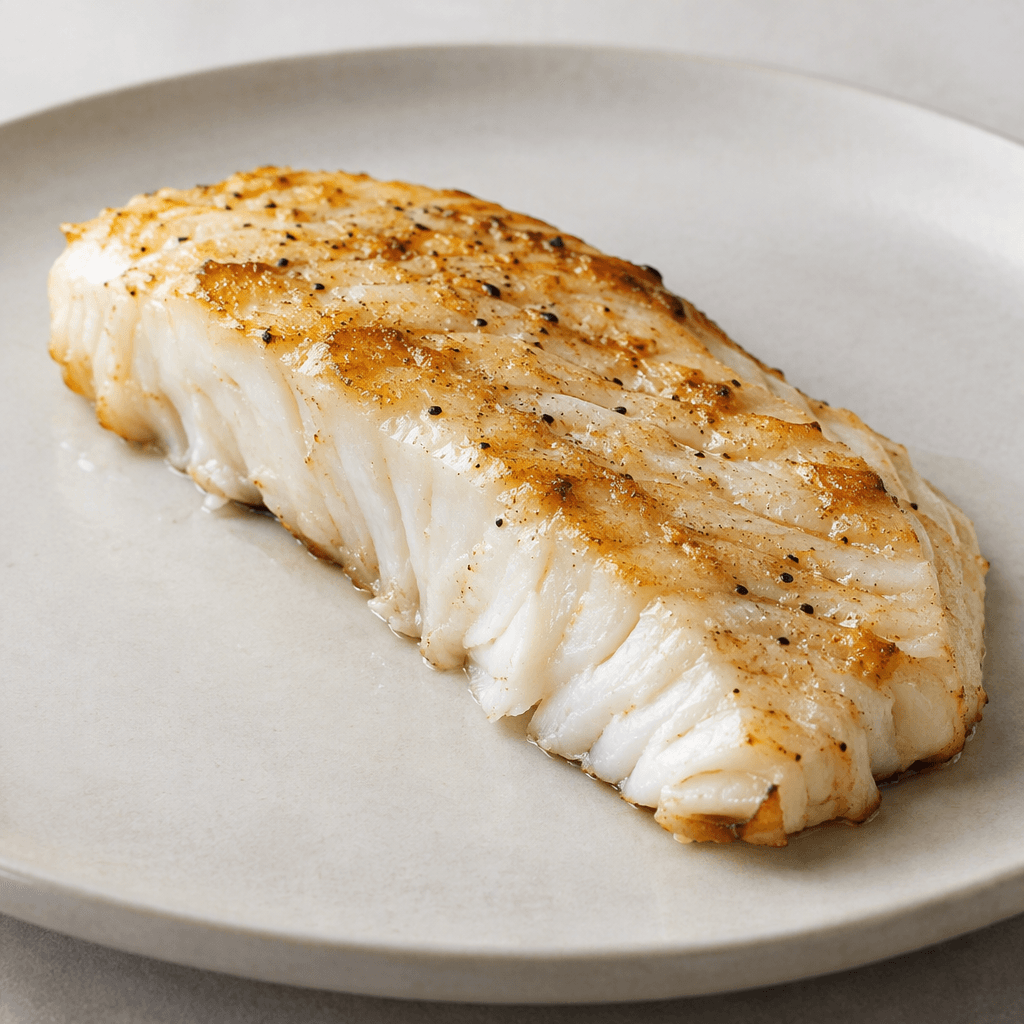
Fish (cooked) Calories
High protein, omega-3 fatty acids, low fat
In season: Spring · Summer · Autumn · Winter
CALORIES
GI
POTASSIUM
FIBER
Quick answer
1 piece (medium) of Fish (cooked) (120 g) has 132 calories. That works out to 110 calories per 100 g. It contains 0 g of carbs, 27.6 g of protein, 3 g of fat and 0 g of fiber. Its 2.5 µg of B12 covers 105% of the Daily Value. Its glycemic index is 0 (low), so it raises blood sugar slowly.
What is Fish (cooked)?
Fish (cooked) can refer to many kinds of fish prepared with heat, from mild, flaky white-fleshed varieties to richer, pink-fleshed ones. Across the world, it may be grilled, baked, steamed, poached or pan-cooked; the flavour and texture depend on both the species and the method. In coastal cuisines, freshly cooked fish is often served simply so its natural taste comes through.
Its tender flesh separates into flakes, and lemon, herbs or a fresh salad make easy accompaniments. It is a protein-rich choice with no carbohydrates and relatively little fat; this serving provides 23 g of protein per 100 g. For a lighter plate, choose grilled, baked or steamed fish and pair it with vegetables rather than a rich sauce.
Fish (cooked) Nutrition Facts
Selected: 100 g
110
KCAL / 100G
Carbs
0g
· 0% DV
Protein
23g
· 46% DV
Fat
2.5g
· 3% DV
Fiber
0g
· 0% DV
DV is the share of the daily value covered, on a 2,000 kcal reference diet.
Calories come from: Carbs 0% · Protein 80% · Fat 20%
Fish (cooked) Vitamins & Minerals
Vitamins
B12
2.1µg · 88% DV
Vitamin D
6µg · 30% DV
B6
0.3mg · 18% DV
B3
2.1mg · 13% DV
Minerals
Selenium
36µg · 65% DV
Phosphorus
210mg · 30% DV
Iodine
40µg · 27% DV
Potassium ⭐
340mg · 10% DV
How Nutritious Is Fish (cooked)?
Nutrient density
Very high
How many vitamins, minerals and how much fiber this food carries per calorie. A high score means a lot of nutrition for few calories.
Satiety score
Medium
An EatBetter score computed from fiber, protein and calorie density. A high score means staying full longer on the same calories.
Both scores are calculated per 100 g and do not change with the selected portion. The satiety score is EatBetter's own calculation, not a clinical measure.
Fish (cooked) Glycemic Index
GLYCEMIC INDEX
GLYCEMIC LOAD
Accounts for portion size — a more realistic measure than GI alone.
How to Burn Off Fish (cooked)
To burn the 110 calories in 100 g:
🚶
Walking (5 km/h)
🏃
Running (8 km/h)
🚴
Cycling
🏊
Swimming
Times are calculated with the MET equation for a 70 kg adult. Actual burn varies with your weight, age and pace.
Is Fish (cooked) Processed?
NOVA 2
Minimally Processed
1. Unprocessed
2. Minimally Processed
3. Processed
4. Ultra-Processed
NOVA classifies foods into 4 groups by industrial processing. NOVA 1 (unprocessed) is the healthiest.
Does Fish (cooked) Contain Allergens?
Contains these allergens:
Which Diets Is Fish (cooked) Good For?
Vegan
— Not suitable
Vegetarian
— Not suitable
Gluten-Free
✓ Suitable
Dairy-Free
— Not suitable
Mediterranean
✓ Suitable
Paleo
✓ Suitable
Whole30
— Not suitable
DASH
— Not suitable
Keto
✓ Suitable
Low FODMAP
— Not suitable
Fish (cooked) Fat Profile
SATURATED
0.6g
MONOUNSATURATED
0.7g
POLYUNSATURATED
0.7g
Omega 6:3 ratio 0.2:1
Below the ideal 4:1 — a good omega balance.
Compare Fish (cooked)
Foods Similar to Fish (cooked)
Frequently Asked Questions About Fish (cooked)
How can you tell when cooked fish is done?
Cooked fish is opaque and separates into flakes when gently pressed with a fork. If the center still looks translucent or raw, cook it a little longer; taking it off the heat as soon as it flakes helps prevent dryness.
How long does cooked fish last in the fridge?
Cooked fish keeps for 3–4 days in a covered container in the refrigerator. Refrigerate it promptly after the meal, and discard it if it develops a sour, ammonia-like, or unusually strong smell.
Can you reheat cooked fish?
Yes, you can reheat cooked fish until it is hot all the way through. Use gentle heat in the oven or a covered pan to reduce drying, and reheat only the portion you plan to eat.
Can cooked fish be frozen?
Yes, cooked fish can be frozen in an airtight container once it has cooled. Thaw it in the refrigerator and reheat it thoroughly; avoid freezing it again after it has thawed.
Why does cooked fish turn dry and tough?
Cooked fish usually turns dry and tough because it has been exposed to heat for too long. Since fish continues cooking briefly after leaving the pan or oven, remove it as soon as the flesh flakes easily.
Can you eat the skin on cooked fish?
Yes, the skin on cooked fish is edible when it has been properly cleaned and cooked. For crisp skin, cook the fish skin-side down and make sure any scales have been removed beforehand.
Can you eat cooked fish cold?
Yes, cooked fish can be eaten cold if it was refrigerated promptly and kept chilled. Flake it into a salad or sandwich, and discard it if it has been left out for too long or smells off.
What should cooked fish smell like?
Cooked fish should smell mild, not sour, rancid, or strongly ammonia-like. A sharp or unpleasant odor can signal spoilage, so do not taste the fish to decide whether it is safe.
Is cooked fish safe to eat during pregnancy?
Yes, thoroughly cooked fish can be part of a pregnancy diet; avoid raw or undercooked fish and choose lower-mercury types. Ask your healthcare professional for advice if you have a condition that affects which fish you can eat.
What can you make with leftover cooked fish?
You can flake leftover cooked fish into fish cakes, tacos, pasta, or a salad. Add it near the end of cooking so it warms through without breaking down or drying out.
Have another question about Fish (cooked)?
Ask the AI nutrition coach — calories, portions, alternatives and more, answered in seconds in the app.

Scan calories with your camera
Instant AI nutrition analysis

Nutrition data compiled from USDA FoodData Central and scientific sources.