

Ready & Packaged Foods
All →Vegetables & Legumes
All →Desserts & Confectionery
All →Meat & Protein
All →Grains & Bakery
All →Beverages
All →Milk & Dairy
All →

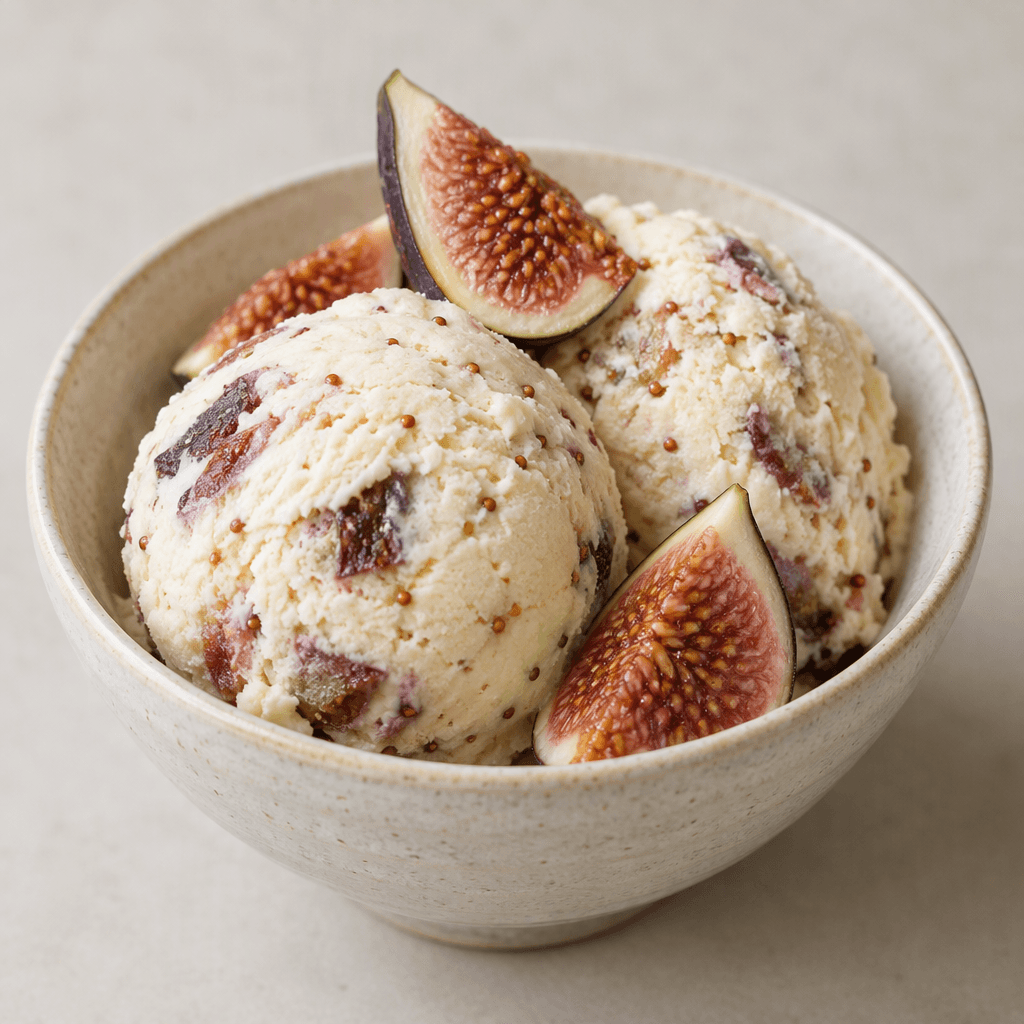
Fig ice cream Calories
Fig ice cream is a creamy dessert made with fresh or dried figs blended into a milk and cream base.
In season: Summer
CALORIES
GI
POTASSIUM
FIBER
Quick answer
1 cup (medium) of Fig ice cream (120 g) has 216 calories. That works out to 180 calories per 100 g. It contains 32.4 g of carbs, 3.8 g of protein, 7.4 g of fat and 1.9 g of fiber. Its 0.2 mg of B2 covers 12% of the Daily Value. Its glycemic index is 50 (medium), so it raises blood sugar at a moderate pace.
What is Fig ice cream?
Fig ice cream blends fresh or dried figs into a milk-and-cream base, often leaving little pieces of fruit and seeds in each scoop. It is a fruit-flavoured take on classic ice cream rather than a dish tied to one particular place; figs are especially familiar in Mediterranean cooking, where they are enjoyed fresh as well as preserved.
Expect a smooth, creamy texture, gentle sweetness and a slight crunch from the seeds. Serve it in a bowl or cone as a summer dessert, or offer a small scoop alongside coffee or fresh fruit. It is a sweet treat with carbohydrates from the fruit and added sweetening, while the dairy gives it a richer character. For a lighter serving, keep the scoop modest and pair it with fresh figs.
Fig ice cream Nutrition Facts
Selected: 100 g
180
KCAL / 100G
Carbs
27g
· 10% DV
Protein
3.2g
· 6% DV
Fat
6.2g
· 8% DV
Fiber
1.6g
· 6% DV
DV is the share of the daily value covered, on a 2,000 kcal reference diet.
Calories come from: Carbs 61% · Protein 7% · Fat 32%
Fig ice cream Vitamins & Minerals
Vitamins
B2
0.13mg · 10% DV
B5
0.5mg · 10% DV
B12
0.18µg · 8% DV
Biotin
2.2µg · 7% DV
Minerals
Calcium
95mg · 10% DV
Phosphorus
72mg · 10% DV
Iodine
7µg · 5% DV
Potassium ⭐
180mg · 5% DV
How Nutritious Is Fig ice cream?
Nutrient density
Medium
How many vitamins, minerals and how much fiber this food carries per calorie. A high score means a lot of nutrition for few calories.
Satiety score
Medium
An EatBetter score computed from fiber, protein and calorie density. A high score means staying full longer on the same calories.
Both scores are calculated per 100 g and do not change with the selected portion. The satiety score is EatBetter's own calculation, not a clinical measure.
Fig ice cream Glycemic Index
GLYCEMIC INDEX
GLYCEMIC LOAD
Accounts for portion size — a more realistic measure than GI alone.
How to Burn Off Fig ice cream
To burn the 180 calories in 100 g:
🚶
Walking (5 km/h)
🏃
Running (8 km/h)
🚴
Cycling
🏊
Swimming
Times are calculated with the MET equation for a 70 kg adult. Actual burn varies with your weight, age and pace.
Is Fig ice cream Processed?
NOVA 3
Processed
1. Unprocessed
2. Minimally Processed
3. Processed
4. Ultra-Processed
NOVA classifies foods into 4 groups by industrial processing. NOVA 1 (unprocessed) is the healthiest.
Does Fig ice cream Contain Allergens?
Contains these allergens:
Which Diets Is Fig ice cream Good For?
Vegan
— Not suitable
Vegetarian
✓ Suitable
Gluten-Free
— Not suitable
Dairy-Free
— Not suitable
Mediterranean
✓ Suitable
Paleo
— Not suitable
Whole30
— Not suitable
DASH
— Not suitable
Keto
— Not suitable
Low FODMAP
— Not suitable
Fig ice cream Fat Profile
SATURATED
3.7g
MONOUNSATURATED
1.7g
POLYUNSATURATED
0.13g
Omega 6:3 ratio 5.5:1
Above the ideal 4:1 (5.5:1).
Compare Fig ice cream
Foods Similar to Fig ice cream
Frequently Asked Questions About Fig ice cream
What does fig ice cream taste like?
Fig ice cream tastes creamy, sweet, and gently fruity, with a honey-like note when made with ripe figs. Fig seeds and pieces add a slight crunch and make its texture different from plain vanilla ice cream.
How do you make fig ice cream?
Fig ice cream is made by blending ripe figs into a milk-and-cream base, then churning and freezing it. You can leave some figs in small pieces for texture or blend them fully for a smoother result.
Can you make fig ice cream without an ice cream maker?
Yes, you can make fig ice cream without an ice cream maker. Freeze the mixture in a shallow container and stir it thoroughly every so often as it freezes to break up large ice crystals.
Should you use fresh or dried figs for fig ice cream?
You can use either fresh or dried figs for fig ice cream. Fresh figs give a lighter, fruitier flavor, while dried figs taste more concentrated and sweet; chop them finely and reduce added sugar if needed.
Why does homemade fig ice cream turn icy?
Homemade fig ice cream can turn icy when the mixture freezes without enough churning or stirring. A tightly covered container helps limit ice crystals during storage, and a short rest before serving softens a very firm batch.
Do you need to peel figs for fig ice cream?
No, figs do not need to be peeled for fig ice cream. Rinse them, remove the stems, and blend or chop them with the skin on; it contributes color and small pieces of fruit.
Which figs are best for fig ice cream?
Ripe, fragrant figs are best for fig ice cream because they bring more sweetness and fruit flavor. Avoid hard, underripe fruit, which can taste bland and won’t blend into the dairy base as easily.
What goes well with fig ice cream?
Toasted walnuts, almonds, or crisp biscuits go well with fig ice cream. Their nutty or crunchy texture contrasts with the creamy dessert, while a small drizzle of honey complements ripe figs without masking their flavor.
How long does homemade fig ice cream last in the freezer?
Keep homemade fig ice cream in a tightly sealed container in the freezer and enjoy it within a few weeks for the best texture. If it melts, do not refreeze it, since that can make it icy and affect food safety.
Can you make fig ice cream without added sugar?
Yes, fig ice cream can be made without added sugar, especially with very ripe fresh figs. Dried figs are sweeter and more concentrated, so taste the mixture before adding any sweetener.
Have another question about Fig ice cream?
Ask the AI nutrition coach — calories, portions, alternatives and more, answered in seconds in the app.

Scan calories with your camera
Instant AI nutrition analysis

Nutrition data compiled from USDA FoodData Central and scientific sources.