

Ready & Packaged Foods
All →Vegetables & Legumes
All →Desserts & Confectionery
All →Meat & Protein
All →Grains & Bakery
All →Beverages
All →Milk & Dairy
All →

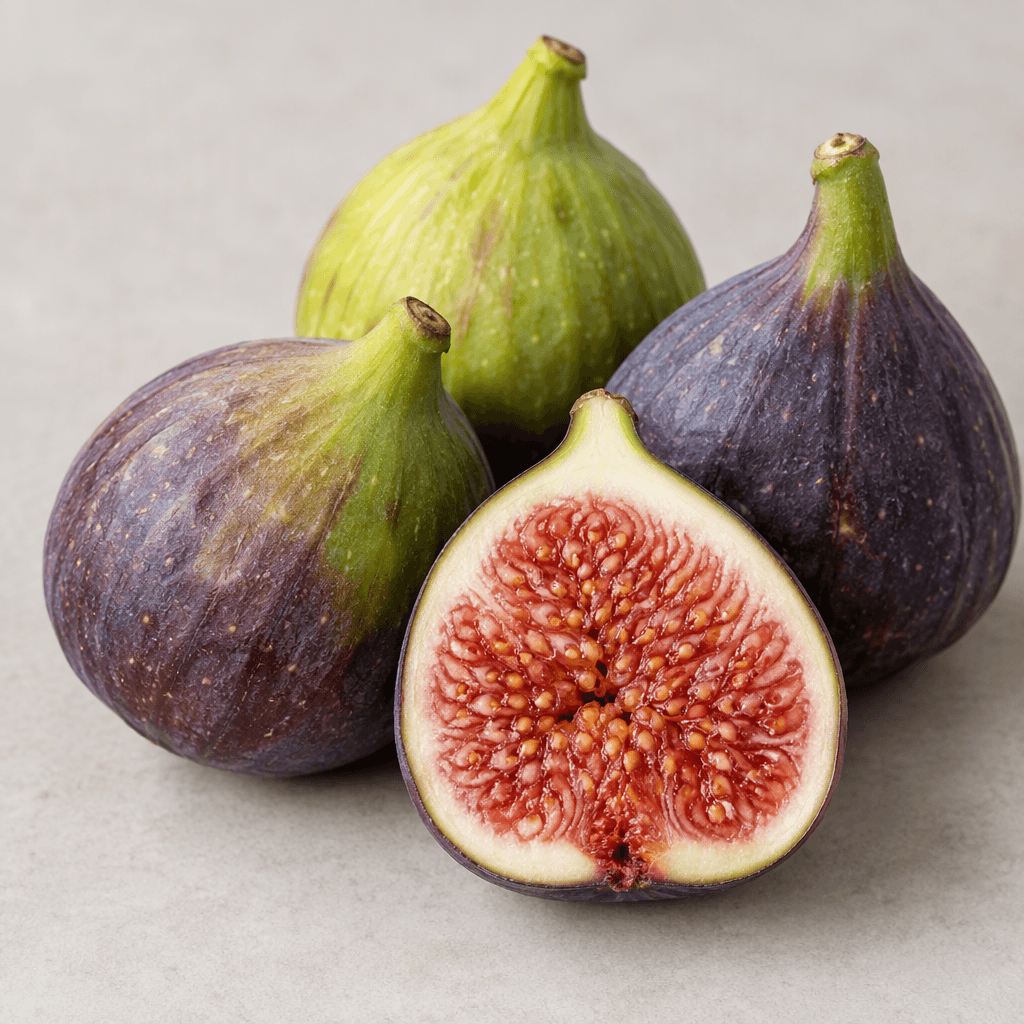
Fig Calories
Rich in fiber and potassium, contains antioxidants.
In season: Summer · Autumn
CALORIES
GI
POTASSIUM
FIBER
Quick answer
1 piece (medium) of Fig (50 g) has 37 calories. That works out to 74 calories per 100 g. It contains 9.6 g of carbs, 0.4 g of protein, 0.2 g of fat and 1.5 g of fiber. Its glycemic index is 51 (medium), so it raises blood sugar at a moderate pace.
What is Fig?
Figs grow on the fig tree and have soft, sweet flesh filled with tiny edible seeds. Fresh figs range from green to deep purple on the outside, with pink or red flesh within. They are long associated with Mediterranean and Middle Eastern food cultures, and are enjoyed fresh in season or dried for a longer-lasting pantry staple.
A ripe fig is tender and juicy, with a honeyed flavour. Eat it whole, slice it over yoghurt or porridge, or pair it with cheese and nuts; dried figs are also a familiar snack and baking ingredient in many countries. Figs provide fibre and potassium, and their natural sweetness makes them satisfying on their own. For a more substantial snack, serve a fresh fig with plain yoghurt or a small handful of nuts.
Fig Nutrition Facts
Selected: 100 g
74
KCAL / 100G
Carbs
19.2g
· 7% DV
Protein
0.8g
· 2% DV
Fat
0.3g
· 0% DV
Fiber
2.9g
· 10% DV
DV is the share of the daily value covered, on a 2,000 kcal reference diet.
Calories come from: Carbs 93% · Protein 4% · Fat 3%
Fig Vitamins & Minerals
Vitamins
Biotin
2µg · 7% DV
B5
0.3mg · 6% DV
B6
0.11mg · 6% DV
B1
0.06mg · 5% DV
Minerals
Potassium ⭐
232mg · 7% DV
Calcium
35mg · 4% DV
Magnesium
17mg · 4% DV
Phosphorus
14mg · 2% DV
How Nutritious Is Fig?
Nutrient density
High
How many vitamins, minerals and how much fiber this food carries per calorie. A high score means a lot of nutrition for few calories.
Satiety score
Medium
An EatBetter score computed from fiber, protein and calorie density. A high score means staying full longer on the same calories.
Both scores are calculated per 100 g and do not change with the selected portion. The satiety score is EatBetter's own calculation, not a clinical measure.
Fig Glycemic Index
GLYCEMIC INDEX
GLYCEMIC LOAD
Accounts for portion size — a more realistic measure than GI alone.
How to Burn Off Fig
To burn the 74 calories in 100 g:
🚶
Walking (5 km/h)
🏃
Running (8 km/h)
🚴
Cycling
🏊
Swimming
Times are calculated with the MET equation for a 70 kg adult. Actual burn varies with your weight, age and pace.
Is Fig Processed?
NOVA 1
Unprocessed
1. Unprocessed
2. Minimally Processed
3. Processed
4. Ultra-Processed
NOVA classifies foods into 4 groups by industrial processing. NOVA 1 (unprocessed) is the healthiest.
Does Fig Contain Allergens?
No known major allergens
Which Diets Is Fig Good For?
Vegan
✓ Suitable
Vegetarian
✓ Suitable
Gluten-Free
✓ Suitable
Dairy-Free
— Not suitable
Mediterranean
✓ Suitable
Paleo
✓ Suitable
Whole30
— Not suitable
DASH
— Not suitable
Keto
— Not suitable
Low FODMAP
— Not suitable
Fig Fat Profile
SATURATED
0.06g
MONOUNSATURATED
0.04g
POLYUNSATURATED
0.07g
Omega 6:3 ratio 2:1
Below the ideal 4:1 — a good omega balance.
Compare Fig
Foods Similar to Fig
Frequently Asked Questions About Fig
How can you tell when a fig is ripe?
A ripe fig feels soft and gives slightly when gently pressed, and it often has a sweet scent. The skin may show small cracks near the stem. Avoid figs that smell sour, are moldy, or leak from damaged spots.
How should you store fresh figs?
Store fresh figs in the refrigerator in a single layer so they do not get crushed. They spoil quickly, so eat them within a few days. Keep them unwashed until you are ready to eat them.
Can you eat fig skin?
Yes, fig skin is edible, so you do not need to peel a fig. Rinse it gently under running water, remove the firm stem tip if you like, and eat it whole or slice it.
Are the seeds in figs edible?
Yes, the tiny seeds inside figs are edible. They are a natural part of the fruit and do not need to be removed; they add a slight crunch to the soft flesh.
Do you need to wash figs before eating them?
Yes, rinse figs gently under cool running water just before eating. Since the skin is edible, washing removes dirt from the surface. Handle them carefully so the soft fruit does not bruise.
Can you freeze fresh figs?
Yes, you can freeze figs, although they become softer and juicier after thawing. Wash and dry them thoroughly, freeze them in a single layer, then transfer them to a sealed container. Use thawed figs in smoothies or cooked dishes.
What is the difference between fresh and dried figs?
Fresh figs are soft and contain much more water, while dried figs are denser and chewier because most of their water has been removed. Dried figs also taste more concentrated, so they may not work as a one-for-one substitute in recipes.
Do figs contain wasps?
Most edible figs do not contain a whole wasp. Some fig varieties are pollinated by tiny fig wasps; if a wasp enters a fig, it is broken down during the process. You do not need to look for one when eating figs.
Can figs help relieve constipation?
Figs provide dietary fiber, which can support regular bowel movements. They are not a treatment for constipation, and adequate fluids matter too. If constipation persists or is severe, seek advice from a healthcare professional.
Can people with diabetes eat figs?
Yes, people with diabetes can include figs, but portion size matters because figs contain natural sugars and carbohydrates. Fresh and dried figs differ in concentration; follow your care plan and ask your clinician how to fit them into it.
Have another question about Fig?
Ask the AI nutrition coach — calories, portions, alternatives and more, answered in seconds in the app.

Scan calories with your camera
Instant AI nutrition analysis

Nutrition data compiled from USDA FoodData Central and scientific sources.