

Ready & Packaged Foods
All →Vegetables & Legumes
All →Desserts & Confectionery
All →Meat & Protein
All →Grains & Bakery
All →Beverages
All →Milk & Dairy
All →

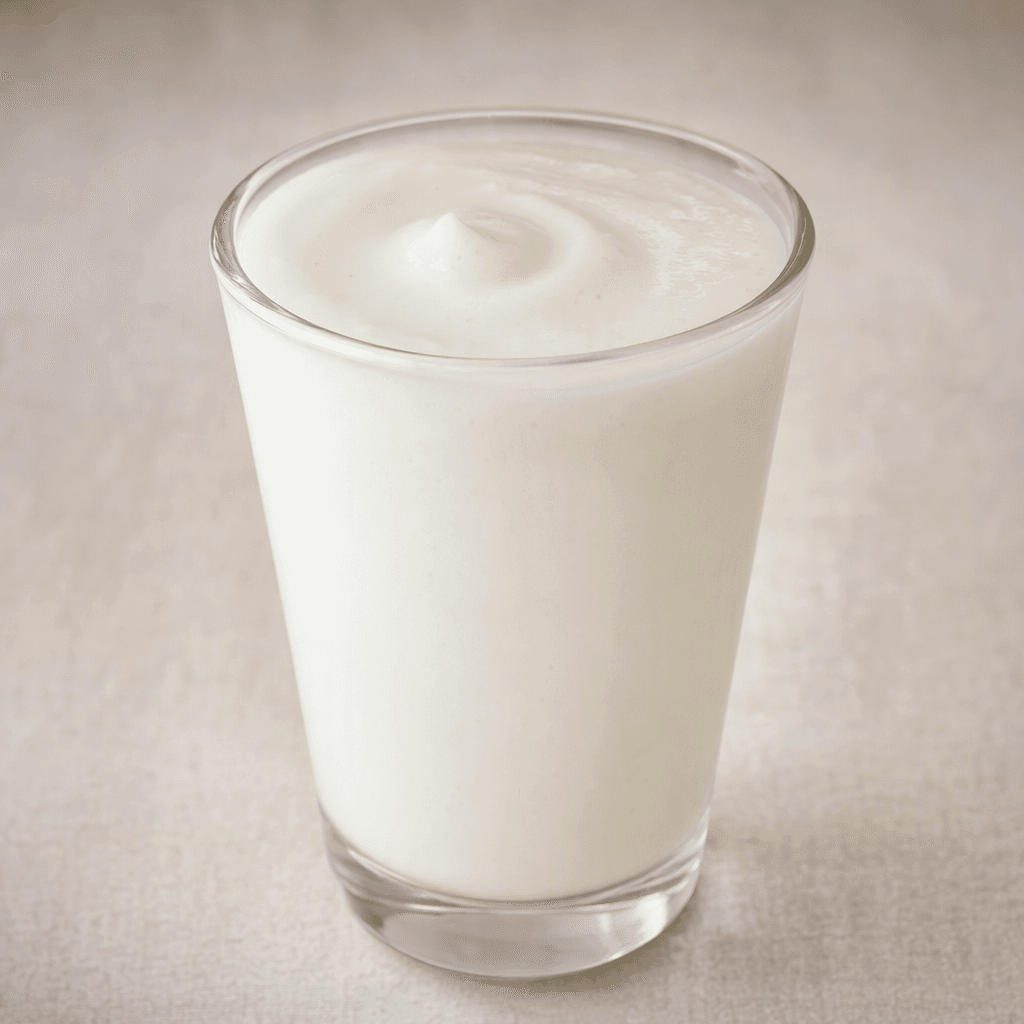
Fat-free drinkable quark fresh cheese Calories
High-protein, fat-free cultured dairy
CALORIES · 100 G
GI
POTASSIUM · 100 G
FIBER · 100 G
Quick answer
1 bottle (small) of Fat-free drinkable quark fresh cheese (250 g) has 120 calories. That works out to 48 calories per 100 g. It contains 7 g of carbs, 20 g of protein, 0 g of fat and 0 g of fiber. Its 1.1 µg of B12 covers 47% of the Daily Value. Its glycemic index is 30 (low), so it raises blood sugar slowly.
Fat-free drinkable quark fresh cheese Nutrition Facts
Selected: 1 bottle (small) · 250 g
120
KCAL / 250G
Carbs
7g
· 3% DV
Protein
20g
· 40% DV
Fat
0g
· 0% DV
Fiber
0g
· 0% DV
DV is the share of the daily value covered, on a 2,000 kcal reference diet.
Calories come from: Carbs 26% · Protein 74% · Fat 0%
Fat-free drinkable quark fresh cheese nutrition facts table · 1 bottle (small) (250 g)
| Nutrient | Amount | % DV |
|---|---|---|
| Calories | 120 kcal | |
| Total fat | 0 g | 0% |
| Saturated fat | 0.3 g | 2% |
| Trans fat | 0 g | |
| Sodium | 113 mg | 5% |
| Total carbohydrate | 7 g | 3% |
| Fiber | 0 g | 0% |
| Protein | 20 g | 40% |
Calories: Calories measure energy. Average daily need is 2,000 kcal. Excess calories are stored as fat, too few cause weight loss.
Carbs: Your body's primary energy source. The brain runs exclusively on carbs. Daily need: 275g.
Protein: Essential for muscle repair and cell growth. Daily need: 50g. Keeps you full and boosts metabolism.
Fat: Needed for hormone production and vitamin absorption. Daily need: 78g. Limit saturated fats, choose unsaturated.
Fiber: Critical for digestive health and satiety. Daily need: 28g. Stabilizes blood sugar, lowers cholesterol.

Log this food in EatBetter
100,000+ people use it
- Get your daily calorie target
- Snap your meal, log it in seconds
- See every vitamin and mineral

📸 Scan the code to get the app free.

How Many Calories in 1 Small Bottle of Fat-free drinkable quark fresh cheese?
| Serving | Amount | Calories |
|---|---|---|
| 1 bottle (small) | 250 g | 120 kcal |
| 100 g | 100 g | 48 kcal |
| 1 serving (small) | 150 g | 72 kcal |
| 1 cup (medium) | 200 g | 96 kcal |
| 1 pack (small) | 200 g | 96 kcal |
| 1 cup (large) | 250 g | 120 kcal |
| 1 serving (large) | 300 g | 144 kcal |
| 1 bottle (medium) | 330 g | 158 kcal |
| 1 bottle (large) | 500 g | 240 kcal |
Calculated from 48 calories per 100 g.
Frequently Asked Questions About Fat-free drinkable quark fresh cheese
What is fat-free drinkable quark fresh cheese?
Fat-free drinkable quark fresh cheese is cultured fresh cheese made thin enough to drink. It is minimally processed and provides a high-protein dairy option; its thickness and tanginess can vary by product.
How is fat-free drinkable quark different from Greek yogurt?
Fat-free drinkable quark is a fresh cheese, while Greek yogurt is strained yogurt. Quark usually has a mild tang and a smooth, drinkable texture; Greek yogurt is typically thicker, though individual products can vary.
Is fat-free drinkable quark the same as kefir?
No. Fat-free drinkable quark is cultured fresh cheese thinned to a drinkable consistency, whereas kefir is a fermented milk drink made using kefir cultures. They differ in how they are made, their texture, and often their taste.
What does fat-free drinkable quark taste like?
Fat-free drinkable quark generally tastes mild, creamy, and slightly tangy. It is not necessarily sweet, so it works with fruit or oats for a sweeter snack and with herbs in a savory dip or sauce.
How can you eat fat-free drinkable quark for breakfast?
You can drink fat-free drinkable quark on its own or serve it with fruit and oats at breakfast. For a thicker bowl, stir it into oats; for a savory option, season it with herbs and serve alongside toast.
Can you use fat-free drinkable quark in a smoothie?
Yes, fat-free drinkable quark blends well into smoothies. It adds a creamy, slightly tangy dairy flavor; combine it with fruit and blend until smooth, then adjust the consistency with another liquid if needed.
Can fat-free drinkable quark replace milk in recipes?
Sometimes, but fat-free drinkable quark is thicker and tangier than milk, so it will change a recipe’s texture and flavor. It is easier to use in smoothies, cold sauces, and batters than as a one-for-one milk replacement in every dish.
How should you store fat-free drinkable quark after opening?
Keep fat-free drinkable quark refrigerated with its container closed after opening. Follow the package for how soon to use it, since that period varies by product; discard it if its smell or appearance has changed.
Can you freeze fat-free drinkable quark?
You can freeze fat-free drinkable quark, but thawing may make its texture grainy or separated. Thaw it in the refrigerator and stir or blend it before use; it is usually better suited to smoothies or cooking afterward than drinking plain.
Is fat-free drinkable quark a good post-workout snack?
Yes, fat-free drinkable quark can be a convenient post-workout snack because it supplies protein in an easy-to-drink form. Pair it with fruit or another carbohydrate-containing food if you also want something more substantial after exercise.
Fat-free drinkable quark fresh cheese Vitamins & Minerals
Vitamins
B12
1.13µg · 47% DV
B2
0.55mg · 42% DV
Biotin
6.25µg · 21% DV
B5
0.88mg · 18% DV
Minerals
Phosphorus
238mg · 34% DV
Calcium
275mg · 28% DV
Iodine
30µg · 20% DV
Selenium
8µg · 15% DV
Potassium ⭐
375mg · 11% DV
Sodium
113mg · 5% DV
Fat-free drinkable quark fresh cheese Glycemic Index
GLYCEMIC INDEX
GLYCEMIC LOAD
Accounts for portion size — a more realistic measure than GI alone.
How to Burn Off Fat-free drinkable quark fresh cheese
To burn the 120 calories in 1 bottle (small) (250 g):
🚶
Walking (5 km/h)
🏃
Running (8 km/h)
🚴
Cycling
🏊
Swimming
Times are calculated with the MET equation for a 70 kg adult. Actual burn varies with your weight, age and pace.
What is Fat-free drinkable quark fresh cheese?
Fat-free drinkable quark fresh cheese is a pourable version of quark, a cultured fresh cheese especially familiar in Germany and other parts of Central Europe. It is made by culturing milk and draining the curds; unlike the thicker quark usually eaten with a spoon, this version is smooth enough to drink.
Serve it chilled, plain or alongside fruit and oats for breakfast or a quick snack. Its mild tang works with both sweet and savoury additions. With 8 g of protein per 100 g and no fat, it is a lean, protein-rich dairy choice. For a simple lighter snack, blend or stir it with fresh fruit rather than sweetening it.
How Nutritious Is Fat-free drinkable quark fresh cheese?
Nutrient density
High
How many vitamins, minerals and how much fiber this food carries per calorie. A high score means a lot of nutrition for few calories.
Satiety score
Medium
An EatBetter score computed from fiber, protein and calorie density. A high score means staying full longer on the same calories.
Both scores are calculated per 100 g and do not change with the selected portion. The satiety score is EatBetter's own calculation, not a clinical measure.
Is Fat-free drinkable quark fresh cheese Processed?
NOVA 2
Minimally Processed
1. Unprocessed
2. Minimally Processed
3. Processed
4. Ultra-Processed
NOVA classifies foods into 4 groups by industrial processing. NOVA 1 (unprocessed) is the healthiest.
Does Fat-free drinkable quark fresh cheese Contain Allergens?
Contains these allergens:
Which Diets Is Fat-free drinkable quark fresh cheese Good For?
Vegan
— Not suitable
Vegetarian
✓ Suitable
Gluten-Free
✓ Suitable
Dairy-Free
— Not suitable
Mediterranean
✓ Suitable
Paleo
— Not suitable
Whole30
— Not suitable
DASH
— Not suitable
Keto
— Not suitable
Low FODMAP
— Not suitable
Fat-free drinkable quark fresh cheese Fat Profile
SATURATED
0.3g
MONOUNSATURATED
0.08g
POLYUNSATURATED
0.05g
Omega 6:3 ratio 1:1
Below the ideal 4:1 — a good omega balance.
Compare Fat-free drinkable quark fresh cheese
Foods Similar to Fat-free drinkable quark fresh cheese
Have another question about Fat-free drinkable quark fresh cheese?
Ask the AI nutrition coach — calories, portions, alternatives and more, answered in seconds in the app.

Scan calories with your camera
Instant AI nutrition analysis

Nutrition data compiled from USDA FoodData Central and scientific sources.