

Ready & Packaged Foods
All →Vegetables & Legumes
All →Desserts & Confectionery
All →Meat & Protein
All →Grains & Bakery
All →Beverages
All →Milk & Dairy
All →

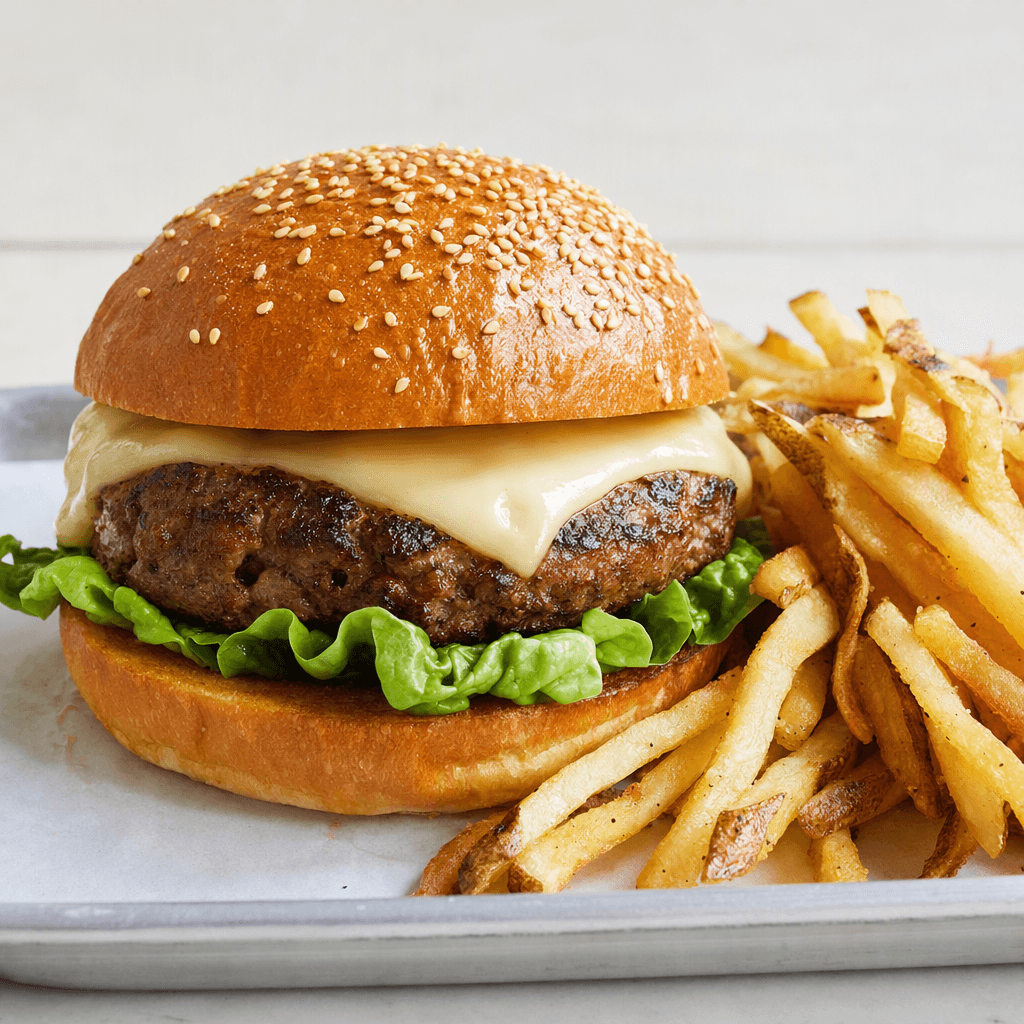
Fast Food Calories
High calorie, often fatty and salty, quick to prepare
In season: Spring · Summer · Autumn · Winter
CALORIES · 100 G
GI
POTASSIUM · 100 G
FIBER · 100 G
Quick answer
1 serving (medium) of Fast Food (150 g) has 405 calories. That works out to 270 calories per 100 g. It contains 45 g of carbs, 12 g of protein, 19.5 g of fat and 3 g of fiber. Its 3.2 mg of B3 covers 20% of the Daily Value. Its glycemic index is 70 (high), so it raises blood sugar quickly.
Fast Food Nutrition Facts
Selected: 1 serving (medium) · 150 g
405
KCAL / 150G
Carbs
45g
· 16% DV
Protein
12g
· 24% DV
Fat
19.5g
· 25% DV
Fiber
3g
· 11% DV
DV is the share of the daily value covered, on a 2,000 kcal reference diet.
Calories come from: Carbs 45% · Protein 12% · Fat 43%
Fast Food nutrition facts table · 1 serving (medium) (150 g)
| Nutrient | Amount | % DV |
|---|---|---|
| Calories | 405 kcal | |
| Total fat | 19.5 g | 25% |
| Saturated fat | 5.25 g | 26% |
| Trans fat | 0.45 g | |
| Sodium | 810 mg | 35% |
| Total carbohydrate | 45 g | 16% |
| Fiber | 3 g | 11% |
| Protein | 12 g | 24% |
Calories: Calories measure energy. Average daily need is 2,000 kcal. Excess calories are stored as fat, too few cause weight loss.
Carbs: Your body's primary energy source. The brain runs exclusively on carbs. Daily need: 275g.
Protein: Essential for muscle repair and cell growth. Daily need: 50g. Keeps you full and boosts metabolism.
Fat: Needed for hormone production and vitamin absorption. Daily need: 78g. Limit saturated fats, choose unsaturated.
Fiber: Critical for digestive health and satiety. Daily need: 28g. Stabilizes blood sugar, lowers cholesterol.

Log this food in EatBetter
100,000+ people use it
- Get your daily calorie target
- Snap your meal, log it in seconds
- See every vitamin and mineral

📸 Scan the code to get the app free.

How Many Calories in 1 Serving of Fast Food?
| Serving | Amount | Calories |
|---|---|---|
| 1 serving (medium) | 150 g | 405 kcal |
| 100 g | 100 g | 270 kcal |
| 1 serving (small) | 100 g | 270 kcal |
| 1 piece (medium) | 120 g | 324 kcal |
| 1 piece (large) | 200 g | 540 kcal |
| 1 serving (large) | 250 g | 675 kcal |
| 1 pack (jumbo) | 300 g | 810 kcal |
| 1 serving (extra large) | 350 g | 945 kcal |
Calculated from 270 calories per 100 g.
Frequently Asked Questions About Fast Food
What counts as fast food?
Fast food is food prepared and served quickly, often from a counter or drive-through. Burgers and fries are common examples, but quick-service sandwiches, pizza, and local takeaway meals can count too.
Is fast food unhealthy?
Fast food can be an unhealthy everyday choice because many meals are salty, rich, and served in large portions, with few vegetables. Eating it occasionally does not make a diet unhealthy by itself; how often it replaces varied meals matters.
Can fast food be a healthy meal?
Yes, fast food can be a more balanced meal if you choose vegetables, a grilled protein, and water, and keep the portion moderate. A salad or vegetable side can help round it out; creamy sauces and fried extras can make that harder.
Why do I crave fast food?
Fast food combines strong flavors, salt, and fat in a way that many people find especially rewarding. Convenience, habits, and seeing or smelling familiar foods can also trigger cravings; the craving does not mean your body needs a particular fast-food meal.
Does fast food cause weight gain?
Eating fast food often can contribute to weight gain, especially when portions are large and the meals add more energy than you use. Smaller portions and fewer extras can make a fast-food meal easier to fit into your usual eating pattern.
How often can you eat fast food?
There is no fixed frequency that suits everyone, but fast food is best kept from becoming your everyday default. Make room for varied meals with vegetables and other minimally prepared foods, and choose fast food when it is convenient rather than relying on it routinely.
Why does fast food make me feel tired?
A large fast-food meal can leave you feeling sluggish, particularly if it is heavy and you eat it quickly. Try a smaller portion, eat at a slower pace, and choose water; persistent or unusual fatigue may have another cause.
How long do fast-food leftovers last in the fridge?
Fast-food leftovers generally keep for three to four days in a refrigerator if they were chilled within two hours of serving. Store them in a covered container and reheat until steaming hot; discard food that smells or looks unusual.
Is fast food bad for children?
Fast food is not automatically harmful for children, but having it frequently can crowd out varied meals that support healthy growth. Offer a child-sized portion, add fruit or vegetables when available, and make water the usual drink.
Can fast food cause bloating?
Yes, fast food can cause bloating for some people, especially when a meal is large, salty, fatty, or eaten quickly. A smaller portion, slower eating, and water may help; recurring or severe symptoms warrant medical advice.
Fast Food Vitamins & Minerals
Vitamins
B3
3.15mg · 20% DV
B12
0.45µg · 19% DV
B5
0.75mg · 15% DV
B2
0.17mg · 13% DV
Minerals
Sodium
810mg · 35% DV
Selenium
11µg · 20% DV
Phosphorus
135mg · 19% DV
Zinc
1.65mg · 15% DV
Potassium ⭐
270mg · 8% DV
Fast Food Glycemic Index
GLYCEMIC INDEX
GLYCEMIC LOAD
Accounts for portion size — a more realistic measure than GI alone.
How to Burn Off Fast Food
To burn the 405 calories in 1 serving (medium) (150 g):
🚶
Walking (5 km/h)
🏃
Running (8 km/h)
🚴
Cycling
🏊
Swimming
Times are calculated with the MET equation for a 70 kg adult. Actual burn varies with your weight, age and pace.
What is Fast Food?
Fast food describes meals made or served quickly, often through counter service or takeaway. Burgers, fries, fried chicken, pizza and sandwiches are common examples. The modern quick-service restaurant model became especially prominent in the United States, then spread worldwide and adapted to local tastes.
Across English-speaking countries, it is a familiar choice for a quick lunch, a late-night bite or a meal on the go. It tends to be savoury and filling, with textures ranging from crisp fried coatings to soft buns; the nutrition varies considerably by item. Fast food is often high in fat and salt and relatively low in fibre. The listed 270 calories per 100 g is a broad guide, not a reliable value for every meal. For a lighter combination, choose a smaller portion, add vegetables and go easy on rich sauces.
How Nutritious Is Fast Food?
Nutrient density
Low
How many vitamins, minerals and how much fiber this food carries per calorie. A high score means a lot of nutrition for few calories.
Satiety score
Medium
An EatBetter score computed from fiber, protein and calorie density. A high score means staying full longer on the same calories.
Both scores are calculated per 100 g and do not change with the selected portion. The satiety score is EatBetter's own calculation, not a clinical measure.
Is Fast Food Processed?
NOVA 4
Ultra-Processed
1. Unprocessed
2. Minimally Processed
3. Processed
4. Ultra-Processed
NOVA classifies foods into 4 groups by industrial processing. NOVA 1 (unprocessed) is the healthiest.
Does Fast Food Contain Allergens?
Contains these allergens:
Which Diets Is Fast Food Good For?
Vegan
— Not suitable
Vegetarian
— Not suitable
Gluten-Free
— Not suitable
Dairy-Free
— Not suitable
Mediterranean
— Not suitable
Paleo
— Not suitable
Whole30
— Not suitable
DASH
— Not suitable
Keto
— Not suitable
Low FODMAP
— Not suitable
Fast Food Fat Profile
SATURATED
5.25g
MONOUNSATURATED
6.75g
POLYUNSATURATED
3.3g
Omega 6:3 ratio 22.5:1
Above the ideal 4:1 (22.5:1).
Compare Fast Food
Foods Similar to Fast Food
Have another question about Fast Food?
Ask the AI nutrition coach — calories, portions, alternatives and more, answered in seconds in the app.

Scan calories with your camera
Instant AI nutrition analysis

Nutrition data compiled from USDA FoodData Central and scientific sources.