

Ready & Packaged Foods
All →Vegetables & Legumes
All →Desserts & Confectionery
All →Meat & Protein
All →Grains & Bakery
All →Beverages
All →Milk & Dairy
All →

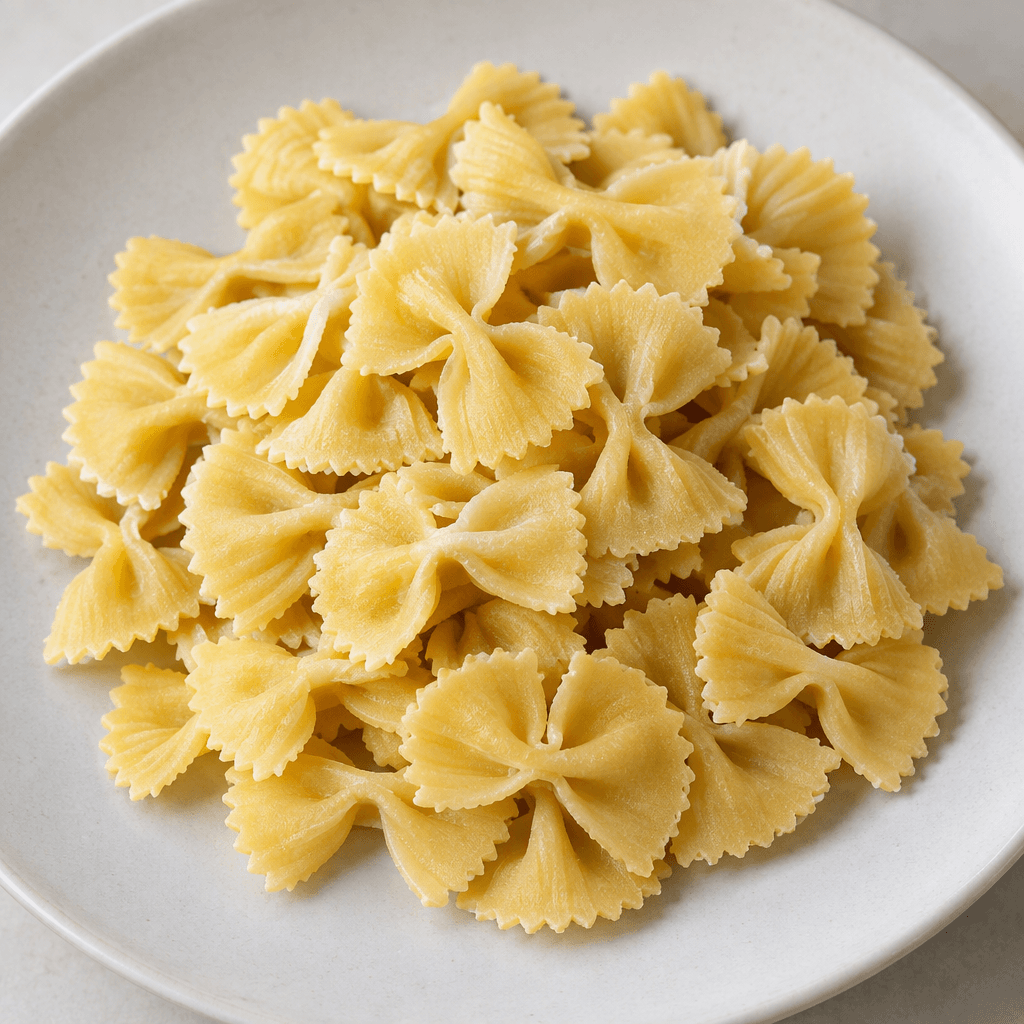
Farfalle Pasta Calories
Bow-tie shaped pasta, typically made from wheat
In season: Spring · Summer · Autumn · Winter
CALORIES
GI
POTASSIUM
FIBER
Quick answer
1 cup (medium) of Farfalle Pasta (70 g) has 248 calories. That works out to 355 calories per 100 g. It contains 50.4 g of carbs, 8.8 g of protein, 1 g of fat and 2.1 g of fiber. Its 21 µg of Selenium covers 38% of the Daily Value. Its glycemic index is 50 (medium), so it raises blood sugar at a moderate pace.
What is Farfalle Pasta?
Farfalle Pasta is the bow-tie-shaped pasta associated with northern Italy. Its name means “butterflies”; the pieces are pinched in the middle, with ruffled edges that catch sauce and a pleasantly firm centre. It is usually made from wheat semolina and water.
In Italy and elsewhere, it is served hot with tomato, vegetable or creamy sauces, and is also popular in chilled pasta salads with vegetables. It is mainly a source of carbohydrates, with 12.5 g of protein per 100 g. For a lighter meal, pair it with plenty of vegetables and a tomato-based sauce, or use it as part of a mixed salad rather than the whole dish.
Farfalle Pasta Nutrition Facts
Selected: 100 g
355
KCAL / 100G
Carbs
72g
· 26% DV
Protein
12.5g
· 25% DV
Fat
1.5g
· 2% DV
Fiber
3g
· 11% DV
DV is the share of the daily value covered, on a 2,000 kcal reference diet.
Calories come from: Carbs 82% · Protein 14% · Fat 4%
Farfalle Pasta Vitamins & Minerals
Vitamins
B1
0.15mg · 13% DV
B3
2mg · 13% DV
B5
0.3mg · 6% DV
B6
0.1mg · 6% DV
Minerals
Selenium
30µg · 55% DV
Manganese
1mg · 43% DV
Phosphorus
120mg · 17% DV
Magnesium
40mg · 10% DV
How Nutritious Is Farfalle Pasta?
Nutrient density
Low
How many vitamins, minerals and how much fiber this food carries per calorie. A high score means a lot of nutrition for few calories.
Satiety score
Medium
An EatBetter score computed from fiber, protein and calorie density. A high score means staying full longer on the same calories.
Both scores are calculated per 100 g and do not change with the selected portion. The satiety score is EatBetter's own calculation, not a clinical measure.
Farfalle Pasta Glycemic Index
GLYCEMIC INDEX
GLYCEMIC LOAD
Accounts for portion size — a more realistic measure than GI alone.
How to Burn Off Farfalle Pasta
To burn the 355 calories in 100 g:
🚶
Walking (5 km/h)
🏃
Running (8 km/h)
🚴
Cycling
🏊
Swimming
Times are calculated with the MET equation for a 70 kg adult. Actual burn varies with your weight, age and pace.
Is Farfalle Pasta Processed?
NOVA 3
Processed
1. Unprocessed
2. Minimally Processed
3. Processed
4. Ultra-Processed
NOVA classifies foods into 4 groups by industrial processing. NOVA 1 (unprocessed) is the healthiest.
Does Farfalle Pasta Contain Allergens?
Contains these allergens:
Which Diets Is Farfalle Pasta Good For?
Vegan
— Not suitable
Vegetarian
✓ Suitable
Gluten-Free
— Not suitable
Dairy-Free
— Not suitable
Mediterranean
✓ Suitable
Paleo
— Not suitable
Whole30
— Not suitable
DASH
— Not suitable
Keto
— Not suitable
Low FODMAP
— Not suitable
Farfalle Pasta Fat Profile
SATURATED
0.3g
MONOUNSATURATED
0.2g
POLYUNSATURATED
0.5g
Omega 6:3 ratio 17.5:1
Above the ideal 4:1 (17.5:1).
Compare Farfalle Pasta
Foods Similar to Farfalle Pasta
Frequently Asked Questions About Farfalle Pasta
What is Farfalle Pasta?
Farfalle Pasta is a bow-tie-shaped pasta with a pinched center and ruffled edges. Its name means “butterflies” in Italian, and the shape gives each piece a firm middle with thinner, softer edges.
How long should Farfalle Pasta cook?
Cook Farfalle Pasta for the time given on its package, since cooking times vary by brand and whether the pasta is dried or fresh. Taste a piece near the end: the pinched center is thicker and may take longer to cook than the edges.
Why is Farfalle Pasta shaped like a bow tie?
Farfalle Pasta gets its distinctive shape from pinching a small piece of dough in the middle and leaving the edges ruffled. The name comes from the Italian word for butterflies; the shape also gives the pasta contrasting textures.
What sauce goes best with Farfalle Pasta?
Farfalle Pasta works well with chunky tomato sauces, pesto, and creamy or vegetable-based sauces. Its ruffled edges catch sauce, while the broad surface pairs easily with small ingredients such as peas, chopped vegetables, or pieces of chicken.
Is Farfalle Pasta good for pasta salad?
Yes, Farfalle Pasta is a good choice for pasta salad because its bow-tie shape mixes easily with vegetables and dressing. Cook it until just tender, drain it well, and let it cool before adding the other ingredients.
Where does Farfalle Pasta come from?
Farfalle Pasta is Italian and is traditionally associated with northern Italy, particularly Lombardy and Emilia-Romagna. The name means “butterflies,” a reference to the pinched center and ruffled edges that distinguish it from other pasta shapes.
How do you keep Farfalle Pasta from sticking together?
Cook Farfalle Pasta in plenty of boiling water and stir it, especially during the first few minutes. Drain it as soon as it is done and combine it with sauce promptly; leaving cooked pasta to sit in a pile encourages sticking.
Can Farfalle Pasta be used in baked pasta dishes?
Yes, Farfalle Pasta can be baked with sauce, vegetables, and cheese. Boil it for slightly less time than the package directs before baking, so it can finish cooking in the oven without becoming too soft.
Can you freeze cooked Farfalle Pasta?
Yes, cooked Farfalle Pasta can be frozen, though it may become softer after thawing. Cool and drain it well, freeze it in an airtight container, and reheat it gently with sauce; pasta salad with a dairy-based dressing is better kept refrigerated instead.
Why is the middle of Farfalle Pasta still hard after cooking?
The pinched center of Farfalle Pasta is thicker than its ruffled edges, so it can stay firm if the pasta is undercooked. Keep it at a steady boil, stir occasionally, and taste the center of a piece before draining.
Have another question about Farfalle Pasta?
Ask the AI nutrition coach — calories, portions, alternatives and more, answered in seconds in the app.

Scan calories with your camera
Instant AI nutrition analysis

Nutrition data compiled from USDA FoodData Central and scientific sources.