

Ready & Packaged Foods
All →Vegetables & Legumes
All →Desserts & Confectionery
All →Meat & Protein
All →Grains & Bakery
All →Beverages
All →Milk & Dairy
All →

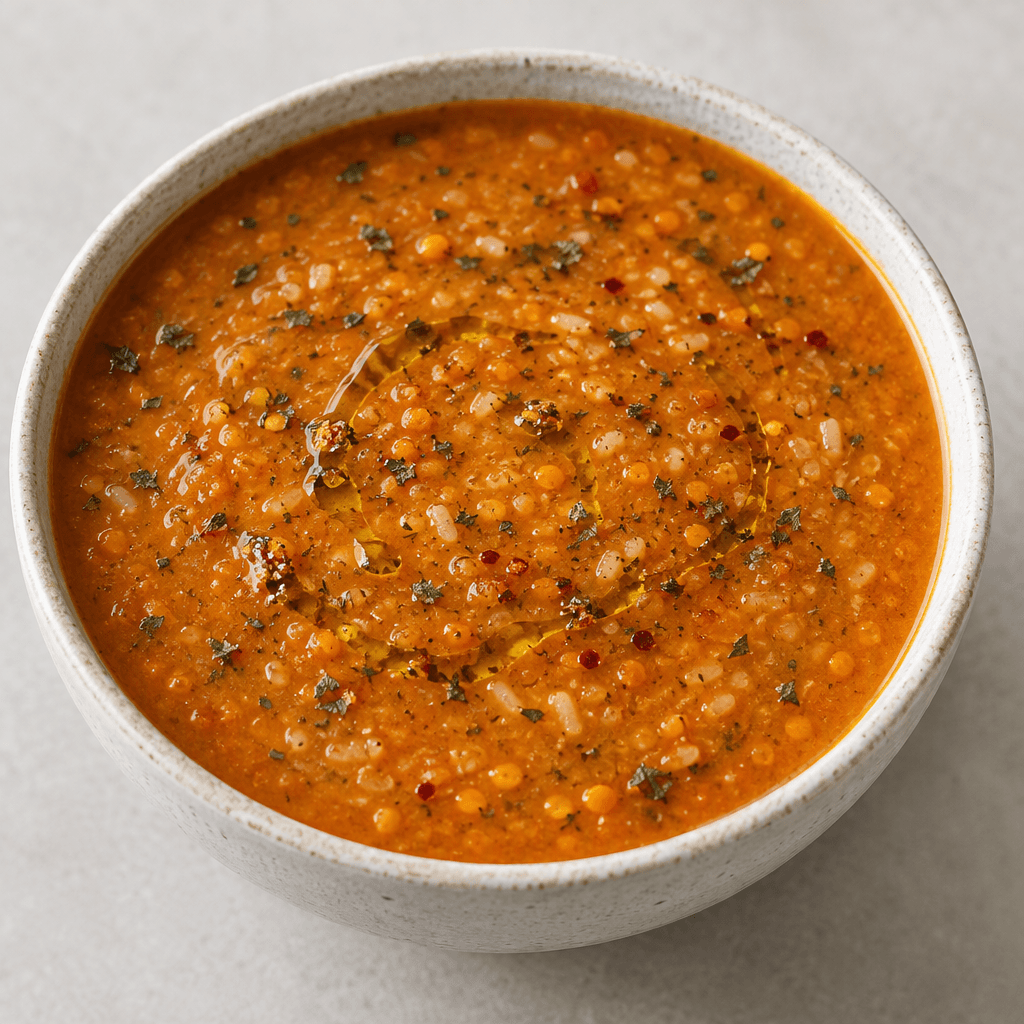
Ezogelin Soup Calories
Traditional Turkish soup made with red lentils, bulgur, rice, tomato, spices, and onion.
In season: Autumn · Winter
CALORIES
GI
POTASSIUM
FIBER
Quick answer
1 cup (medium) of Ezogelin Soup (250 g) has 175 calories. That works out to 70 calories per 100 g. It contains 28.8 g of carbs, 8 g of protein, 3 g of fat and 6.8 g of fiber. Its 0.2 mg of Copper covers 25% of the Daily Value. Its glycemic index is 55 (medium), so it raises blood sugar at a moderate pace.
What is Ezogelin Soup?
Ezogelin Soup is a Turkish red-lentil soup cooked with bulgur, rice, onion and tomato, then seasoned with mint, pepper and other spices. It is associated with southeastern Turkey, particularly Gaziantep. The finished soup is usually thick, with soft lentils and fine grains of bulgur and rice giving it a gently textured body.
In Turkey it is commonly served hot as a first course at home or in lokantas, often with bread and a squeeze of lemon. Its lentils and grains contribute fibre, while it is not especially high in protein on its own. For a lighter bowl, use a restrained hand with the oil and serve it alongside a salad or vegetables.
Ezogelin Soup Nutrition Facts
Selected: 100 g
70
KCAL / 100G
Carbs
11.5g
· 4% DV
Protein
3.2g
· 6% DV
Fat
1.2g
· 2% DV
Fiber
2.7g
· 10% DV
DV is the share of the daily value covered, on a 2,000 kcal reference diet.
Calories come from: Carbs 66% · Protein 18% · Fat 16%
Ezogelin Soup Vitamins & Minerals
Vitamins
B1
0.06mg · 5% DV
Folate
18µg · 5% DV
Vitamin C
4.5mg · 5% DV
B5
0.18mg · 4% DV
Minerals
Sodium
220mg · 10% DV
Iron
1mg · 6% DV
Phosphorus
38mg · 5% DV
Magnesium
16mg · 4% DV
How Nutritious Is Ezogelin Soup?
Nutrient density
Medium
How many vitamins, minerals and how much fiber this food carries per calorie. A high score means a lot of nutrition for few calories.
Satiety score
Medium
An EatBetter score computed from fiber, protein and calorie density. A high score means staying full longer on the same calories.
Both scores are calculated per 100 g and do not change with the selected portion. The satiety score is EatBetter's own calculation, not a clinical measure.
Ezogelin Soup Glycemic Index
GLYCEMIC INDEX
GLYCEMIC LOAD
Accounts for portion size — a more realistic measure than GI alone.
How to Burn Off Ezogelin Soup
To burn the 70 calories in 100 g:
🚶
Walking (5 km/h)
🏃
Running (8 km/h)
🚴
Cycling
🏊
Swimming
Times are calculated with the MET equation for a 70 kg adult. Actual burn varies with your weight, age and pace.
Is Ezogelin Soup Processed?
NOVA 2
Minimally Processed
1. Unprocessed
2. Minimally Processed
3. Processed
4. Ultra-Processed
NOVA classifies foods into 4 groups by industrial processing. NOVA 1 (unprocessed) is the healthiest.
Does Ezogelin Soup Contain Allergens?
No known major allergens
Which Diets Is Ezogelin Soup Good For?
Vegan
— Not suitable
Vegetarian
✓ Suitable
Gluten-Free
— Not suitable
Dairy-Free
— Not suitable
Mediterranean
✓ Suitable
Paleo
— Not suitable
Whole30
— Not suitable
DASH
— Not suitable
Keto
— Not suitable
Low FODMAP
— Not suitable
Ezogelin Soup Fat Profile
SATURATED
0.2g
MONOUNSATURATED
0.3g
POLYUNSATURATED
0.5g
Omega 6:3 ratio 4.3:1
Above the ideal 4:1 (4.3:1).
Compare Ezogelin Soup
Foods Similar to Ezogelin Soup
Frequently Asked Questions About Ezogelin Soup
What is Ezogelin Soup made of?
Ezogelin Soup is made with red lentils, bulgur, rice, onion, tomato or tomato paste, and spices such as dried mint and red pepper. Recipes vary, but the combination of lentils and grains gives this Turkish soup its characteristic hearty texture.
How do you make Ezogelin Soup?
To make Ezogelin Soup, sauté onion with tomato paste, then simmer it with red lentils, bulgur, rice, and water or stock until tender. Season with mint and pepper; blend only partly if you want to retain some of the grains’ texture.
What is the difference between Ezogelin Soup and Turkish lentil soup?
Ezogelin Soup includes bulgur and rice as well as red lentils, while Turkish red lentil soup is often made without those grains. Ezogelin Soup is typically more textured and seasoned with mint and red pepper rather than served completely smooth.
Why is it called Ezogelin Soup?
Ezogelin Soup is named after Ezo Gelin, a woman from southeastern Turkey whose story is part of local folklore. The dish is strongly associated with Gaziantep, but popular stories about how she created it are legends rather than firmly documented history.
What does Ezogelin Soup taste like?
Ezogelin Soup tastes savory and gently tangy from the tomato, with earthy lentils, soft grains, and a fragrant note of dried mint. Red pepper can add warmth or noticeable heat, depending on the recipe.
Is Ezogelin Soup blended smooth?
Usually, Ezogelin Soup is not blended completely smooth. The lentils soften and thicken the broth, while bulgur and rice provide texture; some cooks briefly blend part of the soup for a thicker consistency without removing every grain.
What is traditionally served with Ezogelin Soup?
Ezogelin Soup is often served hot with lemon wedges and bread, and may be followed by a main course. A squeeze of lemon brightens its savory flavor; flatbread or pide makes a familiar accompaniment.
Can you freeze Ezogelin Soup?
Yes, Ezogelin Soup freezes well, though the rice and bulgur may become softer after thawing. Freeze it in airtight, meal-sized containers, then reheat it thoroughly and stir in a little water or stock if it has thickened.
How long does Ezogelin Soup last in the refrigerator?
Ezogelin Soup keeps for about 3–4 days in the refrigerator when cooled promptly and stored in a covered container. Reheat only the portion you plan to eat, stirring until it is hot throughout.
Is Ezogelin Soup healthy?
Ezogelin Soup can be a nourishing meal: red lentils provide plant protein and fibre, while bulgur and rice make it filling. A homemade version lets you adjust the salt and oil, and adding a salad can round out the meal.
Have another question about Ezogelin Soup?
Ask the AI nutrition coach — calories, portions, alternatives and more, answered in seconds in the app.

Scan calories with your camera
Instant AI nutrition analysis

Nutrition data compiled from USDA FoodData Central and scientific sources.