

Ready & Packaged Foods
All →Vegetables & Legumes
All →Desserts & Confectionery
All →Meat & Protein
All →Grains & Bakery
All →Beverages
All →Milk & Dairy
All →

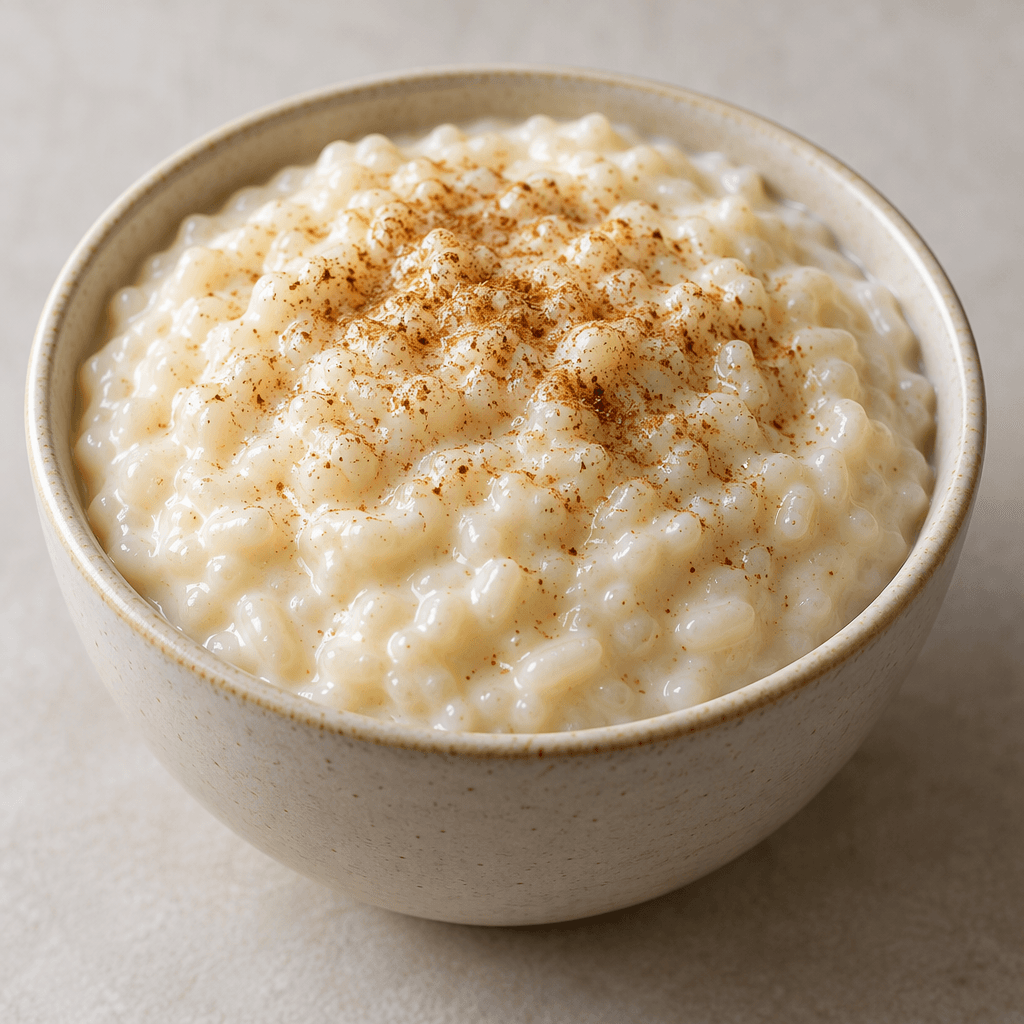
Homemade rice pudding Calories
Source of calcium and energy
In season: Spring · Summer · Autumn · Winter
CALORIES
GI
POTASSIUM
FIBER
Quick answer
1 cup (medium) of Homemade rice pudding (200 g) has 270 calories. That works out to 135 calories per 100 g. It contains 45.6 g of carbs, 6.4 g of protein, 6.8 g of fat and 0.6 g of fiber. Its 0.8 µg of B12 covers 32% of the Daily Value. Its glycemic index is 62 (medium), so it raises blood sugar at a moderate pace.
What is Homemade rice pudding?
Homemade rice pudding here refers to Turkish sütlaç, a home-style dessert made by gently cooking rice with milk and sugar. It is often finished on the stovetop, though some versions are baked until the surface is lightly browned. The pudding is usually served chilled, with soft grains suspended in a creamy, mildly sweet base.
In Turkey it is enjoyed after a meal or offered to guests; elsewhere, it fits easily among familiar rice-pudding desserts, whether served as a small treat or a simple make-ahead pudding. It is mainly a source of carbohydrates, with some protein and calcium from the milk. For a less sweet version, reduce the sugar and add cinnamon at serving.
Homemade rice pudding Nutrition Facts
Selected: 100 g
135
KCAL / 100G
Carbs
22.8g
· 8% DV
Protein
3.2g
· 6% DV
Fat
3.4g
· 4% DV
Fiber
0.3g
· 1% DV
DV is the share of the daily value covered, on a 2,000 kcal reference diet.
Calories come from: Carbs 68% · Protein 10% · Fat 22%
Homemade rice pudding Vitamins & Minerals
Vitamins
B12
0.38µg · 16% DV
B2
0.14mg · 11% DV
B5
0.31mg · 6% DV
Vitamin A
32µg · 4% DV
Minerals
Phosphorus
92mg · 13% DV
Calcium
110mg · 11% DV
Iodine
14µg · 9% DV
Selenium
3.4µg · 6% DV
How Nutritious Is Homemade rice pudding?
Nutrient density
Medium
How many vitamins, minerals and how much fiber this food carries per calorie. A high score means a lot of nutrition for few calories.
Satiety score
Low
An EatBetter score computed from fiber, protein and calorie density. A high score means staying full longer on the same calories.
Both scores are calculated per 100 g and do not change with the selected portion. The satiety score is EatBetter's own calculation, not a clinical measure.
Homemade rice pudding Glycemic Index
GLYCEMIC INDEX
GLYCEMIC LOAD
Accounts for portion size — a more realistic measure than GI alone.
How to Burn Off Homemade rice pudding
To burn the 135 calories in 100 g:
🚶
Walking (5 km/h)
🏃
Running (8 km/h)
🚴
Cycling
🏊
Swimming
Times are calculated with the MET equation for a 70 kg adult. Actual burn varies with your weight, age and pace.
Is Homemade rice pudding Processed?
NOVA 2
Minimally Processed
1. Unprocessed
2. Minimally Processed
3. Processed
4. Ultra-Processed
NOVA classifies foods into 4 groups by industrial processing. NOVA 1 (unprocessed) is the healthiest.
Does Homemade rice pudding Contain Allergens?
Contains these allergens:
Which Diets Is Homemade rice pudding Good For?
Vegan
— Not suitable
Vegetarian
✓ Suitable
Gluten-Free
✓ Suitable
Dairy-Free
— Not suitable
Mediterranean
✓ Suitable
Paleo
— Not suitable
Whole30
— Not suitable
DASH
— Not suitable
Keto
— Not suitable
Low FODMAP
— Not suitable
Homemade rice pudding Fat Profile
SATURATED
2.1g
MONOUNSATURATED
0.9g
POLYUNSATURATED
0.13g
Omega 6:3 ratio 3.3:1
Below the ideal 4:1 — a good omega balance.
Compare Homemade rice pudding
Foods Similar to Homemade rice pudding
Frequently Asked Questions About Homemade rice pudding
How do you make homemade rice pudding?
Homemade rice pudding is made by gently cooking rice with milk and sugar until the grains are soft and the mixture thickens. Stir regularly, especially near the end, then portion it into bowls and chill or serve warm.
What kind of rice is best for homemade rice pudding?
Short- or medium-grain white rice works well for homemade rice pudding because it releases starch as it cooks and gives the milk a creamy texture. Long-grain rice tends to stay more separate and produces a less thick pudding.
Does homemade rice pudding contain eggs?
Traditional stovetop homemade rice pudding usually contains no eggs; rice, milk, and sugar are enough. Some baked versions add egg yolk for extra richness or a browned top, so recipes vary.
Why is my homemade rice pudding runny?
Homemade rice pudding can seem runny if it has not simmered long enough for the rice to release starch and the milk to reduce. It also thickens as it cools, so judge the final texture after chilling.
How can I thicken homemade rice pudding?
Simmer homemade rice pudding gently for longer, stirring often, to reduce excess liquid and soften the rice further. If you need a quicker fix, mix a little cornstarch with cold milk, stir it in, and cook until thickened.
How long does homemade rice pudding last in the fridge?
Homemade rice pudding keeps for about three days in the refrigerator when covered and chilled promptly. Store it in sealed containers, and discard it if it has been left at room temperature for an extended period.
Can you freeze homemade rice pudding?
Yes, homemade rice pudding can be frozen, but thawing often makes the milk separate and the rice softer or grainier. Freeze it in portions, thaw it in the refrigerator, then stir well while gently reheating.
Should homemade rice pudding be served warm or cold?
Homemade rice pudding can be served either warm or cold. Turkish-style sütlaç is commonly chilled in individual bowls, while a warm serving is also comforting; chilling gives the pudding a firmer, more settled texture.
How do you stop homemade rice pudding from sticking to the pan?
Cook homemade rice pudding in a heavy-bottomed saucepan over low to medium heat and stir frequently, scraping the bottom. Milk and rice can scorch quickly once the mixture thickens, so avoid leaving the pan unattended.
Is homemade rice pudding a healthy dessert?
Homemade rice pudding provides calcium from milk, but it also contains added sugar and rice carbohydrates. A smaller bowl with less sugar can make it a more moderate dessert; it is not a substitute for a balanced meal.
Have another question about Homemade rice pudding?
Ask the AI nutrition coach — calories, portions, alternatives and more, answered in seconds in the app.

Scan calories with your camera
Instant AI nutrition analysis

Nutrition data compiled from USDA FoodData Central and scientific sources.