

Ready & Packaged Foods
All →Vegetables & Legumes
All →Desserts & Confectionery
All →Meat & Protein
All →Grains & Bakery
All →Beverages
All →Milk & Dairy
All →

Homemade Mosaic Cake Calories
Rich no-bake dessert made with cocoa biscuits, butter, and milk
In season: Spring · Summer · Autumn · Winter
CALORIES
GI
POTASSIUM
FIBER
Quick answer
1 slice (medium) of Homemade Mosaic Cake (90 g) has 368 calories. That works out to 409 calories per 100 g. It contains 53.3 g of carbs, 4.6 g of protein, 15.6 g of fat and 1.9 g of fiber. Its 9.5 µg of Selenium covers 17% of the Daily Value. Its glycemic index is 64 (medium), so it raises blood sugar at a moderate pace.
What is Homemade Mosaic Cake?
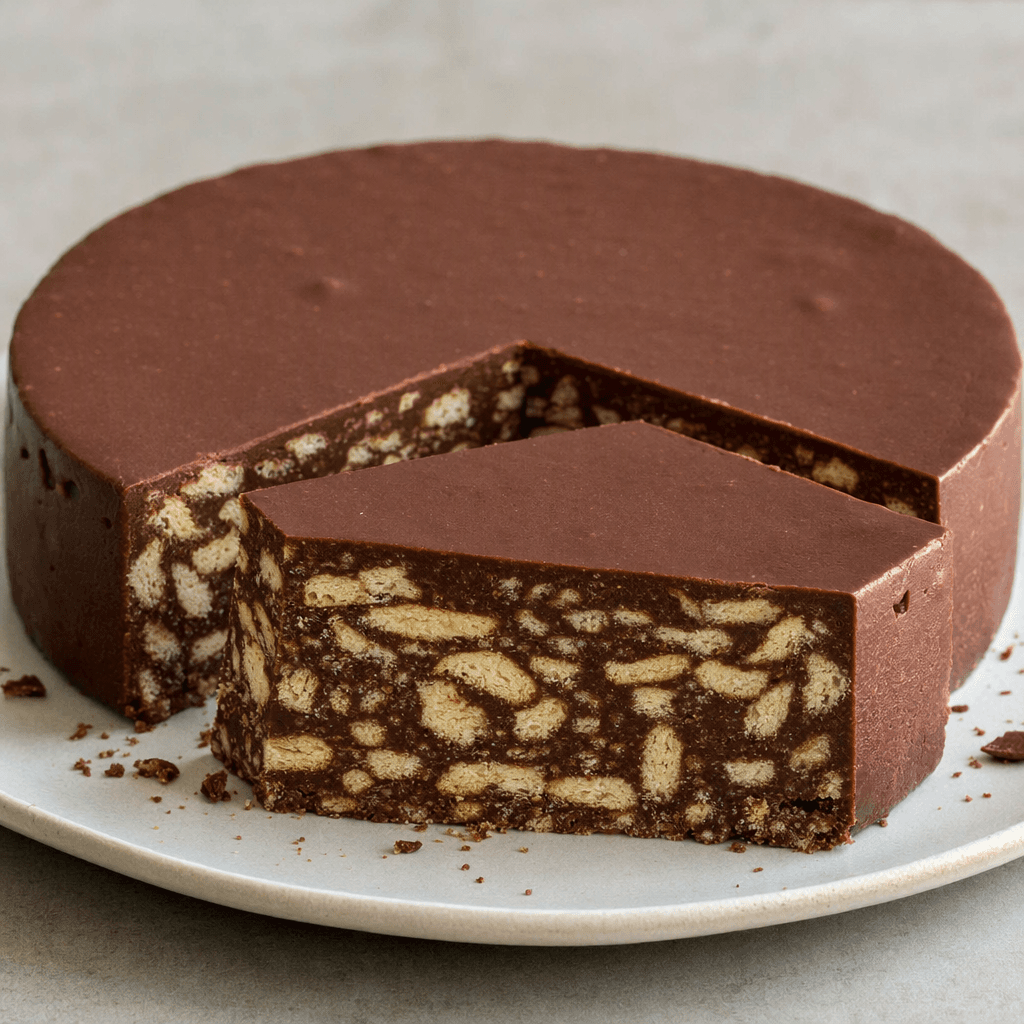
Homemade Mosaic Cake is a familiar Turkish no-bake dessert made by coating broken biscuits in a mixture of cocoa, milk and butter, then chilling it until firm. Sliced, it reveals the pale biscuit pieces set in a dark chocolate-coloured base, creating the mosaic pattern that gives the cake its name.
It is served cold, usually in slices, and its sweet, dense, biscuit-studded texture makes it a popular treat with tea or coffee. The cake is rich in carbohydrates and fat, so a modest slice can feel satisfying. For a lighter serving, cut thinner slices and pair them with unsweetened tea or coffee.
Homemade Mosaic Cake Nutrition Facts
Selected: 100 g
409
KCAL / 100G
Carbs
59.2g
· 22% DV
Protein
5.1g
· 10% DV
Fat
17.3g
· 22% DV
Fiber
2.1g
· 8% DV
DV is the share of the daily value covered, on a 2,000 kcal reference diet.
Calories come from: Carbs 57% · Protein 5% · Fat 38%
Homemade Mosaic Cake Vitamins & Minerals
Vitamins
B1
0.18mg · 15% DV
B12
0.35µg · 15% DV
Vitamin A
105µg · 12% DV
B2
0.16mg · 12% DV
Minerals
Selenium
10.5µg · 19% DV
Phosphorus
116mg · 17% DV
Sodium
285mg · 12% DV
Iron
2mg · 11% DV
How Nutritious Is Homemade Mosaic Cake?
Nutrient density
Low
How many vitamins, minerals and how much fiber this food carries per calorie. A high score means a lot of nutrition for few calories.
Satiety score
Low
An EatBetter score computed from fiber, protein and calorie density. A high score means staying full longer on the same calories.
Both scores are calculated per 100 g and do not change with the selected portion. The satiety score is EatBetter's own calculation, not a clinical measure.
Homemade Mosaic Cake Glycemic Index
GLYCEMIC INDEX
GLYCEMIC LOAD
Accounts for portion size — a more realistic measure than GI alone.
How to Burn Off Homemade Mosaic Cake
To burn the 409 calories in 100 g:
🚶
Walking (5 km/h)
🏃
Running (8 km/h)
🚴
Cycling
🏊
Swimming
Times are calculated with the MET equation for a 70 kg adult. Actual burn varies with your weight, age and pace.
Is Homemade Mosaic Cake Processed?
NOVA 3
Processed
1. Unprocessed
2. Minimally Processed
3. Processed
4. Ultra-Processed
NOVA classifies foods into 4 groups by industrial processing. NOVA 1 (unprocessed) is the healthiest.
Does Homemade Mosaic Cake Contain Allergens?
Contains these allergens:
Which Diets Is Homemade Mosaic Cake Good For?
Vegan
— Not suitable
Vegetarian
✓ Suitable
Gluten-Free
— Not suitable
Dairy-Free
— Not suitable
Mediterranean
— Not suitable
Paleo
— Not suitable
Whole30
— Not suitable
DASH
— Not suitable
Keto
— Not suitable
Low FODMAP
— Not suitable
Homemade Mosaic Cake Fat Profile
SATURATED
9.4g
MONOUNSATURATED
4.3g
POLYUNSATURATED
2.9g
Omega 6:3 ratio 22.5:1
Above the ideal 4:1 (22.5:1).
Compare Homemade Mosaic Cake
Foods Similar to Homemade Mosaic Cake
Frequently Asked Questions About Homemade Mosaic Cake
What is homemade mosaic cake?
Homemade mosaic cake is a chilled dessert made by binding broken plain biscuits with a cocoa mixture, commonly containing butter, milk, and sugar. Once sliced, the pale biscuit pieces show against the dark chocolate mixture, creating its distinctive mosaic pattern.
How do you make homemade mosaic cake?
Homemade mosaic cake is made by folding broken biscuits into a smooth cocoa, butter, milk, and sugar mixture, then shaping and chilling it until firm. Keep the biscuit pieces chunky rather than crushing them into crumbs so the slices show a clear pattern.
Why is homemade mosaic cake called mosaic cake?
Homemade mosaic cake gets its name from the patchwork pattern of light biscuit pieces set in the dark cocoa mixture. Each slice reveals a different arrangement, much like a small mosaic, so the look comes from the biscuits rather than decoration.
Does homemade mosaic cake need to be baked?
No, homemade mosaic cake is usually a no-bake dessert. The biscuit-and-cocoa mixture is shaped and chilled until it firms up; there is no need to bake it in an oven. Keep it refrigerated until you are ready to serve.
What biscuits are best for homemade mosaic cake?
Plain, crisp tea biscuits or digestive-style biscuits work well in homemade mosaic cake because they hold their shape while taking on moisture from the cocoa mixture. Break them into small chunks rather than crumbs for the characteristic contrasting pattern.
Can you make homemade mosaic cake without eggs?
Yes, homemade mosaic cake can be made without eggs, and many basic versions use none. Butter and the cocoa mixture bind the biscuit pieces together as the cake chills. If adapting a recipe that calls for raw egg, choose an egg-free version instead.
Can homemade mosaic cake be frozen?
Yes, homemade mosaic cake can be frozen. Wrap individual slices or the whole cake tightly, then thaw it in the refrigerator before serving. Chilling it after thawing helps restore a firm texture and makes the slices easier to handle.
How long does homemade mosaic cake need to chill?
Homemade mosaic cake needs several hours in the refrigerator to become firm enough to slice cleanly. Chill it covered, and check that the centre has set before serving; a longer chill can make cutting easier.
How long does homemade mosaic cake last in the fridge?
Homemade mosaic cake keeps for a few days in the refrigerator when stored in a covered container. Because recipes commonly contain milk and butter, return leftovers to the fridge after serving rather than leaving them out for an extended time.
Why won't homemade mosaic cake hold together?
Homemade mosaic cake may fail to hold together if the biscuit mixture is too dry, the biscuits are crushed too finely, or the cake has not chilled long enough. Add enough mixture to coat the pieces, press the shaped cake firmly, and let it set before slicing.
Have another question about Homemade Mosaic Cake?
Ask the AI nutrition coach — calories, portions, alternatives and more, answered in seconds in the app.

Scan calories with your camera
Instant AI nutrition analysis

Nutrition data compiled from USDA FoodData Central and scientific sources.