

Ready & Packaged Foods
All →Vegetables & Legumes
All →Desserts & Confectionery
All →Meat & Protein
All →Grains & Bakery
All →Beverages
All →Milk & Dairy
All →

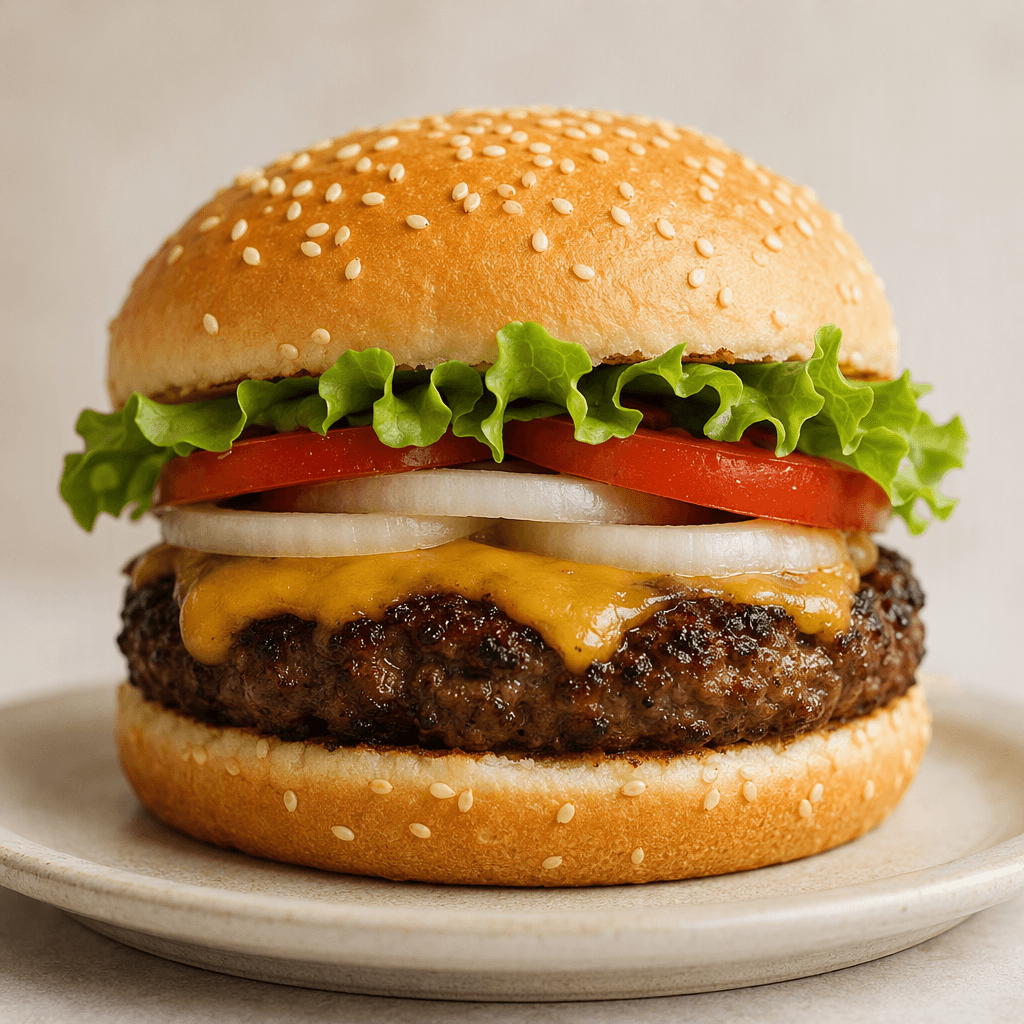
Beef Burger Calories
Classic beef burger, source of protein and iron
In season: Spring · Summer · Autumn · Winter
CALORIES
GI
POTASSIUM
FIBER
Quick answer
1 piece (medium) of Beef Burger (180 g) has 450 calories. That works out to 250 calories per 100 g. It contains 37.8 g of carbs, 27.9 g of protein, 22.5 g of fat and 2.2 g of fiber. Its 3.2 µg of B12 covers 135% of the Daily Value. Its glycemic index is 60 (medium), so it raises blood sugar at a moderate pace.
What is Beef Burger?
A Beef Burger is a sandwich built around a seasoned beef patty in a bun. The modern burger is closely associated with the United States, where it became a familiar diner and fast-food meal; cheese, lettuce, tomato and onion are common additions.
The soft bun contrasts with the browned, juicy patty and crisp vegetables. It is often served with fries or a side salad, though toppings and sides vary widely around the world. Beef makes it a source of protein and iron. For a lighter version, choose a smaller patty, go easy on rich sauces and add extra salad or vegetables.
Beef Burger Nutrition Facts
Selected: 100 g
250
KCAL / 100G
Carbs
21g
· 8% DV
Protein
15.5g
· 31% DV
Fat
12.5g
· 16% DV
Fiber
1.2g
· 4% DV
DV is the share of the daily value covered, on a 2,000 kcal reference diet.
Calories come from: Carbs 32% · Protein 24% · Fat 44%
Beef Burger Vitamins & Minerals
Vitamins
B12
1.8µg · 75% DV
B3
3.8mg · 24% DV
B6
0.32mg · 19% DV
B2
0.16mg · 12% DV
Minerals
Zinc
3mg · 27% DV
Selenium
13µg · 24% DV
Phosphorus
140mg · 20% DV
Sodium
420mg · 18% DV
How Nutritious Is Beef Burger?
Nutrient density
Medium
How many vitamins, minerals and how much fiber this food carries per calorie. A high score means a lot of nutrition for few calories.
Satiety score
Medium
An EatBetter score computed from fiber, protein and calorie density. A high score means staying full longer on the same calories.
Both scores are calculated per 100 g and do not change with the selected portion. The satiety score is EatBetter's own calculation, not a clinical measure.
Beef Burger Glycemic Index
GLYCEMIC INDEX
GLYCEMIC LOAD
Accounts for portion size — a more realistic measure than GI alone.
How to Burn Off Beef Burger
To burn the 250 calories in 100 g:
🚶
Walking (5 km/h)
🏃
Running (8 km/h)
🚴
Cycling
🏊
Swimming
Times are calculated with the MET equation for a 70 kg adult. Actual burn varies with your weight, age and pace.
Is Beef Burger Processed?
NOVA 3
Processed
1. Unprocessed
2. Minimally Processed
3. Processed
4. Ultra-Processed
NOVA classifies foods into 4 groups by industrial processing. NOVA 1 (unprocessed) is the healthiest.
Does Beef Burger Contain Allergens?
Contains these allergens:
Which Diets Is Beef Burger Good For?
Vegan
— Not suitable
Vegetarian
— Not suitable
Gluten-Free
— Not suitable
Dairy-Free
— Not suitable
Mediterranean
✓ Suitable
Paleo
— Not suitable
Whole30
— Not suitable
DASH
— Not suitable
Keto
— Not suitable
Low FODMAP
— Not suitable
Beef Burger Fat Profile
SATURATED
5.2g
MONOUNSATURATED
4.8g
POLYUNSATURATED
1.1g
Omega 6:3 ratio 2.3:1
Below the ideal 4:1 — a good omega balance.
Compare Beef Burger
Foods Similar to Beef Burger
Frequently Asked Questions About Beef Burger
What is in a beef burger?
A beef burger usually has a ground-beef patty in a bun, with toppings such as lettuce, tomato, onion, cheese and sauce. Recipes vary, and a prepared burger may include sauces or extras that are not part of the basic burger.
How do you make a beef burger juicy?
Handle the beef gently, shape the patties without compacting them, and cook them in a hot pan or on a grill without pressing them down. Pressing releases juices, while letting a cooked patty rest briefly helps keep it moist.
Why does a beef burger patty shrink when cooked?
A beef burger patty shrinks as heat renders fat and drives moisture out of the meat. Shape the patty slightly wider than the bun, and make a shallow indentation in its centre to reduce bulging as it cooks.
Can you eat a beef burger medium-rare?
It is safer to cook a ground-beef burger thoroughly rather than leave it pink in the middle. Grinding can spread bacteria from the meat’s surface throughout the patty, so browning only the outside is not enough.
What is the difference between a beef burger and a beef sandwich?
A beef burger is typically made with a round ground-beef patty served in a burger bun, often with classic toppings such as lettuce, tomato and pickles. A beef sandwich can use sliced or shredded beef and many different kinds of bread.
Is a beef burger a healthy meal?
A beef burger can be part of a balanced meal, especially when served with vegetables, but large portions and generous amounts of cheese or sauce can make it heavier. At home, add plenty of vegetables and keep rich sauces modest.
How long does a cooked beef burger last in the fridge?
A cooked beef burger keeps for 3–4 days in the refrigerator when stored in a covered container. For better texture, refrigerate the patty separately from the bun and fresh toppings, and chill it promptly rather than leaving it out.
How do you reheat a beef burger without making the bun soggy?
Separate the patty from the bun and fresh toppings before reheating a beef burger. Warm the patty in a pan or oven, toast the bun separately, then put the burger back together with the cold toppings just before serving.
What should you serve with a beef burger?
Beef burgers are commonly served with fries, potato wedges, coleslaw, pickles or a green salad. For a lighter plate, choose a salad or grilled vegetables instead of fries, particularly if the burger already has rich cheese and sauce.
Can you freeze beef burger patties?
Yes, you can freeze raw beef burger patties with baking paper between them so they do not stick together. Thaw them in the refrigerator before cooking and cook them thoroughly; freezing a fully assembled burger can make the bun and vegetables soggy.
Have another question about Beef Burger?
Ask the AI nutrition coach — calories, portions, alternatives and more, answered in seconds in the app.

Scan calories with your camera
Instant AI nutrition analysis

Nutrition data compiled from USDA FoodData Central and scientific sources.