

Ready & Packaged Foods
All →Vegetables & Legumes
All →Desserts & Confectionery
All →Meat & Protein
All →Grains & Bakery
All →Beverages
All →Milk & Dairy
All →

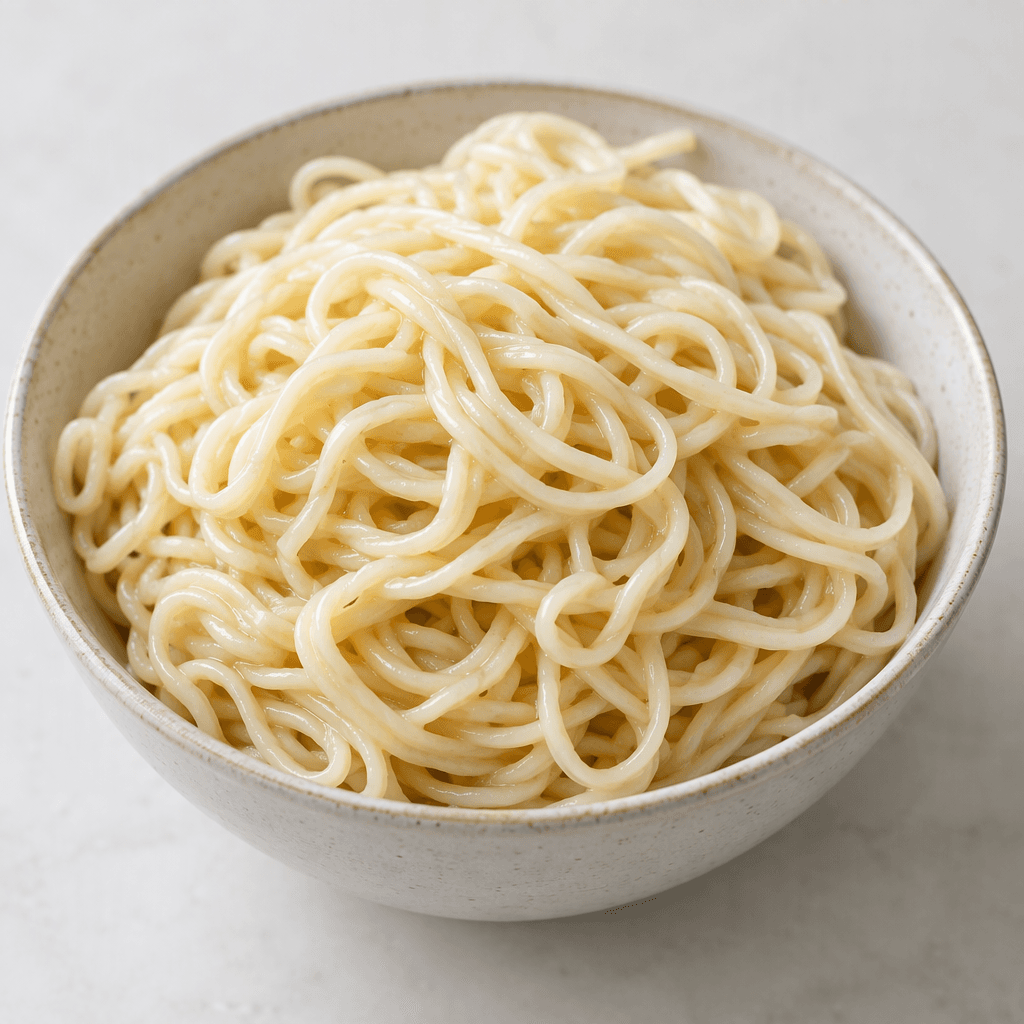
Cooked Noodles Calories
Boiled noodles, source of carbohydrates and energy.
CALORIES
GI
POTASSIUM
FIBER
Quick answer
1 cup (medium) of Cooked Noodles (150 g) has 207 calories. That works out to 138 calories per 100 g. It contains 37.5 g of carbs, 6.8 g of protein, 3.2 g of fat and 1.8 g of fiber. Its 15 µg of Selenium covers 27% of the Daily Value. Its glycemic index is 50 (medium), so it raises blood sugar at a moderate pace.
What is Cooked Noodles?
Cooked noodles here refers to Turkish erişte: strips of dough, traditionally made at home from flour, egg, water and salt, then boiled until tender. Recipes vary by household and region, and the noodles may be dried before cooking.
They have a mild, wheaty flavour and a soft, slightly springy texture. In Turkey, erişte is often tossed with butter and served with walnuts or cheese, paired with yoghurt, or added to soup; elsewhere, it works much like a simple pasta side. It is mainly a source of carbohydrates, with 25 g per 100 g. For a lighter, more balanced bowl, use butter sparingly and add vegetables or beans.
Cooked Noodles Nutrition Facts
Selected: 100 g
138
KCAL / 100G
Carbs
25g
· 9% DV
Protein
4.5g
· 9% DV
Fat
2.1g
· 3% DV
Fiber
1.2g
· 4% DV
DV is the share of the daily value covered, on a 2,000 kcal reference diet.
Calories come from: Carbs 73% · Protein 13% · Fat 14%
Cooked Noodles Vitamins & Minerals
Vitamins
B1
0.07mg · 6% DV
B3
0.4mg · 3% DV
B5
0.13mg · 3% DV
B2
0.03mg · 2% DV
Minerals
Selenium
10µg · 18% DV
Phosphorus
45mg · 6% DV
Magnesium
10mg · 2% DV
Calcium
7mg · 1% DV
How Nutritious Is Cooked Noodles?
Nutrient density
Low
How many vitamins, minerals and how much fiber this food carries per calorie. A high score means a lot of nutrition for few calories.
Satiety score
Medium
An EatBetter score computed from fiber, protein and calorie density. A high score means staying full longer on the same calories.
Both scores are calculated per 100 g and do not change with the selected portion. The satiety score is EatBetter's own calculation, not a clinical measure.
Cooked Noodles Glycemic Index
GLYCEMIC INDEX
GLYCEMIC LOAD
Accounts for portion size — a more realistic measure than GI alone.
How to Burn Off Cooked Noodles
To burn the 138 calories in 100 g:
🚶
Walking (5 km/h)
🏃
Running (8 km/h)
🚴
Cycling
🏊
Swimming
Times are calculated with the MET equation for a 70 kg adult. Actual burn varies with your weight, age and pace.
Is Cooked Noodles Processed?
NOVA 3
Processed
1. Unprocessed
2. Minimally Processed
3. Processed
4. Ultra-Processed
NOVA classifies foods into 4 groups by industrial processing. NOVA 1 (unprocessed) is the healthiest.
Does Cooked Noodles Contain Allergens?
Contains these allergens:
Which Diets Is Cooked Noodles Good For?
Vegan
— Not suitable
Vegetarian
✓ Suitable
Gluten-Free
— Not suitable
Dairy-Free
— Not suitable
Mediterranean
— Not suitable
Paleo
— Not suitable
Whole30
— Not suitable
DASH
— Not suitable
Keto
— Not suitable
Low FODMAP
— Not suitable
Cooked Noodles Fat Profile
SATURATED
0.4g
MONOUNSATURATED
0.4g
POLYUNSATURATED
0.5g
Omega 6:3 ratio 34:1
Above the ideal 4:1 (34:1).
Compare Cooked Noodles
Foods Similar to Cooked Noodles
Frequently Asked Questions About Cooked Noodles
How long do cooked noodles last in the fridge?
Cooked noodles generally keep for 3–4 days in a covered container in the refrigerator. Refrigerate them promptly after cooking, rather than leaving them out for hours, and discard them if they develop an unusual smell, mold, or a slimy texture.
Can you freeze cooked noodles?
Yes, cooked noodles can be frozen. Cool them, portion them into airtight containers, and thaw them in the refrigerator. Reheat with a splash of water or a little butter, stirring gently to loosen the strands.
What is the best way to reheat cooked noodles?
Warm cooked noodles in a skillet over medium-low heat with a splash of water or a little oil, stirring until hot. For the microwave, cover them and heat in short intervals, stirring between each interval so they warm evenly.
How do you stop cooked noodles from sticking together?
Toss cooked noodles with a little butter or oil soon after draining to keep the strands separate. If they have already stuck, add a small splash of water while reheating and gently loosen them with a fork.
Should you rinse cooked noodles after draining?
Usually, no: rinsing removes surface starch that helps butter or sauce cling to cooked noodles. Rinse them briefly under cold water if you are making a chilled noodle salad or need to stop the cooking quickly.
Can you eat cooked noodles cold?
Yes, cooked noodles can be eaten cold if they were cooled and refrigerated promptly. Toss them with yogurt, herbs, or a vinaigrette for a cold salad, and do not leave the finished dish at room temperature for an extended time.
How can you turn leftover cooked noodles into a meal?
Add leftover cooked noodles to a skillet with vegetables, egg, or cooked meat for a quick noodle stir-fry. Add the noodles near the end and heat them through; cooking them for too long can make the strands soft and breakable.
What goes well with cooked noodles?
Cooked noodles pair well with browned butter, herbs, vegetables, cheese, or a savory sauce. For a Turkish-style serving, toss them with butter and add walnuts or yogurt; choose toppings that suit the seasoning already on the noodles.
Do cooked noodles cause weight gain?
Cooked noodles do not cause weight gain on their own; weight change reflects overall energy intake and expenditure over time. Large servings and rich sauces can add substantially to a meal, so pair noodles with vegetables and a protein source.
Can people with diabetes eat cooked noodles?
Yes, people with diabetes can include cooked noodles in a meal, but their carbohydrates can raise blood glucose. Portion size and the rest of the meal matter, so follow your own meal plan and pair noodles with vegetables and protein.
Have another question about Cooked Noodles?
Ask the AI nutrition coach — calories, portions, alternatives and more, answered in seconds in the app.

Scan calories with your camera
Instant AI nutrition analysis

Nutrition data compiled from USDA FoodData Central and scientific sources.