

Ready & Packaged Foods
All →Vegetables & Legumes
All →Desserts & Confectionery
All →Meat & Protein
All →Grains & Bakery
All →Beverages
All →Milk & Dairy
All →

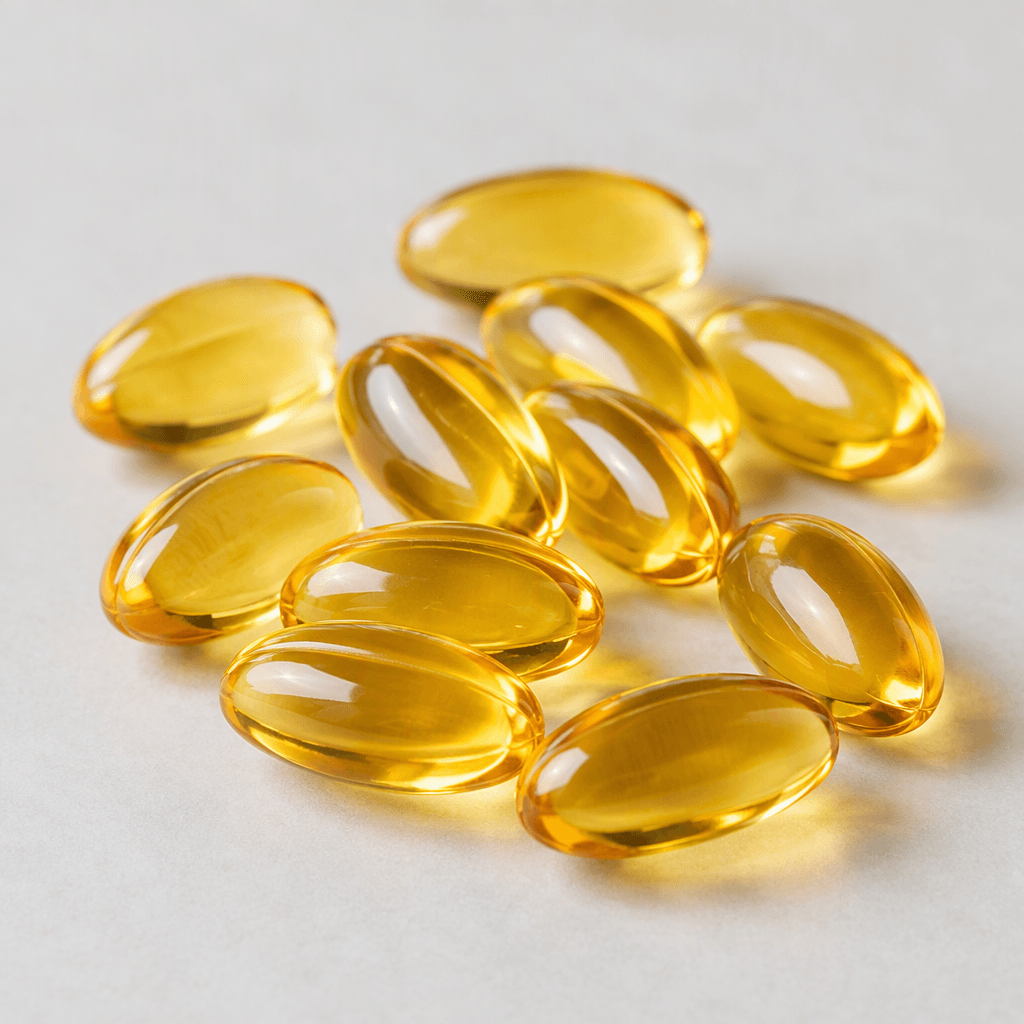
EPA Omega 3 supplement Calories
EPA Omega 3 supplement
CALORIES
GI
POTASSIUM
FIBER
Quick answer
1 piece (small) of EPA Omega 3 supplement (1 g) has 9 calories. That works out to 900 calories per 100 g. It contains 0 g of carbs, 0 g of protein, 1 g of fat and 0 g of fiber. Its glycemic index is 0 (low), so it raises blood sugar slowly.
What is EPA Omega 3 supplement?
EPA Omega 3 supplement usually refers to an oil-based product supplying EPA, an omega-3 fatty acid. It is commonly sold in softgel capsules, often made with marine oil, rather than as a food to cook with. In many countries, people take it as part of a daily supplement routine, swallowing the capsule with water and following the product label.
Its nutritional profile is essentially that of concentrated fat, with little role as a source of protein or carbohydrate, so it does not replace a meal or a serving of oily fish. Check the label for the amount of EPA per capsule, since products vary, and take it in whatever way the directions recommend. Pairing it with a meal may make it easier to fit into your routine.
EPA Omega 3 supplement Nutrition Facts
Selected: 100 g
900
KCAL / 100G
Carbs
0g
· 0% DV
Protein
0g
· 0% DV
Fat
100g
· 128% DV
Fiber
0g
· 0% DV
DV is the share of the daily value covered, on a 2,000 kcal reference diet.
Calories come from: Carbs 0% · Protein 0% · Fat 100%
EPA Omega 3 supplement Vitamins & Minerals
Vitamins
Vitamin E
0.5mg · 3% DV
Vitamin A
0µg · 0% DV
B1
0mg · 0% DV
B2
0mg · 0% DV
Minerals
Calcium
0mg · 0% DV
Iron
0mg · 0% DV
Magnesium
0mg · 0% DV
Zinc
0mg · 0% DV
How Nutritious Is EPA Omega 3 supplement?
Nutrient density
Medium
How many vitamins, minerals and how much fiber this food carries per calorie. A high score means a lot of nutrition for few calories.
Satiety score
Low
An EatBetter score computed from fiber, protein and calorie density. A high score means staying full longer on the same calories.
Both scores are calculated per 100 g and do not change with the selected portion. The satiety score is EatBetter's own calculation, not a clinical measure.
EPA Omega 3 supplement Glycemic Index
GLYCEMIC INDEX
GLYCEMIC LOAD
Accounts for portion size — a more realistic measure than GI alone.
How to Burn Off EPA Omega 3 supplement
To burn the 900 calories in 100 g:
🚶
Walking (5 km/h)
🏃
Running (8 km/h)
🚴
Cycling
🏊
Swimming
Times are calculated with the MET equation for a 70 kg adult. Actual burn varies with your weight, age and pace.
Is EPA Omega 3 supplement Processed?
NOVA 3
Processed
1. Unprocessed
2. Minimally Processed
3. Processed
4. Ultra-Processed
NOVA classifies foods into 4 groups by industrial processing. NOVA 1 (unprocessed) is the healthiest.
Does EPA Omega 3 supplement Contain Allergens?
Contains these allergens:
Which Diets Is EPA Omega 3 supplement Good For?
Vegan
— Not suitable
Vegetarian
— Not suitable
Gluten-Free
✓ Suitable
Dairy-Free
— Not suitable
Mediterranean
✓ Suitable
Paleo
✓ Suitable
Whole30
— Not suitable
DASH
— Not suitable
Keto
✓ Suitable
Low FODMAP
— Not suitable
EPA Omega 3 supplement Fat Profile
SATURATED
20g
MONOUNSATURATED
40g
POLYUNSATURATED
40g
Omega 6:3 ratio 0:1
Below the ideal 4:1 — a good omega balance.
Compare EPA Omega 3 supplement
Foods Similar to EPA Omega 3 supplement
Frequently Asked Questions About EPA Omega 3 supplement
What does an EPA Omega 3 supplement do?
An EPA Omega 3 supplement provides eicosapentaenoic acid, a long-chain omega-3 fat found in cell membranes. EPA can help lower blood triglycerides, although the effect depends on the amount of EPA and the purpose for taking it.
What is the difference between an EPA Omega 3 supplement and DHA?
EPA and DHA are different omega-3 fatty acids. EPA is especially studied for its effect on triglycerides, while DHA is a structural component of the brain and retina. A supplement containing EPA does not necessarily contain DHA.
How much EPA Omega 3 supplement should you take daily?
There is no single daily amount that suits everyone; the appropriate amount depends on the reason for taking it and the EPA content. A capsule’s total oil weight is not the same as its EPA amount, so check the EPA value per serving.
Is an EPA Omega 3 supplement the same as fish oil?
No. Fish oil can contain several fatty acids, while an EPA Omega 3 supplement may be concentrated to provide a higher proportion of EPA. Compare the EPA amount per serving, rather than relying on the total fish oil weight.
What are the side effects of an EPA Omega 3 supplement?
Possible side effects include fishy-tasting burps, nausea, stomach discomfort, and loose stools. Taking an EPA Omega 3 supplement with a meal may reduce these effects; stop using it and seek medical advice if symptoms are severe or persistent.
Can you take an EPA Omega 3 supplement with blood thinners?
EPA may affect bleeding risk, particularly at high supplemental doses. If you take a blood-thinning medicine, ask your doctor before starting an EPA Omega 3 supplement, and do not change your prescribed medicine on your own.
When should you take an EPA Omega 3 supplement?
Taking an EPA Omega 3 supplement with a meal is often easier on the stomach and may reduce fishy aftertaste. There is no universally best time of day; taking it consistently with food is a practical approach.
Can an EPA Omega 3 supplement lower triglycerides?
Yes, EPA supplements can lower triglycerides when they provide a sufficient amount of EPA. The effect varies with the dose and product, and higher-dose use for blood lipid management should be supervised by a health professional.
How can you tell if an EPA Omega 3 supplement has gone bad?
A strong rancid, stale, or paint-like smell or an unusually unpleasant taste may indicate that the oil has oxidized. Store an EPA Omega 3 supplement away from heat, moisture, and light, and do not use it past its expiry date.
How is an EPA Omega 3 supplement made?
An EPA Omega 3 supplement is generally a processed product made by extracting and concentrating EPA from fish oil before putting it into capsules. Manufacturing methods vary, so the EPA content and other ingredients can differ between products.
Have another question about EPA Omega 3 supplement?
Ask the AI nutrition coach — calories, portions, alternatives and more, answered in seconds in the app.

Scan calories with your camera
Instant AI nutrition analysis

Nutrition data compiled from USDA FoodData Central and scientific sources.