

Ready & Packaged Foods
All →Vegetables & Legumes
All →Desserts & Confectionery
All →Meat & Protein
All →Grains & Bakery
All →Beverages
All →Milk & Dairy
All →

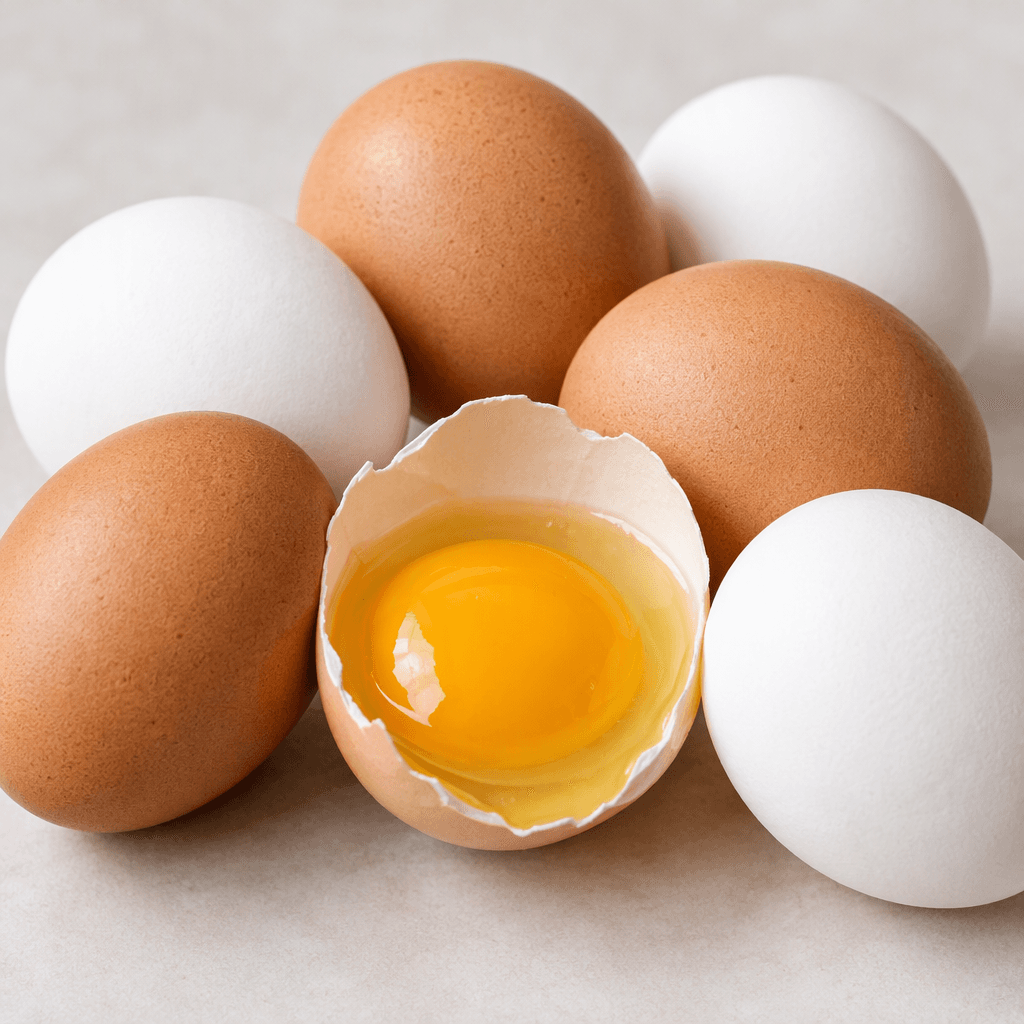
Eggs Calories
High-quality protein, vitamin B12, choline, healthy fats
In season: Spring · Summer · Autumn · Winter
CALORIES
GI
POTASSIUM
FIBER
Quick answer
1 piece (medium) of Eggs (50 g) has 72 calories. That works out to 143 calories per 100 g. It contains 0.6 g of carbs, 6.5 g of protein, 4.8 g of fat and 0 g of fiber. Its 10 µg of Biotin covers 33% of the Daily Value. Its glycemic index is 0 (low), so it raises blood sugar slowly.
What is Eggs?
Eggs are laid by birds, with hen’s eggs the everyday choice in most kitchens. Their white and yolk can be cooked on their own or used to bind, enrich and leaven dishes, from omelettes and baked goods to sauces and noodles.
Mild in flavour, eggs take on a soft or firm texture depending on how they’re cooked; a runny yolk also makes a simple meal feel rich. They’re a protein-rich staple, providing 13 g of protein per 100 g. Serve them boiled, scrambled or poached with toast and vegetables, or use a little oil when frying for a lighter plate.
Eggs Nutrition Facts
Selected: 100 g
143
KCAL / 100G
Carbs
1.1g
· 0% DV
Protein
13g
· 26% DV
Fat
9.5g
· 12% DV
Fiber
0g
· 0% DV
DV is the share of the daily value covered, on a 2,000 kcal reference diet.
Calories come from: Carbs 3% · Protein 37% · Fat 60%
Eggs Vitamins & Minerals
Vitamins
Biotin
20µg · 67% DV
B12
1.1µg · 46% DV
B2
0.5mg · 38% DV
B5
1.4mg · 28% DV
Minerals
Selenium
30µg · 55% DV
Iodine
47µg · 31% DV
Phosphorus
198mg · 28% DV
Zinc
1mg · 9% DV
How Nutritious Is Eggs?
Nutrient density
Very high
How many vitamins, minerals and how much fiber this food carries per calorie. A high score means a lot of nutrition for few calories.
Satiety score
Medium
An EatBetter score computed from fiber, protein and calorie density. A high score means staying full longer on the same calories.
Both scores are calculated per 100 g and do not change with the selected portion. The satiety score is EatBetter's own calculation, not a clinical measure.
Eggs Glycemic Index
GLYCEMIC INDEX
GLYCEMIC LOAD
Accounts for portion size — a more realistic measure than GI alone.
How to Burn Off Eggs
To burn the 143 calories in 100 g:
🚶
Walking (5 km/h)
🏃
Running (8 km/h)
🚴
Cycling
🏊
Swimming
Times are calculated with the MET equation for a 70 kg adult. Actual burn varies with your weight, age and pace.
Is Eggs Processed?
NOVA 1
Unprocessed
1. Unprocessed
2. Minimally Processed
3. Processed
4. Ultra-Processed
NOVA classifies foods into 4 groups by industrial processing. NOVA 1 (unprocessed) is the healthiest.
Does Eggs Contain Allergens?
Contains these allergens:
Which Diets Is Eggs Good For?
Vegan
— Not suitable
Vegetarian
✓ Suitable
Gluten-Free
✓ Suitable
Dairy-Free
— Not suitable
Mediterranean
✓ Suitable
Paleo
✓ Suitable
Whole30
— Not suitable
DASH
— Not suitable
Keto
✓ Suitable
Low FODMAP
— Not suitable
Eggs Fat Profile
SATURATED
3.1g
MONOUNSATURATED
3.7g
POLYUNSATURATED
1.4g
Omega 6:3 ratio 26:1
Above the ideal 4:1 (26:1).
Compare Eggs
Foods Similar to Eggs
Frequently Asked Questions About Eggs
How long should you boil eggs?
For a firm yolk, simmer eggs for about 10–12 minutes; for a softer yolk, use less time. Start timing once the water reaches a gentle boil, then cool the eggs in cold water to stop cooking and make peeling easier.
How can you tell if an egg is fresh?
Crack the egg into a separate bowl: a fresh egg usually has a rounded yolk, thicker white, and no off smell. The water test is only a rough guide; an egg that floats should be discarded, while one that sinks is not automatically safe.
Should eggs be refrigerated?
Yes, keep eggs refrigerated in their carton on an interior shelf, where the temperature stays steadier than in the door. Discard eggs with cracked shells, and refrigerate cooked eggs promptly rather than leaving them at room temperature.
Should you wash eggs before cooking them?
No, washing eggs before use can damage the shell’s protective coating and may help bacteria pass through it. If a shell is visibly dirty, discard that egg rather than washing it; wash your hands and surfaces after handling raw eggs.
Are brown eggs healthier than white eggs?
No, shell color does not determine an egg’s nutrition or quality. The color mostly reflects the breed of hen; any flavor difference is more likely related to the hen’s feed and rearing conditions. Freshness and proper storage matter more.
Can you eat eggs every day?
For most healthy adults, eggs can be part of a balanced diet eaten regularly. Pair them with vegetables or whole grains, and limit the butter, processed meat, or excess oil served alongside them for a more balanced meal.
Is it safe to eat raw eggs?
Raw or undercooked eggs can carry Salmonella, with greater concern for young children, pregnant people, older adults, and people with weakened immune systems. Cook eggs until the whites and yolks are set, or choose pasteurized eggs for recipes served raw.
Do eggs raise cholesterol?
Eggs contain dietary cholesterol, but its effect on blood cholesterol varies between people, and saturated fat also matters. If you have high LDL cholesterol, discuss how eggs fit your eating plan with your clinician or dietitian.
Can you freeze eggs?
Yes, but do not freeze eggs in their shells: the contents expand and can crack them. Crack and lightly beat the eggs first, or separate the whites and yolks; thaw them in the refrigerator and cook thoroughly after thawing.
Why are some hard-boiled eggs difficult to peel?
Very fresh eggs are often harder to peel because the membrane beneath the shell clings more tightly to the white. Cooling boiled eggs in cold water, cracking the shell all over, and peeling under running water can help.
Have another question about Eggs?
Ask the AI nutrition coach — calories, portions, alternatives and more, answered in seconds in the app.

Scan calories with your camera
Instant AI nutrition analysis

Nutrition data compiled from USDA FoodData Central and scientific sources.