

Ready & Packaged Foods
All →Vegetables & Legumes
All →Desserts & Confectionery
All →Meat & Protein
All →Grains & Bakery
All →Beverages
All →Milk & Dairy
All →

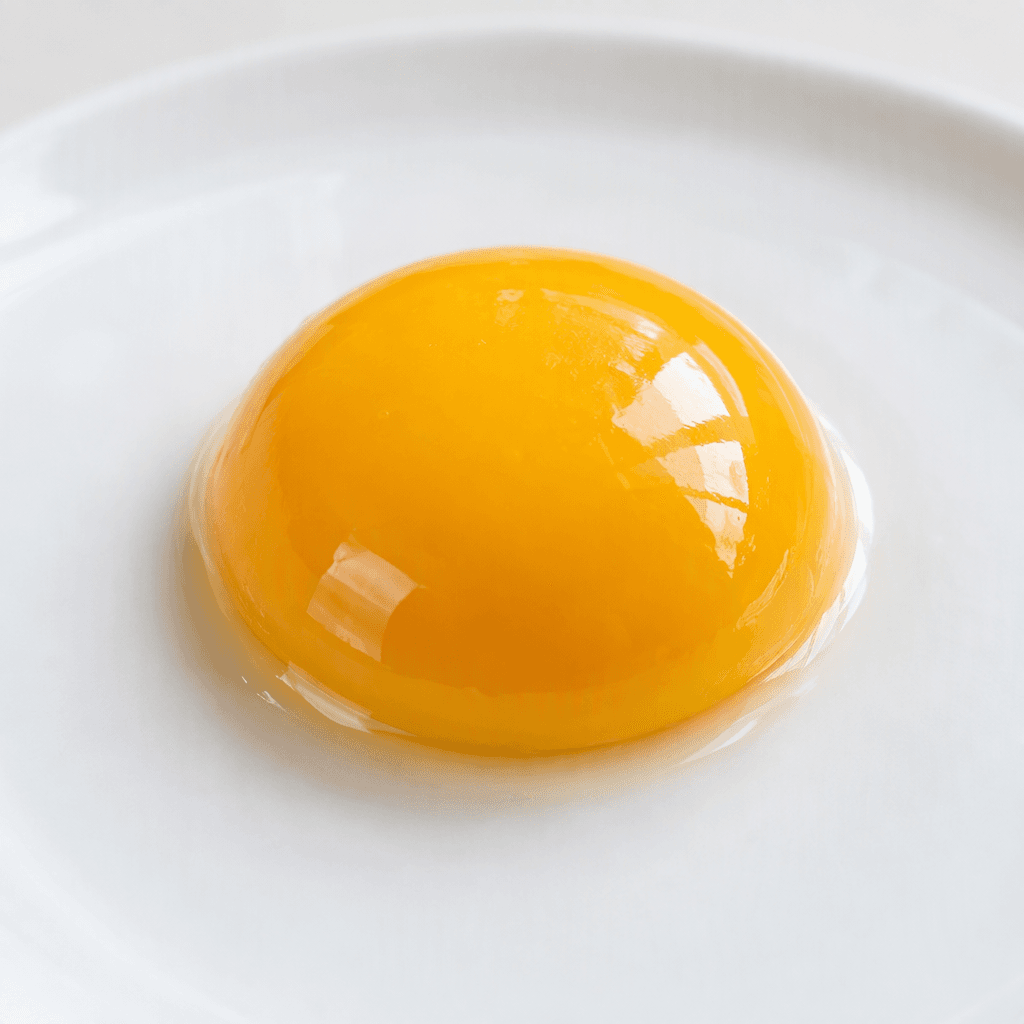
Egg Yolk Calories
Rich in protein, vitamins, minerals; high in cholesterol.
In season: Spring · Summer · Autumn · Winter
CALORIES
GI
POTASSIUM
FIBER
Quick answer
1 piece (medium) of Egg Yolk (18 g) has 58 calories. That works out to 322 calories per 100 g. It contains 0.6 g of carbs, 2.9 g of protein, 4.8 g of fat and 0 g of fiber. Its 9.5 µg of Biotin covers 32% of the Daily Value. Its glycemic index is 0 (low), so it raises blood sugar slowly.
What is Egg Yolk?
The egg yolk is the golden centre of an egg, eaten with the white or separated out for recipes. It gives custards, sauces and baked goods richness, colour and a smooth texture. In many kitchens, it is also served in soft-boiled or fried eggs, or stirred into dishes to thicken them.
Its flavour is fuller than the white, and it stays creamy when gently cooked, becoming firm when cooked through. Egg yolk provides protein as well as much of an egg’s fat and several vitamins and minerals, so a little can add substantial richness to a dish. For a lighter meal, use it alongside vegetables or mix one yolk with additional egg whites.
Egg Yolk Nutrition Facts
Selected: 100 g
322
KCAL / 100G
Carbs
3.6g
· 1% DV
Protein
15.9g
· 32% DV
Fat
26.5g
· 34% DV
Fiber
0g
· 0% DV
DV is the share of the daily value covered, on a 2,000 kcal reference diet.
Calories come from: Carbs 5% · Protein 20% · Fat 75%
Egg Yolk Vitamins & Minerals
Vitamins
Biotin
53µg · 177% DV
B5
2.8mg · 56% DV
B12
1.1µg · 46% DV
Vitamin A
381µg · 42% DV
Minerals
Selenium
30.8µg · 56% DV
Phosphorus
390mg · 56% DV
Zinc
3mg · 27% DV
Iron
3mg · 17% DV
How Nutritious Is Egg Yolk?
Nutrient density
Very high
How many vitamins, minerals and how much fiber this food carries per calorie. A high score means a lot of nutrition for few calories.
Satiety score
Low
An EatBetter score computed from fiber, protein and calorie density. A high score means staying full longer on the same calories.
Both scores are calculated per 100 g and do not change with the selected portion. The satiety score is EatBetter's own calculation, not a clinical measure.
Egg Yolk Glycemic Index
GLYCEMIC INDEX
GLYCEMIC LOAD
Accounts for portion size — a more realistic measure than GI alone.
How to Burn Off Egg Yolk
To burn the 322 calories in 100 g:
🚶
Walking (5 km/h)
🏃
Running (8 km/h)
🚴
Cycling
🏊
Swimming
Times are calculated with the MET equation for a 70 kg adult. Actual burn varies with your weight, age and pace.
Is Egg Yolk Processed?
NOVA 1
Unprocessed
1. Unprocessed
2. Minimally Processed
3. Processed
4. Ultra-Processed
NOVA classifies foods into 4 groups by industrial processing. NOVA 1 (unprocessed) is the healthiest.
Does Egg Yolk Contain Allergens?
Contains these allergens:
Which Diets Is Egg Yolk Good For?
Vegan
— Not suitable
Vegetarian
— Not suitable
Gluten-Free
✓ Suitable
Dairy-Free
— Not suitable
Mediterranean
✓ Suitable
Paleo
✓ Suitable
Whole30
— Not suitable
DASH
— Not suitable
Keto
✓ Suitable
Low FODMAP
— Not suitable
Egg Yolk Fat Profile
SATURATED
9.6g
MONOUNSATURATED
10.7g
POLYUNSATURATED
4.2g
Omega 6:3 ratio 7.4:1
Above the ideal 4:1 (7.4:1).
Compare Egg Yolk
Foods Similar to Egg Yolk
Frequently Asked Questions About Egg Yolk
Is egg yolk healthier than egg white?
Egg yolk and egg white provide different nutrients, so neither is simply healthier in every respect. The yolk contains most of an egg’s vitamins and minerals, while the white supplies protein; eating the whole egg offers both.
Why is egg yolk yellow or orange?
Egg yolk gets its yellow-to-orange color from pigments in a hen’s feed, such as carotenoids. A deeper orange yolk does not automatically mean the egg is fresher or more nutritious; it mainly reflects what the hen ate.
Can you eat egg yolk raw?
Raw egg yolk can carry Salmonella, so eating it uncooked carries a food-poisoning risk. Use pasteurized eggs for dishes such as homemade mayonnaise or raw-yolk sauces, and cook ordinary eggs thoroughly, especially when serving people at higher risk.
How do you separate egg yolk from egg white?
Crack the egg into a small bowl, then lift the yolk out with clean fingers or an egg separator. This is gentler than passing the yolk between shell halves, whose sharp edges can puncture the yolk membrane.
How long does egg yolk last in the fridge?
Separated egg yolk keeps in a covered container in the refrigerator for up to two days. Covering it with a little cold water can help prevent a dry surface; pour the water off before using the yolk.
Can you freeze egg yolk?
Yes, egg yolk can be frozen, but it may turn thick and gel-like when thawed. Beat in a small pinch of salt for savory recipes or sugar for sweet ones before freezing, and note the addition on the container.
Why does egg yolk turn green when hard-boiled?
A green ring around a hard-boiled egg yolk forms when the egg is cooked too long or at too high a temperature. It is harmless, though the yolk may be dry; cooling the egg promptly helps prevent the ring.
What does egg yolk do in baking?
Egg yolk adds richness, color, and tenderness to baked goods, while its lecithin helps bind ingredients such as fat and water. Recipes that call for yolks specifically may turn out less tender or less cohesive if you leave them out.
How can you tell if separated egg yolk has gone bad?
Discard separated egg yolk if it smells unpleasant, looks unusually discolored, or has been left at room temperature for too long. Fresh yolk should look glossy and hold together, but appearance alone cannot guarantee safety.
Why does egg yolk break in the pan?
Egg yolk breaks when its surrounding membrane is weak or gets punctured as the egg is cracked. Crack the egg into a small bowl first and slide it gently into the pan; fresher eggs often have firmer yolk membranes.
Have another question about Egg Yolk?
Ask the AI nutrition coach — calories, portions, alternatives and more, answered in seconds in the app.

Scan calories with your camera
Instant AI nutrition analysis

Nutrition data compiled from USDA FoodData Central and scientific sources.