

Ready & Packaged Foods
All →Vegetables & Legumes
All →Desserts & Confectionery
All →Meat & Protein
All →Grains & Bakery
All →Beverages
All →Milk & Dairy
All →

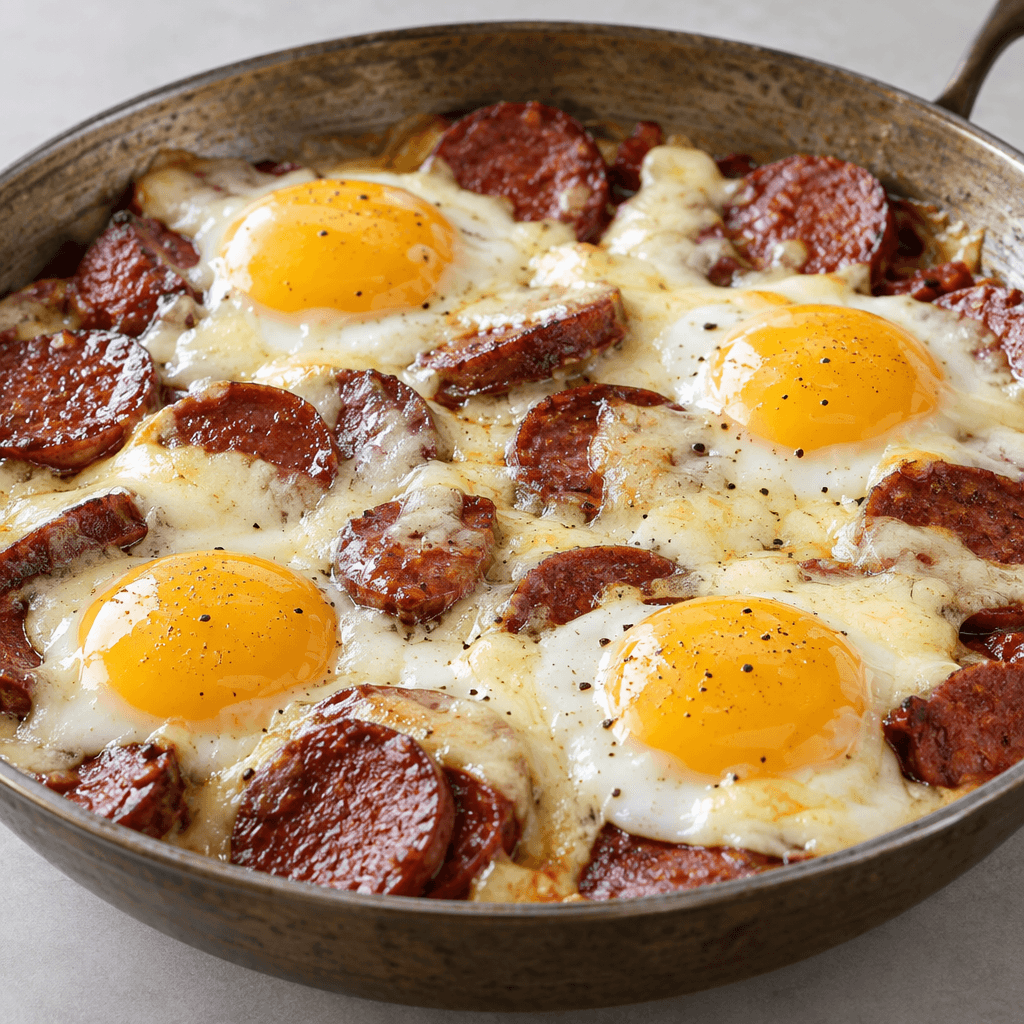
Egg with Sucuk and Kasar Cheese Calories
Rich in protein and fat, classic Turkish breakfast dish
In season: Spring · Summer · Autumn · Winter
CALORIES
GI
POTASSIUM
FIBER
Quick answer
1 piece (medium) of Egg with Sucuk and Kasar Cheese (160 g) has 352 calories. That works out to 220 calories per 100 g. It contains 3.5 g of carbs, 22.4 g of protein, 27.2 g of fat and 0 g of fiber. Its 3.4 µg of B12 covers 140% of the Daily Value. Its glycemic index is 15 (low), so it raises blood sugar slowly.
What is Egg with Sucuk and Kasar Cheese?
Egg with sucuk and kasar cheese brings eggs together with slices of sucuk, a Turkish spiced sausage, and softly melted kaşar, a Turkish cheese. It is a familiar choice for a Turkish breakfast, often cooked and served in the same pan. The sausage gives the dish a savoury, warmly spiced flavour, while the eggs and melting cheese make each bite soft and rich.
Serve it hot with bread for dipping, alongside tea and, if you like, fresh tomatoes and cucumber. It is filling, with protein as well as plenty of fat, so a smaller portion can work well with a lighter spread of vegetables. Using less sucuk or cheese is an easy way to make the plate less rich without losing its characteristic flavour.
Egg with Sucuk and Kasar Cheese Nutrition Facts
Selected: 100 g
220
KCAL / 100G
Carbs
2.2g
· 1% DV
Protein
14g
· 28% DV
Fat
17g
· 22% DV
Fiber
0g
· 0% DV
DV is the share of the daily value covered, on a 2,000 kcal reference diet.
Calories come from: Carbs 4% · Protein 26% · Fat 70%
Egg with Sucuk and Kasar Cheese Vitamins & Minerals
Vitamins
B12
2.1µg · 88% DV
Biotin
18µg · 60% DV
B2
0.38mg · 29% DV
Vitamin A
220µg · 24% DV
Minerals
Phosphorus
260mg · 37% DV
Sodium
820mg · 36% DV
Selenium
19µg · 35% DV
Calcium
320mg · 32% DV
How Nutritious Is Egg with Sucuk and Kasar Cheese?
Nutrient density
Medium
How many vitamins, minerals and how much fiber this food carries per calorie. A high score means a lot of nutrition for few calories.
Satiety score
Medium
An EatBetter score computed from fiber, protein and calorie density. A high score means staying full longer on the same calories.
Both scores are calculated per 100 g and do not change with the selected portion. The satiety score is EatBetter's own calculation, not a clinical measure.
Egg with Sucuk and Kasar Cheese Glycemic Index
GLYCEMIC INDEX
GLYCEMIC LOAD
Accounts for portion size — a more realistic measure than GI alone.
How to Burn Off Egg with Sucuk and Kasar Cheese
To burn the 220 calories in 100 g:
🚶
Walking (5 km/h)
🏃
Running (8 km/h)
🚴
Cycling
🏊
Swimming
Times are calculated with the MET equation for a 70 kg adult. Actual burn varies with your weight, age and pace.
Is Egg with Sucuk and Kasar Cheese Processed?
NOVA 2
Minimally Processed
1. Unprocessed
2. Minimally Processed
3. Processed
4. Ultra-Processed
NOVA classifies foods into 4 groups by industrial processing. NOVA 1 (unprocessed) is the healthiest.
Does Egg with Sucuk and Kasar Cheese Contain Allergens?
Contains these allergens:
Which Diets Is Egg with Sucuk and Kasar Cheese Good For?
Vegan
— Not suitable
Vegetarian
— Not suitable
Gluten-Free
— Not suitable
Dairy-Free
— Not suitable
Mediterranean
✓ Suitable
Paleo
— Not suitable
Whole30
— Not suitable
DASH
— Not suitable
Keto
— Not suitable
Low FODMAP
— Not suitable
Egg with Sucuk and Kasar Cheese Fat Profile
SATURATED
7.5g
MONOUNSATURATED
6.2g
POLYUNSATURATED
1.3g
Omega 6:3 ratio 8.5:1
Above the ideal 4:1 (8.5:1).
Compare Egg with Sucuk and Kasar Cheese
Foods Similar to Egg with Sucuk and Kasar Cheese
Frequently Asked Questions About Egg with Sucuk and Kasar Cheese
How do you make egg with sucuk and kasar cheese?
Egg with sucuk and kasar cheese is made by cooking sliced sucuk in a pan until it releases some fat, then adding the eggs. When the whites begin to set, scatter kasar cheese over the top and cook until it melts, leaving the yolks as runny or firm as you like.
What is egg with sucuk and kasar cheese?
Egg with sucuk and kasar cheese is a Turkish skillet breakfast made with eggs, sucuk—a spiced, cured Turkish sausage—and melting kasar cheese. The sausage seasons the eggs as it cooks, while the cheese adds a soft, savory layer.
What is the difference between egg with sucuk and kasar cheese and sucuklu yumurta?
Egg with sucuk and kasar cheese includes melted kasar on top, while sucuklu yumurta usually means eggs cooked with sucuk without cheese. The cheese makes the dish richer and softer in texture; the simpler version puts more emphasis on the sausage.
Do you need to add oil to egg with sucuk and kasar cheese?
Usually, you do not need extra oil for egg with sucuk and kasar cheese. Cook the sucuk first so it releases its own fat, then add the eggs. If your sucuk is particularly lean or sticks to the pan, add a little oil.
When should you add kasar cheese to egg with sucuk and kasar cheese?
Add the kasar cheese to egg with sucuk and kasar cheese after the eggs go into the pan. Once the whites start to set, sprinkle on grated or thinly sliced cheese; it will melt without requiring you to overcook the eggs.
Is egg with sucuk and kasar cheese spicy?
Egg with sucuk and kasar cheese can be mildly spiced or quite hot, depending on the sucuk. Choose a mild sausage if you prefer less heat, and taste before adding chili flakes because sucuk is already seasoned.
What do you serve with egg with sucuk and kasar cheese?
Egg with sucuk and kasar cheese is commonly served with fresh bread for dipping into the yolk, plus simple sides such as tomatoes or cucumber. Since the dish is savory and rich, fresh vegetables make a useful contrast.
Can you make egg with sucuk and kasar cheese in the oven?
Yes, egg with sucuk and kasar cheese can be baked. Briefly cook the sucuk in a pan, transfer it to an oven-safe dish, add the eggs and kasar, then bake until the whites are set and the cheese has melted.
Can you make egg with sucuk and kasar cheese with another cheese?
Yes, you can make egg with sucuk and kasar cheese with another cheese, though the result will taste different. A mild cheese that melts well is the closest swap; strong or salty cheeses can overpower the seasoned sucuk.
How should you store leftover egg with sucuk and kasar cheese?
Store leftover egg with sucuk and kasar cheese in a covered container in the refrigerator rather than leaving it at room temperature. The eggs may firm up after reheating, so it is best eaten soon and reheated until thoroughly hot.
Have another question about Egg with Sucuk and Kasar Cheese?
Ask the AI nutrition coach — calories, portions, alternatives and more, answered in seconds in the app.

Scan calories with your camera
Instant AI nutrition analysis

Nutrition data compiled from USDA FoodData Central and scientific sources.