

Ready & Packaged Foods
All →Vegetables & Legumes
All →Desserts & Confectionery
All →Meat & Protein
All →Grains & Bakery
All →Beverages
All →Milk & Dairy
All →

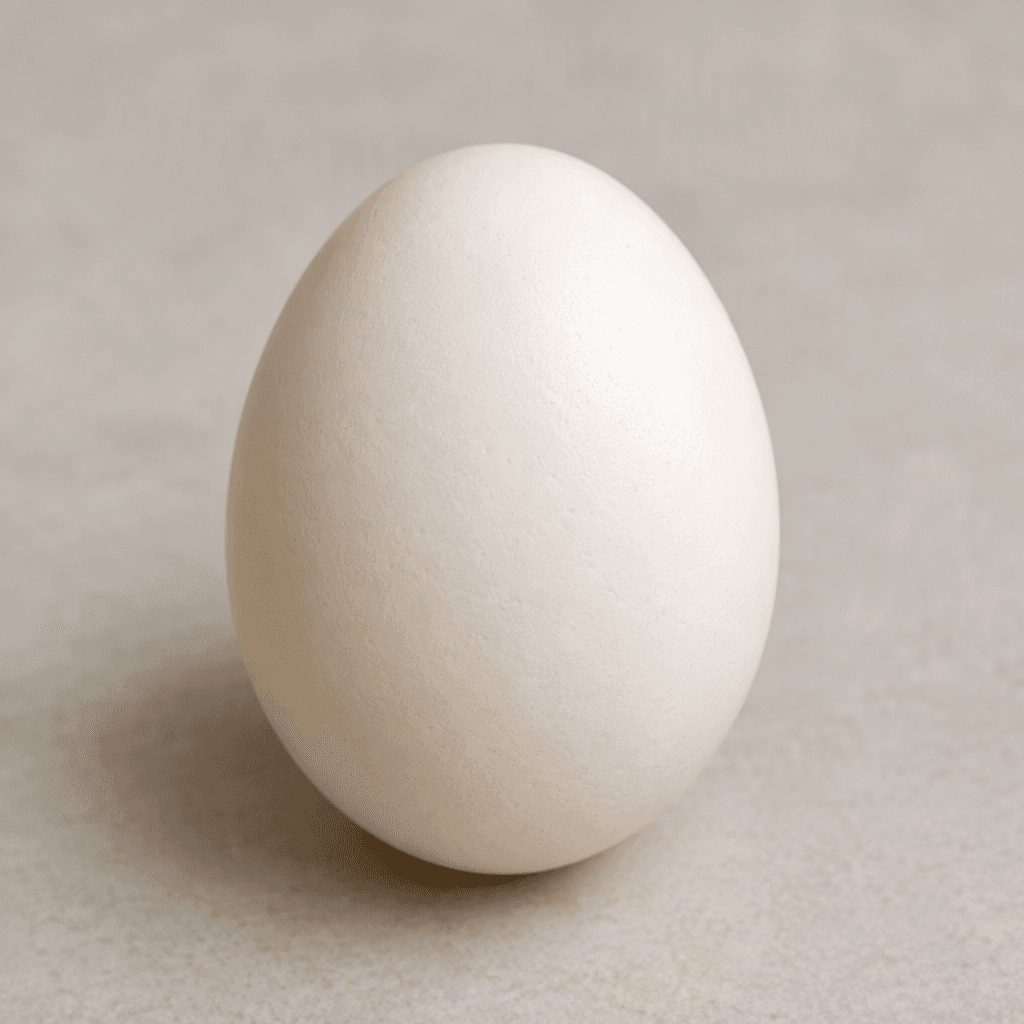
Egg (whole) Calories
High-quality protein, rich in B12, choline, iron, and vitamin D.
In season: Spring · Summer · Autumn · Winter
CALORIES
GI
POTASSIUM
FIBER
Quick answer
1 piece (medium) of Egg (whole) (50 g) has 72 calories. That works out to 143 calories per 100 g. It contains 0.6 g of carbs, 6.5 g of protein, 5 g of fat and 0 g of fiber. Its 10 µg of Biotin covers 33% of the Daily Value. Its glycemic index is 0 (low), so it raises blood sugar slowly.
What is Egg (whole)?
A whole egg is a chicken egg eaten with both its white and yolk, and it is a familiar staple in kitchens around the world. It can be boiled, poached, fried or scrambled, and is also used to bind batters and enrich baked goods.
Its mild flavour pairs well with toast, vegetables, herbs or rice. The yolk brings a richer, creamy note, while the white sets softly. Serve one boiled or scrambled for a quick breakfast, or add it to salads and grain bowls. Whole eggs provide high-quality protein and are low in carbohydrates; 100 grams contain 13 grams of protein. For a lighter preparation, boil the egg or cook it in a non-stick pan with little oil.
Egg (whole) Nutrition Facts
Selected: 100 g
143
KCAL / 100G
Carbs
1.1g
· 0% DV
Protein
13g
· 26% DV
Fat
9.9g
· 13% DV
Fiber
0g
· 0% DV
DV is the share of the daily value covered, on a 2,000 kcal reference diet.
Calories come from: Carbs 3% · Protein 36% · Fat 61%
Egg (whole) Vitamins & Minerals
Vitamins
Biotin
20µg · 67% DV
B12
1.1µg · 46% DV
B2
0.5mg · 38% DV
B5
1.4mg · 28% DV
Minerals
Selenium
30µg · 55% DV
Iodine
47µg · 31% DV
Phosphorus
198mg · 28% DV
Iron
2mg · 11% DV
How Nutritious Is Egg (whole)?
Nutrient density
Very high
How many vitamins, minerals and how much fiber this food carries per calorie. A high score means a lot of nutrition for few calories.
Satiety score
Medium
An EatBetter score computed from fiber, protein and calorie density. A high score means staying full longer on the same calories.
Both scores are calculated per 100 g and do not change with the selected portion. The satiety score is EatBetter's own calculation, not a clinical measure.
Egg (whole) Glycemic Index
GLYCEMIC INDEX
GLYCEMIC LOAD
Accounts for portion size — a more realistic measure than GI alone.
How to Burn Off Egg (whole)
To burn the 143 calories in 100 g:
🚶
Walking (5 km/h)
🏃
Running (8 km/h)
🚴
Cycling
🏊
Swimming
Times are calculated with the MET equation for a 70 kg adult. Actual burn varies with your weight, age and pace.
Is Egg (whole) Processed?
NOVA 1
Unprocessed
1. Unprocessed
2. Minimally Processed
3. Processed
4. Ultra-Processed
NOVA classifies foods into 4 groups by industrial processing. NOVA 1 (unprocessed) is the healthiest.
Does Egg (whole) Contain Allergens?
Contains these allergens:
Which Diets Is Egg (whole) Good For?
Vegan
— Not suitable
Vegetarian
✓ Suitable
Gluten-Free
✓ Suitable
Dairy-Free
— Not suitable
Mediterranean
✓ Suitable
Paleo
— Not suitable
Whole30
— Not suitable
DASH
— Not suitable
Keto
✓ Suitable
Low FODMAP
— Not suitable
Egg (whole) Fat Profile
SATURATED
3.1g
MONOUNSATURATED
3.6g
POLYUNSATURATED
1.4g
Omega 6:3 ratio 26:1
Above the ideal 4:1 (26:1).
Compare Egg (whole)
Foods Similar to Egg (whole)
Frequently Asked Questions About Egg (whole)
How long should you boil a whole egg?
For a firm yolk, simmer a whole egg for about 9–12 minutes after the water reaches a boil. Cool it promptly in cold water to stop cooking and make peeling easier; use a shorter cooking time if you prefer a softer yolk.
How can you tell if a whole egg is fresh?
Place the whole egg in a bowl of water: one that lies flat on the bottom is generally fresher, while one that stands upright is older. If it floats, discard it; when in doubt, crack it separately and discard any egg with an unpleasant smell.
How should you store whole eggs?
Keep whole eggs in their carton in the main part of the refrigerator, where the temperature is steadier than in the door. Leave them in the shell until needed, and use cracked eggs promptly after cooking them thoroughly.
Can you freeze whole eggs?
Yes, but crack and beat whole eggs before freezing them; eggs frozen in their shells can crack as they expand. Store the beaten egg in a sealed, freezer-safe container, then thaw it in the refrigerator and cook it soon after.
Are brown whole eggs healthier than white ones?
No, brown whole eggs are not inherently healthier than white ones. Shell colour mainly reflects the breed of hen, while the egg’s nutritional value is not reliably indicated by its shell; freshness and safe handling matter more.
Is it safe to eat a whole egg raw?
No, raw whole eggs can carry Salmonella, so cooking them is the safer choice. For recipes that call for uncooked egg, use pasteurized eggs; young children, pregnant people, older adults, and people with weakened immune systems should avoid raw eggs.
Should you wash a whole egg before using it?
No, avoid washing a whole egg before storing it because moisture can damage its natural protective coating and help bacteria pass through the shell. If it needs cleaning, do so just before cooking, then wash your hands and any surfaces it touched.
Why does a whole egg yolk get a green ring after boiling?
A green-gray ring around a whole egg yolk forms when the egg is overcooked; it comes from a reaction between sulfur and iron compounds. It is usually harmless, and cooling the egg quickly after cooking can help prevent the ring.
How many whole eggs can you eat in a day?
There is no single daily limit that applies to everyone; many healthy adults can include whole eggs regularly in a balanced diet. If you have high cholesterol or cardiovascular disease, discuss an appropriate amount with your clinician or dietitian.
Do whole eggs raise cholesterol?
Whole eggs contain dietary cholesterol, but their effect on blood cholesterol varies between people. For heart health, the overall eating pattern matters too—especially saturated fat intake—so an egg should not be considered in isolation.
Have another question about Egg (whole)?
Ask the AI nutrition coach — calories, portions, alternatives and more, answered in seconds in the app.

Scan calories with your camera
Instant AI nutrition analysis

Nutrition data compiled from USDA FoodData Central and scientific sources.