

Ready & Packaged Foods
All →Vegetables & Legumes
All →Desserts & Confectionery
All →Meat & Protein
All →Grains & Bakery
All →Beverages
All →Milk & Dairy
All →

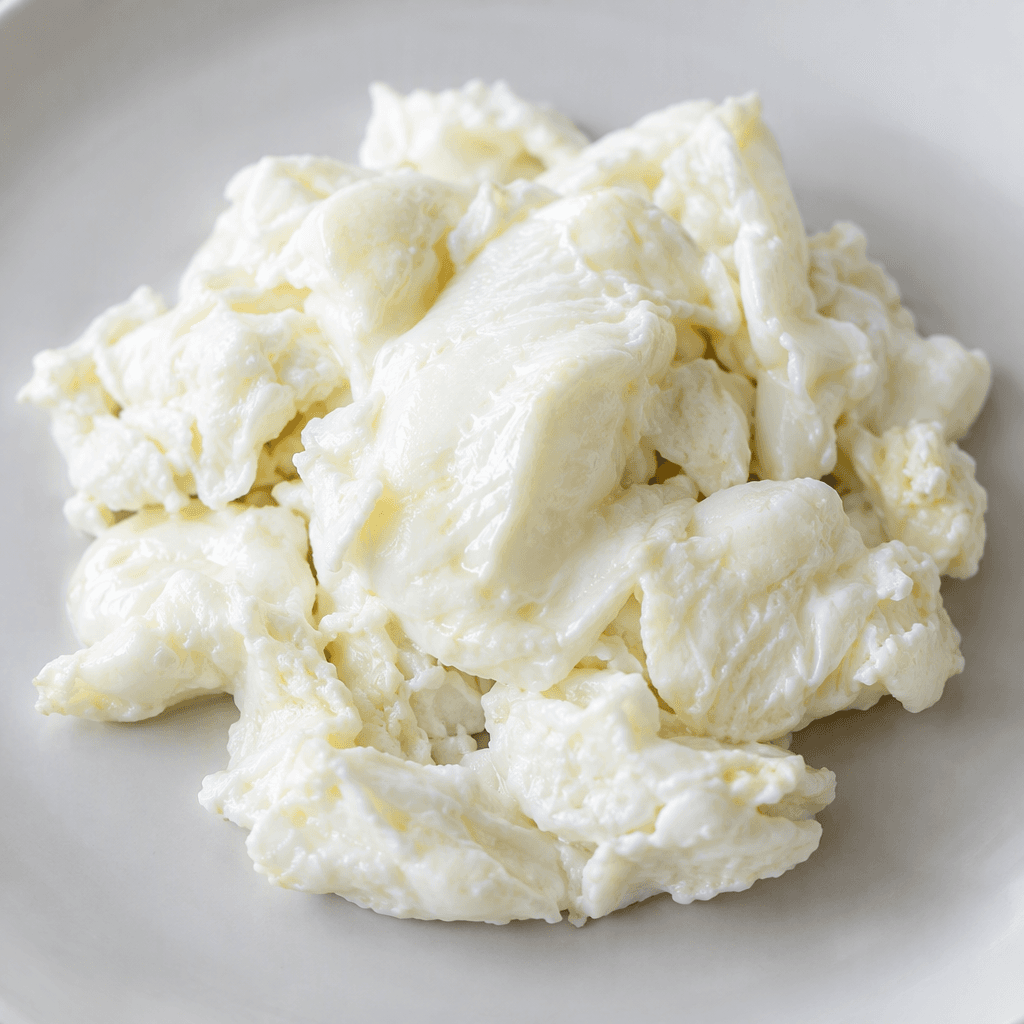
Egg White (cooked) Calories
High protein, low fat and carbs, cholesterol-free
In season: Spring · Summer · Autumn · Winter
CALORIES
GI
POTASSIUM
FIBER
Quick answer
100 g of Egg White (cooked) has 52 calories. It contains 0.7 g of carbs, 10.9 g of protein, 0.2 g of fat and 0 g of fiber. Its 20 µg of Selenium covers 36% of the Daily Value. Its glycemic index is 0 (low), so it raises blood sugar slowly.
What is Egg White (cooked)?
Cooked egg white is the clear portion of an egg, set by boiling or cooking in a pan after it has been separated from the yolk. It can be eaten on its own or added to omelettes, salads and sandwiches.
Its mild flavour and tender, slightly springy texture make it easy to pair with herbs, spices and vegetables. In many places, it is served at breakfast, often alongside toast or folded into an omelette; it also works as a simple addition to a lunch salad. Cooked egg white is high in protein and very low in fat and carbohydrates, with 10.9 grams of protein per 100 grams. Pair it with whole-grain toast or vegetables for a more rounded meal.
Egg White (cooked) Nutrition Facts
Selected: 100 g
52
KCAL / 100G
Carbs
0.7g
· 0% DV
Protein
10.9g
· 22% DV
Fat
0.2g
· 0% DV
Fiber
0g
· 0% DV
DV is the share of the daily value covered, on a 2,000 kcal reference diet.
Calories come from: Carbs 6% · Protein 90% · Fat 4%
Egg White (cooked) Vitamins & Minerals
Vitamins
B2
0.43mg · 33% DV
Biotin
10µg · 33% DV
B5
0.3mg · 6% DV
B12
0.09µg · 4% DV
Minerals
Selenium
20µg · 36% DV
Sodium
166mg · 7% DV
Iodine
7µg · 5% DV
Potassium ⭐
163mg · 5% DV
How Nutritious Is Egg White (cooked)?
Nutrient density
High
How many vitamins, minerals and how much fiber this food carries per calorie. A high score means a lot of nutrition for few calories.
Satiety score
Medium
An EatBetter score computed from fiber, protein and calorie density. A high score means staying full longer on the same calories.
Both scores are calculated per 100 g and do not change with the selected portion. The satiety score is EatBetter's own calculation, not a clinical measure.
Egg White (cooked) Glycemic Index
GLYCEMIC INDEX
GLYCEMIC LOAD
Accounts for portion size — a more realistic measure than GI alone.
How to Burn Off Egg White (cooked)
To burn the 52 calories in 100 g:
🚶
Walking (5 km/h)
🏃
Running (8 km/h)
🚴
Cycling
🏊
Swimming
Times are calculated with the MET equation for a 70 kg adult. Actual burn varies with your weight, age and pace.
Is Egg White (cooked) Processed?
NOVA 2
Minimally Processed
1. Unprocessed
2. Minimally Processed
3. Processed
4. Ultra-Processed
NOVA classifies foods into 4 groups by industrial processing. NOVA 1 (unprocessed) is the healthiest.
Does Egg White (cooked) Contain Allergens?
Contains these allergens:
Which Diets Is Egg White (cooked) Good For?
Vegan
— Not suitable
Vegetarian
✓ Suitable
Gluten-Free
✓ Suitable
Dairy-Free
— Not suitable
Mediterranean
✓ Suitable
Paleo
✓ Suitable
Whole30
— Not suitable
DASH
— Not suitable
Keto
✓ Suitable
Low FODMAP
— Not suitable
Egg White (cooked) Fat Profile
SATURATED
0.03g
MONOUNSATURATED
0.01g
POLYUNSATURATED
0.01g
Compare Egg White (cooked)
Foods Similar to Egg White (cooked)
Frequently Asked Questions About Egg White (cooked)
How long does cooked egg white last in the fridge?
Cooked egg white keeps for 3–4 days in the refrigerator when stored promptly in a covered container. Discard it if it develops an off smell, a sticky surface, or an unusual color, and avoid leaving it at room temperature for long.
Can you freeze cooked egg white?
Yes, you can freeze cooked egg white, but thawing may make it rubbery or watery. Freeze it in airtight portions, thaw it in the refrigerator, and use it in a cooked dish where a change in texture matters less.
Why is cooked egg white rubbery?
Cooked egg white turns rubbery when it is exposed to too much heat or cooked for too long. For a gentler texture, stop cooking once it is fully set; when boiling eggs, avoid leaving them at a rolling boil longer than needed.
How do you cook egg white without the yolk?
To cook egg white without the yolk, crack the egg and separate the white into a clean pan, then cook over medium-low heat until fully set. You can also boil a whole egg, cool it, peel it, and separate the cooked white afterward.
What can you make with leftover cooked egg white?
Leftover cooked egg white works well chopped into salads, sandwiches, grain bowls, or soups. You can also mash it with herbs and a little yogurt for a sandwich filling; refrigerate any leftovers promptly in a covered container.
Is cooked egg white good for weight loss?
Cooked egg white can help make a meal more filling because it provides protein without much fat or carbohydrate. It does not cause weight loss on its own, but it can fit into a balanced meal with vegetables and other filling foods.
Can you eat cooked egg white cold?
Yes, cooked egg white can be eaten cold; it does not need to be reheated. Add chilled pieces to a salad or sandwich, keeping them refrigerated until serving and avoiding repeated cycles of warming and cooling.
Does cooking egg white destroy its protein?
No, cooking does not destroy all the protein in egg white; it changes the protein structure as the white sets. Cooked egg white remains a useful protein source, and thorough cooking also reduces the risk from harmful microorganisms.
Is cooked egg white healthier than a whole egg?
Not necessarily: cooked egg white provides protein, while the yolk supplies nutrients such as choline and vitamins. Which is a better choice depends on what you want from the meal, so compare the whole egg and the white rather than treating one as universally healthier.
How many cooked egg whites can you eat in a day?
There is no single daily number of cooked egg whites that suits everyone. They can contribute to your protein intake, but variety matters too; include other protein foods and consider your overall eating pattern rather than relying on egg whites alone.
Have another question about Egg White (cooked)?
Ask the AI nutrition coach — calories, portions, alternatives and more, answered in seconds in the app.

Scan calories with your camera
Instant AI nutrition analysis

Nutrition data compiled from USDA FoodData Central and scientific sources.