

Ready & Packaged Foods
All →Vegetables & Legumes
All →Desserts & Confectionery
All →Meat & Protein
All →Grains & Bakery
All →Beverages
All →Milk & Dairy
All →

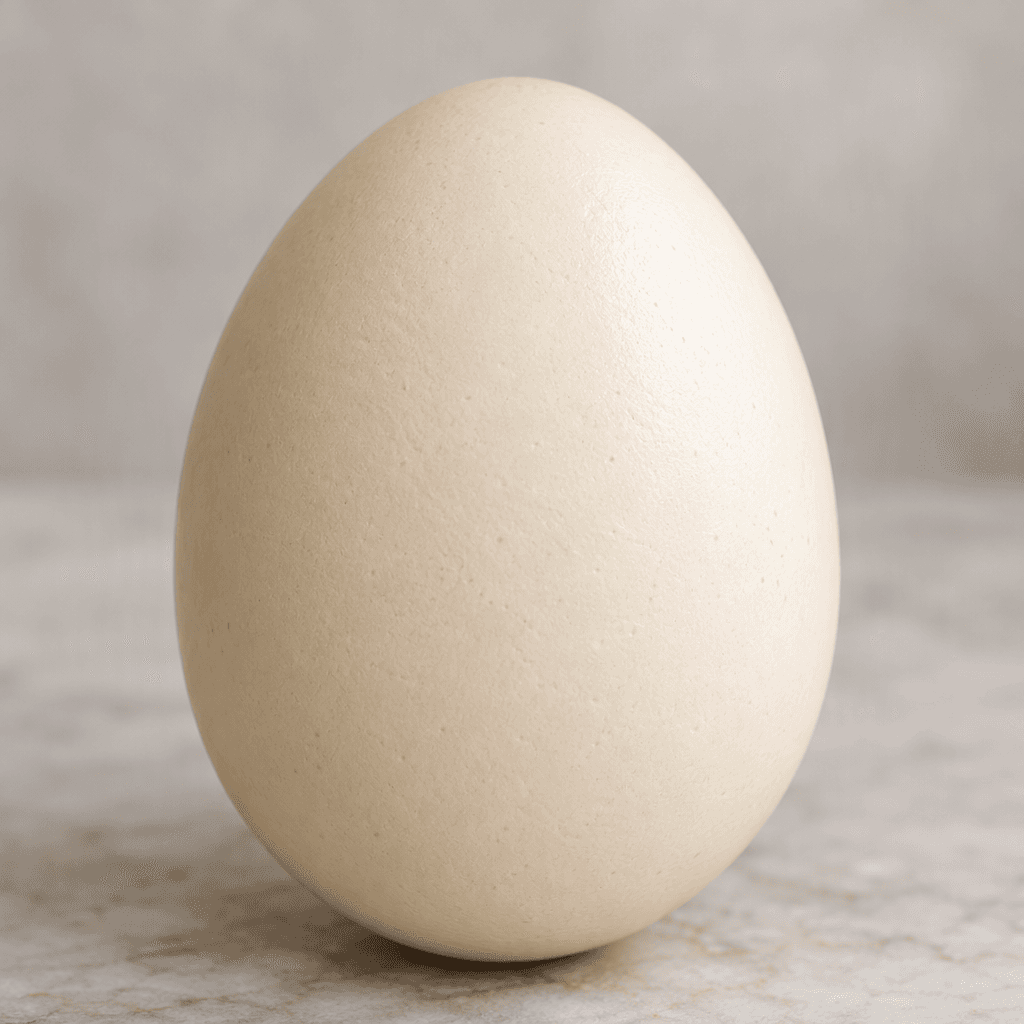
Egg (jumbo) Calories
Jumbo egg, high in protein and vitamin B12
In season: Spring · Summer · Autumn · Winter
CALORIES · 100 G
GI
POTASSIUM · 100 G
FIBER · 100 G
Quick answer
1 piece (jumbo) of Egg (jumbo) (70 g) has 100 calories. That works out to 143 calories per 100 g. It contains 0.8 g of carbs, 9.1 g of protein, 6.7 g of fat and 0 g of fiber. Its 14 µg of Biotin covers 47% of the Daily Value. Its glycemic index is 0 (low), so it raises blood sugar slowly.
Egg (jumbo) Nutrition Facts
Selected: 1 piece (jumbo) · 70 g
100
KCAL / 70G
Carbs
0.8g
· 0% DV
Protein
9.1g
· 18% DV
Fat
6.7g
· 9% DV
Fiber
0g
· 0% DV
DV is the share of the daily value covered, on a 2,000 kcal reference diet.
Calories come from: Carbs 3% · Protein 36% · Fat 61%
Egg (jumbo) nutrition facts table · 1 piece (jumbo) (70 g)
| Nutrient | Amount | % DV |
|---|---|---|
| Calories | 100 kcal | |
| Total fat | 6.7 g | 9% |
| Saturated fat | 2.17 g | 11% |
| Trans fat | 0.03 g | |
| Sodium | 98 mg | 4% |
| Total carbohydrate | 0.8 g | 0% |
| Fiber | 0 g | 0% |
| Protein | 9.1 g | 18% |
Calories: Calories measure energy. Average daily need is 2,000 kcal. Excess calories are stored as fat, too few cause weight loss.
Carbs: Your body's primary energy source. The brain runs exclusively on carbs. Daily need: 275g.
Protein: Essential for muscle repair and cell growth. Daily need: 50g. Keeps you full and boosts metabolism.
Fat: Needed for hormone production and vitamin absorption. Daily need: 78g. Limit saturated fats, choose unsaturated.
Fiber: Critical for digestive health and satiety. Daily need: 28g. Stabilizes blood sugar, lowers cholesterol.

Log this food in EatBetter
100,000+ people use it
- Get your daily calorie target
- Snap your meal, log it in seconds
- See every vitamin and mineral

📸 Scan the code to get the app free.

How Many Calories in 1 Egg (jumbo)?
| Serving | Amount | Calories |
|---|---|---|
| 1 piece (jumbo) | 70 g | 100 kcal |
| 1 piece (half) | 35 g | 50 kcal |
| 1 piece (medium) | 50 g | 72 kcal |
| 1 piece (large) | 60 g | 86 kcal |
| 1 piece (whole) | 70 g | 100 kcal |
| 100 g | 100 g | 143 kcal |
| 1 serving (large) | 105 g | 150 kcal |
| 2 piece (jumbo) | 140 g | 200 kcal |
| 1 serving (jumbo) | 140 g | 200 kcal |
| 3 piece (jumbo) | 210 g | 300 kcal |
Calculated from 143 calories per 100 g.
Frequently Asked Questions About Egg (jumbo)
How long should you boil a jumbo egg?
For a jumbo egg, simmer for about 7 minutes for a soft yolk or 11–12 minutes for a firm yolk, counting from when the water reaches a boil. Cool it in cold water afterward to stop the cooking.
Can you use a jumbo egg instead of a large egg in a recipe?
Yes, but a jumbo egg adds more volume, which can change the texture of cakes and other baking. For best results, use the egg quantity or weight specified by the recipe rather than swapping them one for one.
How long do jumbo eggs last in the refrigerator?
Keep jumbo eggs refrigerated in their carton and follow the date on the package. Store them in the main part of the refrigerator rather than the door, where temperatures fluctuate; discard eggs with cracked shells.
Can you freeze jumbo eggs?
Yes, but crack jumbo eggs out of their shells first. Beat the yolks and whites together, or separate them, then freeze in a sealed container; thaw in the refrigerator and use them in cooked dishes rather than relying on their original texture.
How can you tell if a jumbo egg is fresh?
Place the jumbo egg in a bowl of water: a fresh one usually lies flat on the bottom, while an older one may stand upright or float. The test indicates age, not safety; discard an egg that smells unpleasant when cracked.
Does the color of a jumbo egg’s shell affect its quality?
No, a jumbo egg’s shell color does not determine its nutritional quality or freshness. Shell color mainly reflects the breed of hen; check the egg’s storage history and condition instead.
Why is the yolk of a jumbo egg sometimes pale or dark yellow?
A jumbo egg’s yolk color mostly reflects pigments in the hen’s feed. A darker yolk does not automatically mean the egg is more nutritious, and a pale yolk alone is not a sign that it has spoiled.
Is it safe to eat a jumbo egg raw?
Eating a raw jumbo egg can expose you to foodborne bacteria such as Salmonella. Cook eggs until both the white and yolk are firm, especially when serving young children, older adults, pregnant people, or anyone with a weakened immune system.
How long do hard-boiled jumbo eggs keep?
Hard-boiled jumbo eggs keep for up to one week in the refrigerator when stored promptly in a covered container. Refrigerate them within two hours of cooking, and do not leave them at room temperature for extended periods.
Do jumbo eggs raise cholesterol?
Jumbo eggs contain more yolk than smaller eggs, so they provide more dietary cholesterol per egg. For most people, saturated fat has a stronger effect on blood cholesterol, but people managing high cholesterol may need individualized advice.
Egg (jumbo) Vitamins & Minerals
Vitamins
Biotin
14µg · 47% DV
B12
0.77µg · 32% DV
B2
0.35mg · 27% DV
B5
0.98mg · 20% DV
Minerals
Selenium
21µg · 38% DV
Iodine
33µg · 22% DV
Phosphorus
139mg · 20% DV
Zinc
0.91mg · 8% DV
Sodium
98mg · 4% DV
Potassium ⭐
97mg · 3% DV
Egg (jumbo) Glycemic Index
GLYCEMIC INDEX
GLYCEMIC LOAD
Accounts for portion size — a more realistic measure than GI alone.
How to Burn Off Egg (jumbo)
To burn the 100 calories in 1 piece (jumbo) (70 g):
🚶
Walking (5 km/h)
🏃
Running (8 km/h)
🚴
Cycling
🏊
Swimming
Times are calculated with the MET equation for a 70 kg adult. Actual burn varies with your weight, age and pace.
What is Egg (jumbo)?
A jumbo egg is a large hen’s egg, used as an everyday ingredient in meals and baking rather than as a dish in its own right. Its mild flavour and rich yolk work well boiled, fried, scrambled or folded into an omelette; the white turns tender or firm depending on how it is cooked.
Across the English-speaking world, it appears at breakfast, in sandwiches and salads, and in baked goods. It is a protein-rich choice and also provides vitamin B12; 100 g contains 13 g of protein. For a lighter meal, cook it with little added fat and serve with vegetables or whole-grain toast.
How Nutritious Is Egg (jumbo)?
Nutrient density
Very high
How many vitamins, minerals and how much fiber this food carries per calorie. A high score means a lot of nutrition for few calories.
Satiety score
Medium
An EatBetter score computed from fiber, protein and calorie density. A high score means staying full longer on the same calories.
Both scores are calculated per 100 g and do not change with the selected portion. The satiety score is EatBetter's own calculation, not a clinical measure.
Is Egg (jumbo) Processed?
NOVA 1
Unprocessed
1. Unprocessed
2. Minimally Processed
3. Processed
4. Ultra-Processed
NOVA classifies foods into 4 groups by industrial processing. NOVA 1 (unprocessed) is the healthiest.
Does Egg (jumbo) Contain Allergens?
Contains these allergens:
Which Diets Is Egg (jumbo) Good For?
Vegan
— Not suitable
Vegetarian
✓ Suitable
Gluten-Free
✓ Suitable
Dairy-Free
— Not suitable
Mediterranean
✓ Suitable
Paleo
✓ Suitable
Whole30
— Not suitable
DASH
— Not suitable
Keto
✓ Suitable
Low FODMAP
— Not suitable
Egg (jumbo) Fat Profile
SATURATED
2.17g
MONOUNSATURATED
2.59g
POLYUNSATURATED
1.4g
Omega 6:3 ratio 18.2:1
Above the ideal 4:1 (18.2:1).
Compare Egg (jumbo)
Foods Similar to Egg (jumbo)
Have another question about Egg (jumbo)?
Ask the AI nutrition coach — calories, portions, alternatives and more, answered in seconds in the app.

Scan calories with your camera
Instant AI nutrition analysis

Nutrition data compiled from USDA FoodData Central and scientific sources.