

Ready & Packaged Foods
All →Vegetables & Legumes
All →Desserts & Confectionery
All →Meat & Protein
All →Grains & Bakery
All →Beverages
All →Milk & Dairy
All →

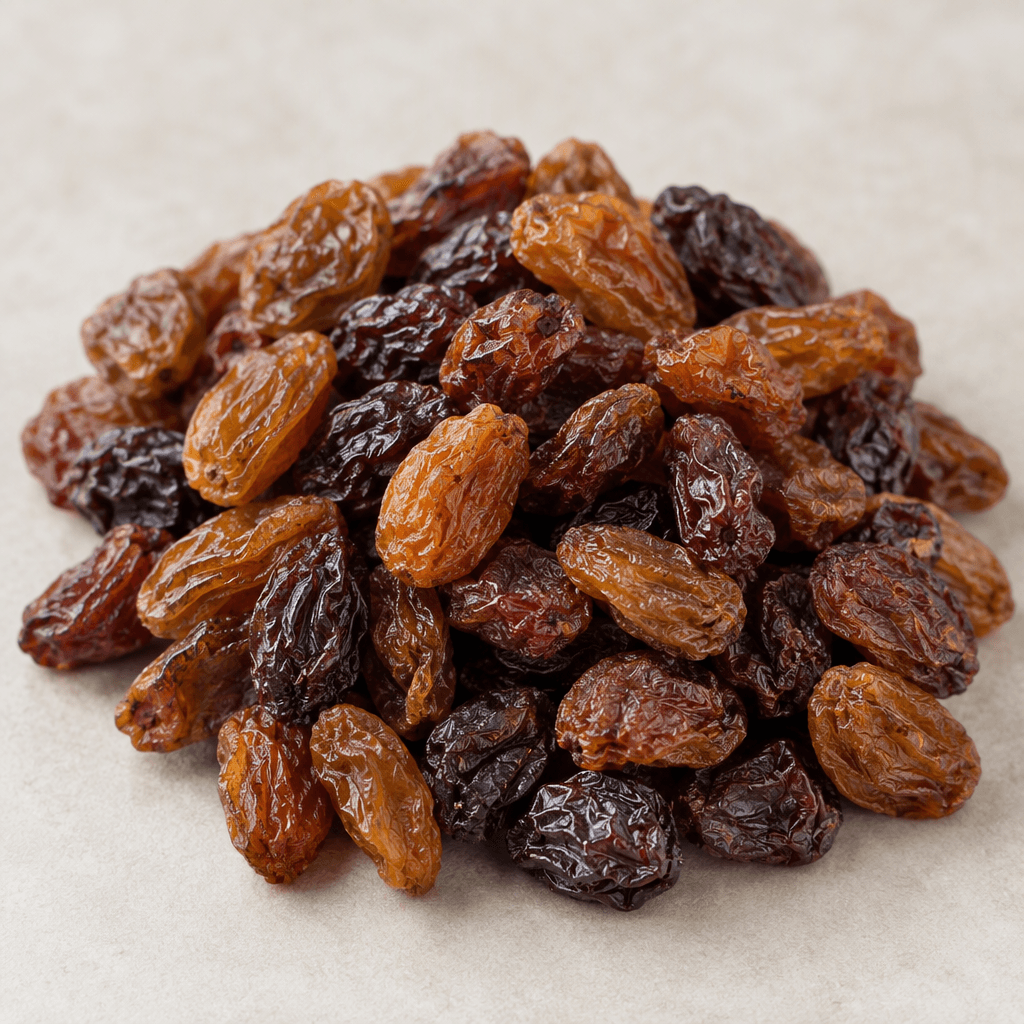
Dried Grapes Calories
Natural energy source, contains fiber and antioxidants
In season: Autumn · Winter
CALORIES
GI
POTASSIUM
FIBER
Quick answer
1 piece (medium) of Dried Grapes (40 g) has 120 calories. That works out to 299 calories per 100 g. It contains 31.7 g of carbs, 1.2 g of protein, 0.2 g of fat and 1.5 g of fiber. Its 0.1 mg of Copper covers 14% of the Daily Value. Its glycemic index is 65 (high), so it raises blood sugar quickly.
What is Dried Grapes?
Dried Grapes are fresh grapes preserved by removing most of their moisture, usually by sun-drying or controlled drying. The small, wrinkled fruit can be golden, brown or deep purple, depending on the grape and method. Across many English-speaking countries, it is eaten by the handful, stirred into porridge or cereal, and added to baking, salads and savoury dishes; in some cuisines it is also used in rice dishes and curries.
Its nutritional character is mostly carbohydrate from naturally occurring sugars, with very little fat and some fibre, making it a compact source of energy. Pair it with plain yoghurt, oats or unsalted nuts for a more filling snack. When baking with it, you can often reduce the added sugar in the recipe.
Dried Grapes Nutrition Facts
Selected: 100 g
299
KCAL / 100G
Carbs
79.2g
· 29% DV
Protein
3.1g
· 6% DV
Fat
0.5g
· 1% DV
Fiber
3.7g
· 13% DV
DV is the share of the daily value covered, on a 2,000 kcal reference diet.
Calories come from: Carbs 95% · Protein 4% · Fat 1%

Log this food in EatBetter
100,000+ people use it
- Get your daily calorie target
- Snap your meal, log it in seconds
- See every vitamin and mineral

📸 Scan the code to get the app free.

Dried Grapes Vitamins & Minerals
Vitamins
Biotin
7µg · 23% DV
B6
0.32mg · 19% DV
B2
0.18mg · 14% DV
B1
0.11mg · 9% DV
Minerals
Potassium ⭐
749mg · 22% DV
Iron
3mg · 17% DV
Phosphorus
101mg · 14% DV
Copper
0mg · 0% DV
How Nutritious Is Dried Grapes?
Nutrient density
Medium
How many vitamins, minerals and how much fiber this food carries per calorie. A high score means a lot of nutrition for few calories.
Satiety score
Low
An EatBetter score computed from fiber, protein and calorie density. A high score means staying full longer on the same calories.
Both scores are calculated per 100 g and do not change with the selected portion. The satiety score is EatBetter's own calculation, not a clinical measure.
Dried Grapes Glycemic Index
GLYCEMIC INDEX
GLYCEMIC LOAD
Accounts for portion size — a more realistic measure than GI alone.
How to Burn Off Dried Grapes
To burn the 299 calories in 100 g:
🚶
Walking (5 km/h)
🏃
Running (8 km/h)
🚴
Cycling
🏊
Swimming
Times are calculated with the MET equation for a 70 kg adult. Actual burn varies with your weight, age and pace.
Is Dried Grapes Processed?
NOVA 2
Minimally Processed
1. Unprocessed
2. Minimally Processed
3. Processed
4. Ultra-Processed
NOVA classifies foods into 4 groups by industrial processing. NOVA 1 (unprocessed) is the healthiest.
Does Dried Grapes Contain Allergens?
No known major allergens
Which Diets Is Dried Grapes Good For?
Vegan
✓ Suitable
Vegetarian
✓ Suitable
Gluten-Free
✓ Suitable
Dairy-Free
— Not suitable
Mediterranean
✓ Suitable
Paleo
— Not suitable
Whole30
— Not suitable
DASH
— Not suitable
Keto
— Not suitable
Low FODMAP
— Not suitable
Dried Grapes Fat Profile
SATURATED
0.16g
MONOUNSATURATED
0.06g
POLYUNSATURATED
0.17g
Omega 6:3 ratio 3:1
Below the ideal 4:1 — a good omega balance.
Compare Dried Grapes
Foods Similar to Dried Grapes
Frequently Asked Questions About Dried Grapes
Are dried grapes the same as raisins?
Yes. Raisins are dried grapes, though names such as raisins, sultanas and currants can refer to different grape varieties or drying methods depending on the country. In everyday English, “raisins” is the most familiar name for dried grapes.
Are dried grapes good for you?
Dried grapes provide fiber and antioxidant compounds, making them a convenient snack or addition to meals. Because drying concentrates their natural sugars, they are easier to overeat than fresh grapes; add a modest amount to oatmeal, yogurt or a trail mix.
Can dogs eat dried grapes?
No. Dried grapes (raisins) can cause severe, potentially fatal kidney injury in dogs, and the toxic amount is unpredictable. Keep them out of reach; if your dog has eaten any, contact a veterinarian or animal poison service immediately rather than waiting for symptoms.
Do you need to wash dried grapes before eating them?
Rinse dried grapes briefly under cool running water if they look dusty or have loose debris, then drain them well. Don’t wash the whole supply before storing it: extra moisture can encourage spoilage or mold.
How should you store dried grapes?
Keep dried grapes in a tightly sealed container in a cool, dry place away from sunlight and moisture. Refrigeration can help in a warm or humid kitchen. Discard them if you notice mold, an unusual smell or persistent dampness.
What is the difference between raisins, sultanas and currants?
They are all dried grapes, but the terms often describe different varieties and sizes. Sultanas are commonly made from light-colored grapes, while currants are usually small dried grapes; usage varies by region, so recipes may use the names differently.
Should you soak dried grapes before eating them?
No soaking is necessary, but dried grapes can be soaked briefly to soften them for baking, oatmeal or savory dishes. Soaking does not remove their natural sugars or make them a detox food; drain them before adding them to a recipe.
How are dried grapes made?
Dried grapes are made by removing water from fresh grapes, traditionally by sun-drying them or using controlled drying equipment. Drying time and color vary with the grape variety and method; commercially sold dried grapes may also receive treatment to preserve their color.
Do dried grapes raise blood sugar?
Yes. Dried grapes contain concentrated natural sugars and can raise blood glucose, especially when eaten alone in a large portion. If you have diabetes, fit them into your meal plan and monitor your response; a clinician or dietitian can help tailor advice.
Can you use dried grapes instead of fresh grapes in baking?
Yes, dried grapes work well in cookies, breads, muffins and pilafs, but they are sweeter and chewier than fresh grapes and contain much less water. Add them as directed by the recipe, or soak them briefly if you want a softer texture.
Have another question about Dried Grapes?
Ask the AI nutrition coach — calories, portions, alternatives and more, answered in seconds in the app.

Scan calories with your camera
Instant AI nutrition analysis

Nutrition data compiled from USDA FoodData Central and scientific sources.