

Ready & Packaged Foods
All →Vegetables & Legumes
All →Desserts & Confectionery
All →Meat & Protein
All →Grains & Bakery
All →Beverages
All →Milk & Dairy
All →

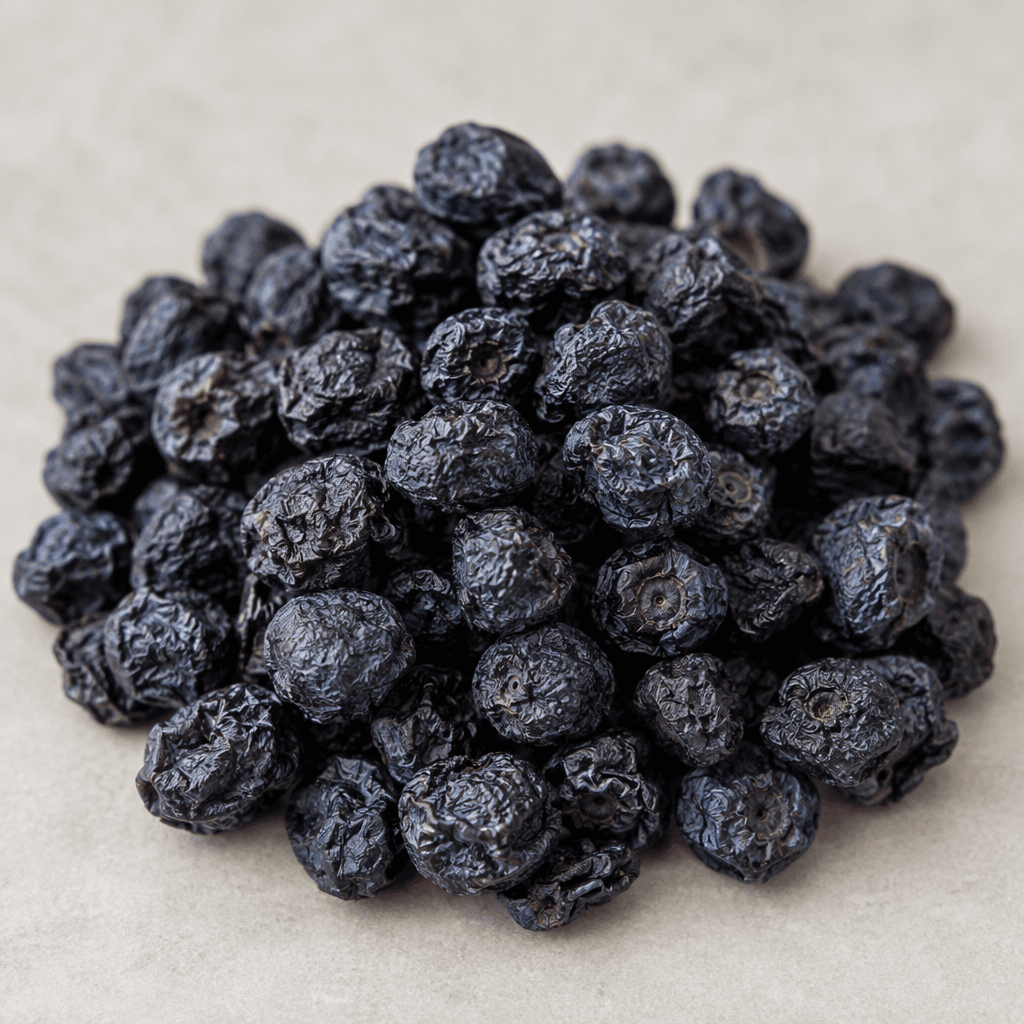
Dried blueberries Calories
Antioxidants, fiber, natural sugars
In season: Summer · Autumn
CALORIES
GI
POTASSIUM
FIBER
Quick answer
1 serving (medium) of Dried blueberries (40 g) has 127 calories. That works out to 317 calories per 100 g. It contains 32 g of carbs, 1 g of protein, 0.3 g of fat and 3 g of fiber. Its 0.2 mg of Manganese covers 9% of the Daily Value. Its glycemic index is 55 (medium), so it raises blood sugar at a moderate pace.
What is Dried blueberries?
Dried blueberries are fresh blueberries with much of their water removed. The berries become smaller and wrinkled, with a chewy texture and a concentrated sweet-tart flavour. Their exact sweetness can vary, so check the ingredient list if you are looking for a product without added sugar.
They’re easy to stir into breakfast porridge, cereal or yoghurt, and are also popular in trail mix, baking and as a portable snack. Their fibre is useful in a small serving, but drying concentrates the berries’ natural sugars and energy. Pair them with plain yoghurt or unsalted nuts, or use a small handful to add fruity flavour to breakfast.
Dried blueberries Nutrition Facts
Selected: 100 g
317
KCAL / 100G
Carbs
80g
· 29% DV
Protein
2.5g
· 5% DV
Fat
0.7g
· 1% DV
Fiber
7.5g
· 27% DV
DV is the share of the daily value covered, on a 2,000 kcal reference diet.
Calories come from: Carbs 95% · Protein 3% · Fat 2%
Dried blueberries Vitamins & Minerals
Vitamins
Vitamin K
19µg · 16% DV
Vitamin E
1.2mg · 8% DV
B2
0.05mg · 4% DV
B5
0.2mg · 4% DV
Minerals
Manganese
1mg · 43% DV
Iron
1mg · 6% DV
Magnesium
18mg · 4% DV
Calcium
25mg · 3% DV
How Nutritious Is Dried blueberries?
Nutrient density
High
How many vitamins, minerals and how much fiber this food carries per calorie. A high score means a lot of nutrition for few calories.
Satiety score
Medium
An EatBetter score computed from fiber, protein and calorie density. A high score means staying full longer on the same calories.
Both scores are calculated per 100 g and do not change with the selected portion. The satiety score is EatBetter's own calculation, not a clinical measure.
Dried blueberries Glycemic Index
GLYCEMIC INDEX
GLYCEMIC LOAD
Accounts for portion size — a more realistic measure than GI alone.
How to Burn Off Dried blueberries
To burn the 317 calories in 100 g:
🚶
Walking (5 km/h)
🏃
Running (8 km/h)
🚴
Cycling
🏊
Swimming
Times are calculated with the MET equation for a 70 kg adult. Actual burn varies with your weight, age and pace.
Is Dried blueberries Processed?
NOVA 2
Minimally Processed
1. Unprocessed
2. Minimally Processed
3. Processed
4. Ultra-Processed
NOVA classifies foods into 4 groups by industrial processing. NOVA 1 (unprocessed) is the healthiest.
Does Dried blueberries Contain Allergens?
No known major allergens
Which Diets Is Dried blueberries Good For?
Vegan
✓ Suitable
Vegetarian
✓ Suitable
Gluten-Free
✓ Suitable
Dairy-Free
— Not suitable
Mediterranean
✓ Suitable
Paleo
✓ Suitable
Whole30
— Not suitable
DASH
— Not suitable
Keto
— Not suitable
Low FODMAP
— Not suitable
Dried blueberries Fat Profile
SATURATED
0.03g
MONOUNSATURATED
0.08g
POLYUNSATURATED
0.09g
Omega 6:3 ratio 4:1
Below the ideal 4:1 — a good omega balance.
Compare Dried blueberries
Foods Similar to Dried blueberries
Frequently Asked Questions About Dried blueberries
How do you eat dried blueberries?
Eat dried blueberries as a snack or add them to oatmeal, yogurt, trail mix, cereal, or baked goods. Their flavor is more concentrated than fresh blueberries, so they work especially well in recipes that benefit from a sweet, chewy addition.
Are dried blueberries good for you?
Dried blueberries provide fiber and antioxidant compounds. Because drying removes water, their flavor and natural sugars become more concentrated than in fresh berries; enjoy them as a small addition to meals or snacks rather than assuming they are identical to fresh fruit.
Do dried blueberries have added sugar?
Some dried blueberries are sweetened with sugar or fruit juice concentrate, while others have no added sweetener. Check the ingredient list for your particular product, since the appearance and taste alone may not reveal whether it was sweetened.
Can you use dried blueberries instead of fresh blueberries in baking?
Yes, dried blueberries can replace fresh blueberries in many muffins, cookies, breads, and oatmeal recipes. They add a chewier, sweeter bite and less moisture, so soaking them briefly can help keep baked goods from turning out too dry.
How do you soften dried blueberries?
To soften dried blueberries, soak them in warm water until they become plumper, then drain them well. If you are adding them to batter, remove excess water first so the extra moisture does not change the recipe's texture.
How should you store dried blueberries after opening?
Store dried blueberries in a tightly sealed container in a cool, dry place. Keep moisture out to preserve their texture; discard them if you notice mold, an unusual smell, or signs of spoilage.
Are dried blueberries as nutritious as fresh blueberries?
Dried blueberries retain fiber and many of the fruit's compounds, but they contain much less water and have a more concentrated taste and natural sugars. Some products also have added sweeteners, so they are not a direct nutritional or portion-for-portion substitute for fresh blueberries.
Can people with diabetes eat dried blueberries?
People with diabetes can include dried blueberries in a meal plan, but the concentrated natural sugars—and any added sweetener—can affect blood glucose. Choose an unsweetened product when possible and follow the portion guidance in your individual care plan.
Can dogs eat dried blueberries?
Plain dried blueberries are not toxic to dogs, but they are concentrated and can contain added sugar. If you offer any, keep it to a small amount and avoid products with sweeteners or other ingredients that may be unsafe for dogs.
Can you freeze dried blueberries?
Yes, you can freeze dried blueberries, although freezing is usually unnecessary if they are kept sealed in a cool, dry place. Protect them from moisture when taking them out of the freezer so condensation does not soften or spoil them.
Have another question about Dried blueberries?
Ask the AI nutrition coach — calories, portions, alternatives and more, answered in seconds in the app.

Scan calories with your camera
Instant AI nutrition analysis

Nutrition data compiled from USDA FoodData Central and scientific sources.