

Ready & Packaged Foods
All →Vegetables & Legumes
All →Desserts & Confectionery
All →Meat & Protein
All →Grains & Bakery
All →Beverages
All →Milk & Dairy
All →

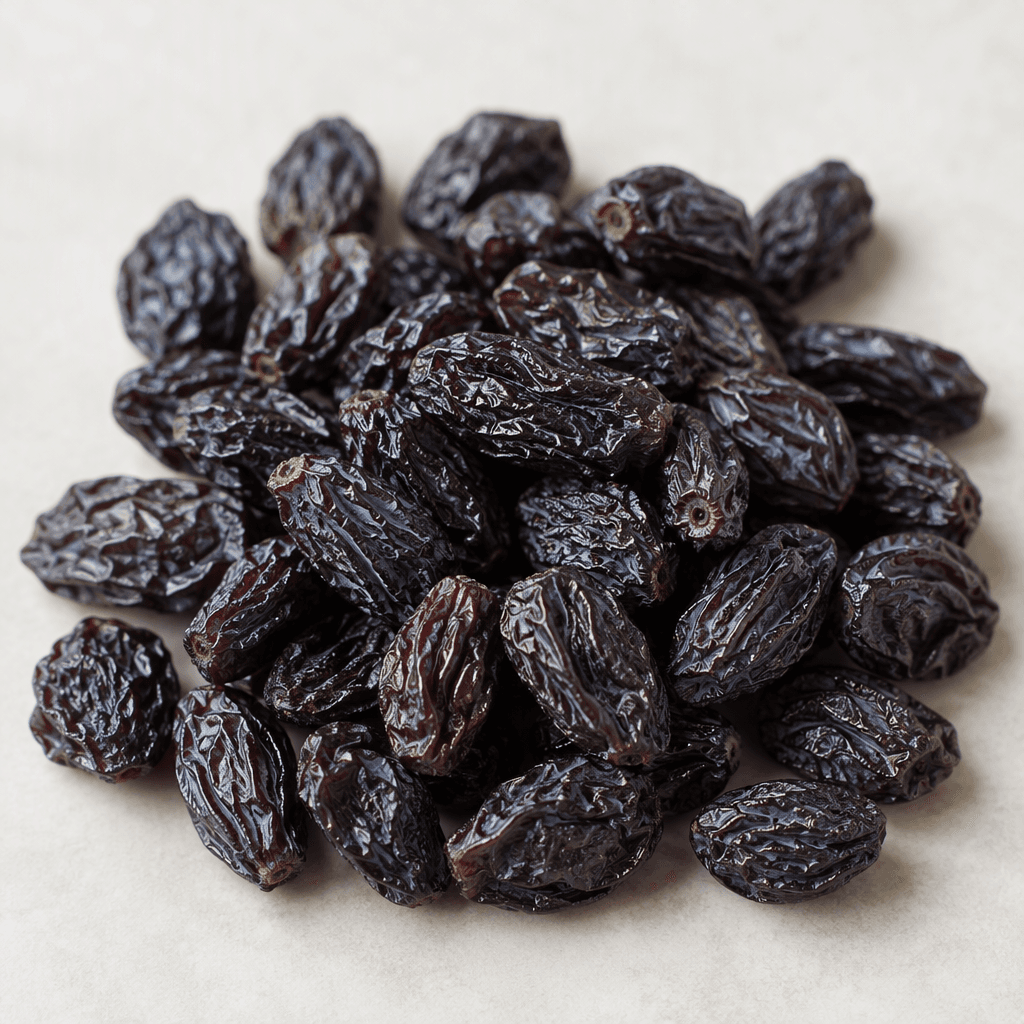
Dried Black Grape Calories
Rich in iron and potassium, natural energy source
In season: Autumn · Winter
CALORIES
GI
POTASSIUM
FIBER
Quick answer
1 serving (medium) of Dried Black Grape (40 g) has 120 calories. That works out to 299 calories per 100 g. It contains 31.7 g of carbs, 1.1 g of protein, 0.2 g of fat and 1.5 g of fiber. Its 0.1 mg of Copper covers 13% of the Daily Value. Its glycemic index is 65 (high), so it raises blood sugar quickly.
What is Dried Black Grape?
Dried black grapes are black grapes that have been dried until their skins wrinkle and their flavour becomes concentrated. They are chewy, sweet and sometimes slightly tangy, and can be eaten by the handful or stirred into porridge, baked goods and savoury rice dishes. In Turkey, they may appear at breakfast alongside nuts and cheese, as a tea-time snack, or in home cooking; elsewhere, they are often used much like raisins in baking and trail mixes.
They are carbohydrate-rich and offer a compact source of energy, with some fibre as well. A small handful works well with unsweetened yoghurt or nuts if you want a more balanced snack.
Dried Black Grape Nutrition Facts
Selected: 100 g
299
KCAL / 100G
Carbs
79.2g
· 29% DV
Protein
2.7g
· 5% DV
Fat
0.5g
· 1% DV
Fiber
3.7g
· 13% DV
DV is the share of the daily value covered, on a 2,000 kcal reference diet.
Calories come from: Carbs 95% · Protein 3% · Fat 2%
Dried Black Grape Vitamins & Minerals
Vitamins
Biotin
7µg · 23% DV
B6
0.32mg · 19% DV
B2
0.19mg · 15% DV
B1
0.1mg · 8% DV
Minerals
Potassium ⭐
746mg · 22% DV
Iron
3mg · 17% DV
Phosphorus
101mg · 14% DV
Magnesium
32mg · 8% DV
How Nutritious Is Dried Black Grape?
Nutrient density
Medium
How many vitamins, minerals and how much fiber this food carries per calorie. A high score means a lot of nutrition for few calories.
Satiety score
Low
An EatBetter score computed from fiber, protein and calorie density. A high score means staying full longer on the same calories.
Both scores are calculated per 100 g and do not change with the selected portion. The satiety score is EatBetter's own calculation, not a clinical measure.
Dried Black Grape Glycemic Index
GLYCEMIC INDEX
GLYCEMIC LOAD
Accounts for portion size — a more realistic measure than GI alone.
How to Burn Off Dried Black Grape
To burn the 299 calories in 100 g:
🚶
Walking (5 km/h)
🏃
Running (8 km/h)
🚴
Cycling
🏊
Swimming
Times are calculated with the MET equation for a 70 kg adult. Actual burn varies with your weight, age and pace.
Is Dried Black Grape Processed?
NOVA 2
Minimally Processed
1. Unprocessed
2. Minimally Processed
3. Processed
4. Ultra-Processed
NOVA classifies foods into 4 groups by industrial processing. NOVA 1 (unprocessed) is the healthiest.
Does Dried Black Grape Contain Allergens?
No known major allergens
Which Diets Is Dried Black Grape Good For?
Vegan
✓ Suitable
Vegetarian
✓ Suitable
Gluten-Free
✓ Suitable
Dairy-Free
— Not suitable
Mediterranean
✓ Suitable
Paleo
✓ Suitable
Whole30
— Not suitable
DASH
— Not suitable
Keto
— Not suitable
Low FODMAP
— Not suitable
Dried Black Grape Fat Profile
SATURATED
0.16g
MONOUNSATURATED
0.03g
POLYUNSATURATED
0.18g
Omega 6:3 ratio 2:1
Below the ideal 4:1 — a good omega balance.
Compare Dried Black Grape
Foods Similar to Dried Black Grape
Frequently Asked Questions About Dried Black Grape
How should you store dried black grapes?
Store dried black grapes in an airtight container in a cool, dry place. Keep moisture out to prevent them from becoming sticky or spoiling, and discard them if you notice mold, an unusual smell, or an unexpected change in appearance.
Do you need to wash dried black grapes before eating them?
Yes, rinse dried black grapes under running water and drain them before eating, especially if they were sold loose. Washing helps remove dust and surface residue; eat them soon after rinsing rather than leaving them damp in storage.
Can you soak dried black grapes overnight?
Yes, soaking dried black grapes overnight in the refrigerator softens them and makes them easier to chew. You can eat the softened fruit as is or add it to porridge; soaking does not make it more nutritious.
What is the difference between dried black grapes and raisins?
Dried black grapes are raisins made from dark-skinned grapes. “Raisin” is the general English term for a dried grape, while dried black grapes describes the dark variety; recipes that call for raisins usually work with either type.
Can you use dried black grapes in baking?
Yes, dried black grapes work well in fruitcakes, muffins, oatmeal cookies, and bread. If they feel very firm, briefly soak and drain them first; this helps keep them tender rather than drawing moisture from the baked mixture.
Are dried black grapes good for you?
Dried black grapes provide fiber and minerals, but they are also concentrated in natural sugars because much of the grape’s water is removed. They can fit into a balanced snack, particularly alongside nuts or plain yogurt.
Can people with diabetes eat dried black grapes?
Yes, people with diabetes can include dried black grapes, but their concentrated natural sugars can raise blood glucose. Keep the portion modest and pair them with a protein- or fat-containing food; follow your own glucose response and care plan.
Can dried black grapes replace raisins in a recipe?
Yes, dried black grapes can usually replace raisins in recipes in the same amount. Their darker color and sometimes deeper flavor may change the finished dish slightly, but they work in cereals, baked goods, pilafs, and savory stuffings.
Are dried black grapes safe for dogs?
No, dried black grapes are not safe for dogs. Raisins can cause serious kidney injury, and even a small amount may be dangerous; keep them out of reach and contact a veterinarian promptly if a dog eats any.
Do dried black grapes need to be soaked before eating?
No, dried black grapes do not need soaking; they are ready to eat as sold. Soak them only if you prefer a softer texture or are adding them to a recipe where plump fruit is desired.
Have another question about Dried Black Grape?
Ask the AI nutrition coach — calories, portions, alternatives and more, answered in seconds in the app.

Scan calories with your camera
Instant AI nutrition analysis

Nutrition data compiled from USDA FoodData Central and scientific sources.