

Ready & Packaged Foods
All →Vegetables & Legumes
All →Desserts & Confectionery
All →Meat & Protein
All →Grains & Bakery
All →Beverages
All →Milk & Dairy
All →

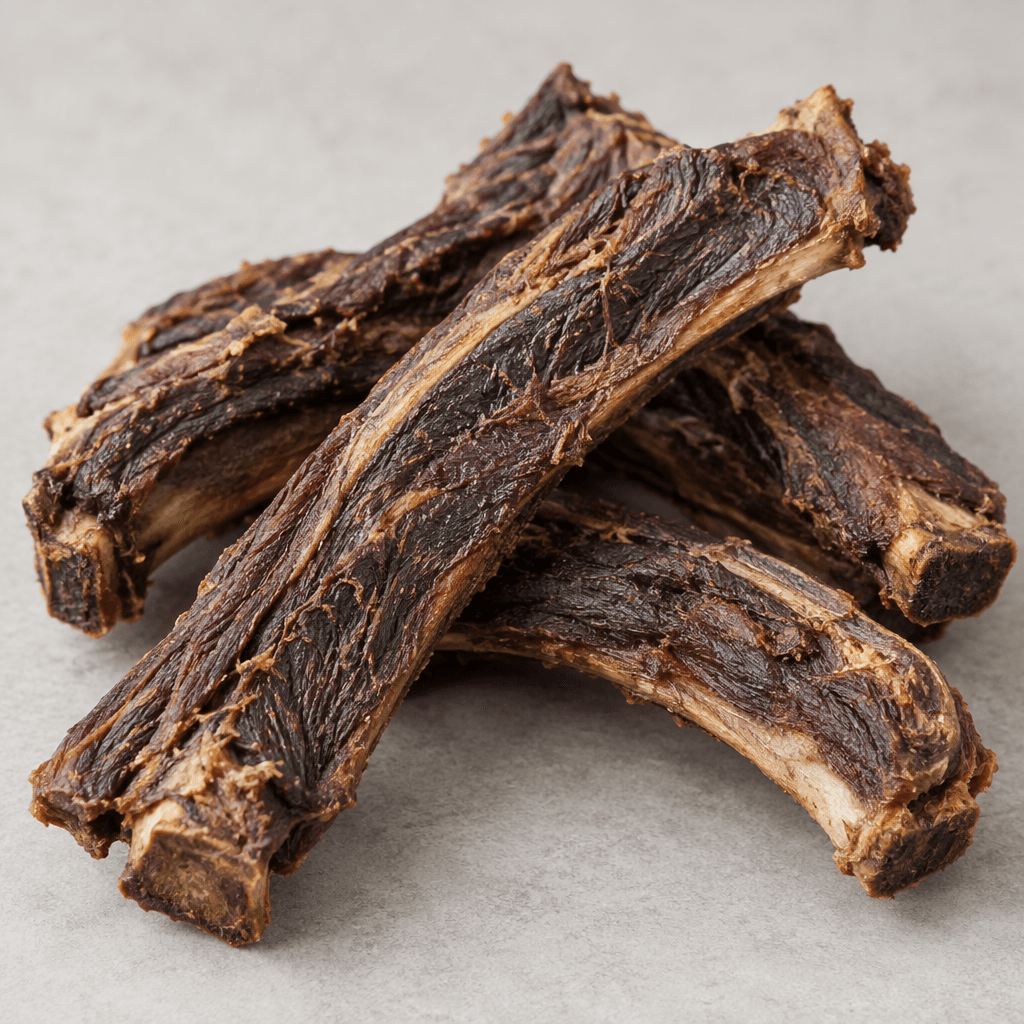
Dried beef rib Calories
High in protein, iron and zinc, long shelf life
CALORIES
GI
POTASSIUM
FIBER
Quick answer
1 piece (medium) of Dried beef rib (40 g) has 164 calories. That works out to 410 calories per 100 g. It contains 0 g of carbs, 22 g of protein, 8 g of fat and 0 g of fiber. Its 1.1 µg of B12 covers 47% of the Daily Value. Its glycemic index is 0 (low), so it raises blood sugar slowly.
What is Dried beef rib?
Dried beef rib is beef from the rib section preserved by drying, sometimes left on the bone. Drying is an old way to keep meat for longer, and the result is more concentrated than fresh beef rather than an everyday cut found everywhere.
Its flavour is robust, while the shrunken meat has a firm, fibrous, chewy texture. Where it is available, it can be simmered until tender and added to soups, beans or stews; soaking it first can help if it is especially dry. It is protein-rich and filling, so a modest amount can go a long way. Pair it with vegetables or a fresh salad for a more balanced plate.
Dried beef rib Nutrition Facts
Selected: 100 g
410
KCAL / 100G
Carbs
0g
· 0% DV
Protein
55g
· 110% DV
Fat
20g
· 26% DV
Fiber
0g
· 0% DV
DV is the share of the daily value covered, on a 2,000 kcal reference diet.
Calories come from: Carbs 0% · Protein 55% · Fat 45%
Dried beef rib Vitamins & Minerals
Vitamins
B12
2.8µg · 117% DV
B3
5.5mg · 34% DV
B6
0.45mg · 26% DV
B2
0.18mg · 14% DV
Minerals
Zinc
11mg · 100% DV
Sodium
1200mg · 52% DV
Phosphorus
340mg · 49% DV
Selenium
18µg · 33% DV
How Nutritious Is Dried beef rib?
Nutrient density
High
How many vitamins, minerals and how much fiber this food carries per calorie. A high score means a lot of nutrition for few calories.
Satiety score
Low
An EatBetter score computed from fiber, protein and calorie density. A high score means staying full longer on the same calories.
Both scores are calculated per 100 g and do not change with the selected portion. The satiety score is EatBetter's own calculation, not a clinical measure.
Dried beef rib Glycemic Index
GLYCEMIC INDEX
GLYCEMIC LOAD
Accounts for portion size — a more realistic measure than GI alone.
How to Burn Off Dried beef rib
To burn the 410 calories in 100 g:
🚶
Walking (5 km/h)
🏃
Running (8 km/h)
🚴
Cycling
🏊
Swimming
Times are calculated with the MET equation for a 70 kg adult. Actual burn varies with your weight, age and pace.
Is Dried beef rib Processed?
NOVA 3
Processed
1. Unprocessed
2. Minimally Processed
3. Processed
4. Ultra-Processed
NOVA classifies foods into 4 groups by industrial processing. NOVA 1 (unprocessed) is the healthiest.
Does Dried beef rib Contain Allergens?
No known major allergens
Which Diets Is Dried beef rib Good For?
Vegan
— Not suitable
Vegetarian
— Not suitable
Gluten-Free
✓ Suitable
Dairy-Free
— Not suitable
Mediterranean
✓ Suitable
Paleo
✓ Suitable
Whole30
— Not suitable
DASH
— Not suitable
Keto
✓ Suitable
Low FODMAP
— Not suitable
Dried beef rib Fat Profile
SATURATED
8.8g
MONOUNSATURATED
8.5g
POLYUNSATURATED
0.6g
Omega 6:3 ratio 2.3:1
Below the ideal 4:1 — a good omega balance.
Compare Dried beef rib
Foods Similar to Dried beef rib
Frequently Asked Questions About Dried beef rib
How do you cook dried beef ribs?
Dried beef ribs are usually best cooked slowly with moisture. Simmer them in water until tender, then add the meat and cooking liquid to soups, beans, or rice dishes. Taste the dish before adding salt, since the ribs may season it.
Should you soak dried beef ribs before cooking?
Yes, soaking dried beef ribs can soften them and remove some surface salt. Cover them with cold water, then discard the soaking water and cook the ribs in fresh water. The time needed varies with how dry and thick the pieces are.
Can you eat dried beef ribs without cooking them?
Not necessarily; drying alone does not mean dried beef ribs are ready to eat. Eat them uncooked only if they are specifically prepared and labeled for that use. Otherwise, cook them thoroughly, especially if they were dried at home.
What dishes can you make with dried beef ribs?
Dried beef ribs add a deep, meaty flavor to soups, bean dishes, and rice. Cook them until tender first, and use some of their cooking liquid for extra flavor. Add salt only after tasting, because the meat may already be salty.
How should you store dried beef ribs?
Keep dried beef ribs in a sealed package in a cool, dry place away from sunlight. Once opened, refrigerate them to limit exposure to moisture and spoilage. Discard the meat if it develops an unusual odor or appearance.
Can you freeze dried beef ribs?
Yes, dried beef ribs can be frozen. Wrap them airtight, ideally in meal-sized portions, and thaw only what you need in the refrigerator. Avoid refreezing ribs after they have thawed.
Can you make dried beef ribs at home?
Yes, but safe home drying requires clean handling and controlled conditions that dry the meat reliably. The bone can make drying uneven, so simply hanging ribs to dry is not a safe method; use a tested meat-drying process.
Why are dried beef ribs so tough?
Dried beef ribs are firm because drying removes moisture, and the meat around the rib can be fibrous. Soak them first if needed, then simmer gently until tender; quick, high-heat cooking is unlikely to soften them.
Do dried beef ribs taste like beef jerky?
They share a concentrated beef flavor, but dried beef ribs are not the same as beef jerky. Ribs include meat attached to bone and are often rehydrated and cooked, while jerky is usually sliced meat eaten as a dried snack.
How do you remove excess salt from dried beef ribs?
Soak dried beef ribs in cold water before cooking to draw out some salt, then discard that water. If the cooked meat still tastes salty, use less of its cooking liquid in the dish and avoid adding extra salt.
Have another question about Dried beef rib?
Ask the AI nutrition coach — calories, portions, alternatives and more, answered in seconds in the app.

Scan calories with your camera
Instant AI nutrition analysis

Nutrition data compiled from USDA FoodData Central and scientific sources.