

Ready & Packaged Foods
All →Vegetables & Legumes
All →Desserts & Confectionery
All →Meat & Protein
All →Grains & Bakery
All →Beverages
All →Milk & Dairy
All →

Dried Apricot Calories
Source of fiber and potassium, contains natural sugars
In season: Summer · Autumn · Winter
CALORIES
GI
POTASSIUM
FIBER
Quick answer
5 piece (medium) of Dried Apricot (40 g) has 96 calories. That works out to 241 calories per 100 g. It contains 25.6 g of carbs, 1.4 g of protein, 0.2 g of fat and 2.9 g of fiber. Its 144 µg of Vitamin A covers 16% of the Daily Value. Its glycemic index is 30 (medium), so it raises blood sugar at a moderate pace.
What is Dried Apricot?
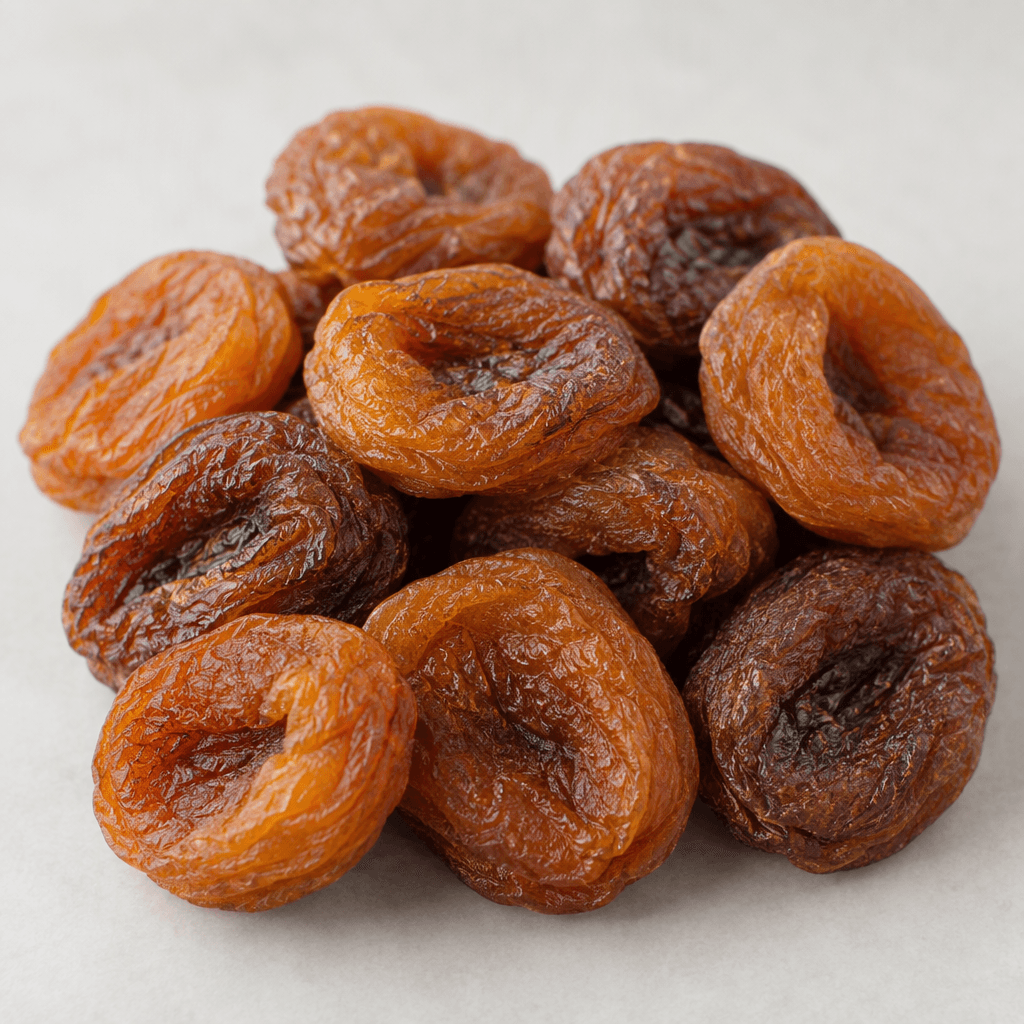
Dried apricots are ripe apricots with much of their moisture removed, leaving a chewy fruit with a concentrated sweetness. They are made and eaten across the Mediterranean, the Middle East and Central Asia, and are sold both soft and plump or darker and firmer.
Enjoy them as a snack, with tea, or chopped into porridge, granola and baked goods. In savoury cooking, they pair well with grains, nuts and slow-cooked meat. Dried apricot provides fibre and potassium, along with naturally occurring sugars; a 100 g portion has 7.3 g of fibre. For a more filling snack, serve a few pieces with plain yoghurt or nuts, rather than eating them by the handful.
Dried Apricot Nutrition Facts
Selected: 100 g
241
KCAL / 100G
Carbs
63.9g
· 23% DV
Protein
3.4g
· 7% DV
Fat
0.5g
· 1% DV
Fiber
7.3g
· 26% DV
DV is the share of the daily value covered, on a 2,000 kcal reference diet.
Calories come from: Carbs 93% · Protein 5% · Fat 2%
Dried Apricot Vitamins & Minerals
Vitamins
Vitamin A
360µg · 40% DV
Vitamin E
4.3mg · 29% DV
B3
2.6mg · 16% DV
B5
0.52mg · 10% DV
Minerals
Potassium ⭐
1162mg · 34% DV
Iron
3mg · 17% DV
Phosphorus
71mg · 10% DV
Magnesium
32mg · 8% DV
How Nutritious Is Dried Apricot?
Nutrient density
High
How many vitamins, minerals and how much fiber this food carries per calorie. A high score means a lot of nutrition for few calories.
Satiety score
Medium
An EatBetter score computed from fiber, protein and calorie density. A high score means staying full longer on the same calories.
Both scores are calculated per 100 g and do not change with the selected portion. The satiety score is EatBetter's own calculation, not a clinical measure.
Dried Apricot Glycemic Index
GLYCEMIC INDEX
GLYCEMIC LOAD
Accounts for portion size — a more realistic measure than GI alone.
How to Burn Off Dried Apricot
To burn the 241 calories in 100 g:
🚶
Walking (5 km/h)
🏃
Running (8 km/h)
🚴
Cycling
🏊
Swimming
Times are calculated with the MET equation for a 70 kg adult. Actual burn varies with your weight, age and pace.
Is Dried Apricot Processed?
NOVA 2
Minimally Processed
1. Unprocessed
2. Minimally Processed
3. Processed
4. Ultra-Processed
NOVA classifies foods into 4 groups by industrial processing. NOVA 1 (unprocessed) is the healthiest.
Does Dried Apricot Contain Allergens?
No known major allergens
Which Diets Is Dried Apricot Good For?
Vegan
✓ Suitable
Vegetarian
✓ Suitable
Gluten-Free
✓ Suitable
Dairy-Free
— Not suitable
Mediterranean
✓ Suitable
Paleo
✓ Suitable
Whole30
— Not suitable
DASH
— Not suitable
Keto
— Not suitable
Low FODMAP
— Not suitable
Dried Apricot Fat Profile
SATURATED
0.02g
MONOUNSATURATED
0.09g
POLYUNSATURATED
0.08g
Omega 6:3 ratio 8:1
Above the ideal 4:1 (8:1).
Compare Dried Apricot
Foods Similar to Dried Apricot
Frequently Asked Questions About Dried Apricot
Are dried apricots good for constipation?
Yes, dried apricots can help relieve constipation because they contain fiber and naturally occurring sorbitol. Drink water with them, and increase the amount gradually, since eating a lot at once may cause gas or loose stools.
Why are some dried apricots orange and others brown?
Bright orange dried apricots are commonly treated with sulfur dioxide to preserve their color, while untreated apricots usually turn brown as they dry. The color difference does not mean that one is fresh and the other is spoiled.
Do dried apricots need to be washed before eating?
Yes, rinse dried apricots under running water before eating, especially if they were sold loose. Pat them dry afterward; storing damp apricots can encourage spoilage.
How should you store dried apricots after opening?
Keep dried apricots in an airtight container in a cool, dry place. Refrigerate them if your kitchen is warm or humid, and use a clean, dry utensil to avoid introducing moisture.
How do you rehydrate dried apricots?
Soak dried apricots in warm water until they soften, then drain them and use them promptly. Rehydrated fruit spoils more quickly than dry fruit, so refrigerate any leftovers.
Can people with diabetes eat dried apricots?
Yes, people with diabetes can include a small portion of dried apricots, but drying concentrates the fruit’s natural sugars. Blood glucose responses vary, so ask your clinician or dietitian what portion fits your individual plan.
Can dogs eat dried apricots?
Dogs can eat a small piece of plain dried apricot, but it is not a necessary treat and its concentrated sugar may upset their stomach. Never give a dog the pit, and avoid products with added ingredients.
Can dried apricots cause diarrhea or bloating?
Yes, eating a large amount of dried apricots can cause bloating, gas, or diarrhea. Their fiber and naturally occurring sorbitol can affect digestion, so reduce the portion if you notice these symptoms.
How are dried apricots made?
Dried apricots are made by removing moisture from ripe apricots, usually by sun-drying or using controlled drying equipment. Some are treated with sulfur dioxide to retain a bright orange color; untreated fruit darkens naturally.
Can dried apricots replace fresh apricots in recipes?
Sometimes, but dried apricots are denser, sweeter, and chewier than fresh ones. For cakes or stews, chop them and soak them first if the recipe needs soft fruit; they will not provide the same moisture as fresh apricots.
Have another question about Dried Apricot?
Ask the AI nutrition coach — calories, portions, alternatives and more, answered in seconds in the app.

Scan calories with your camera
Instant AI nutrition analysis

Nutrition data compiled from USDA FoodData Central and scientific sources.