

Ready & Packaged Foods
All →Vegetables & Legumes
All →Desserts & Confectionery
All →Meat & Protein
All →Grains & Bakery
All →Beverages
All →Milk & Dairy
All →

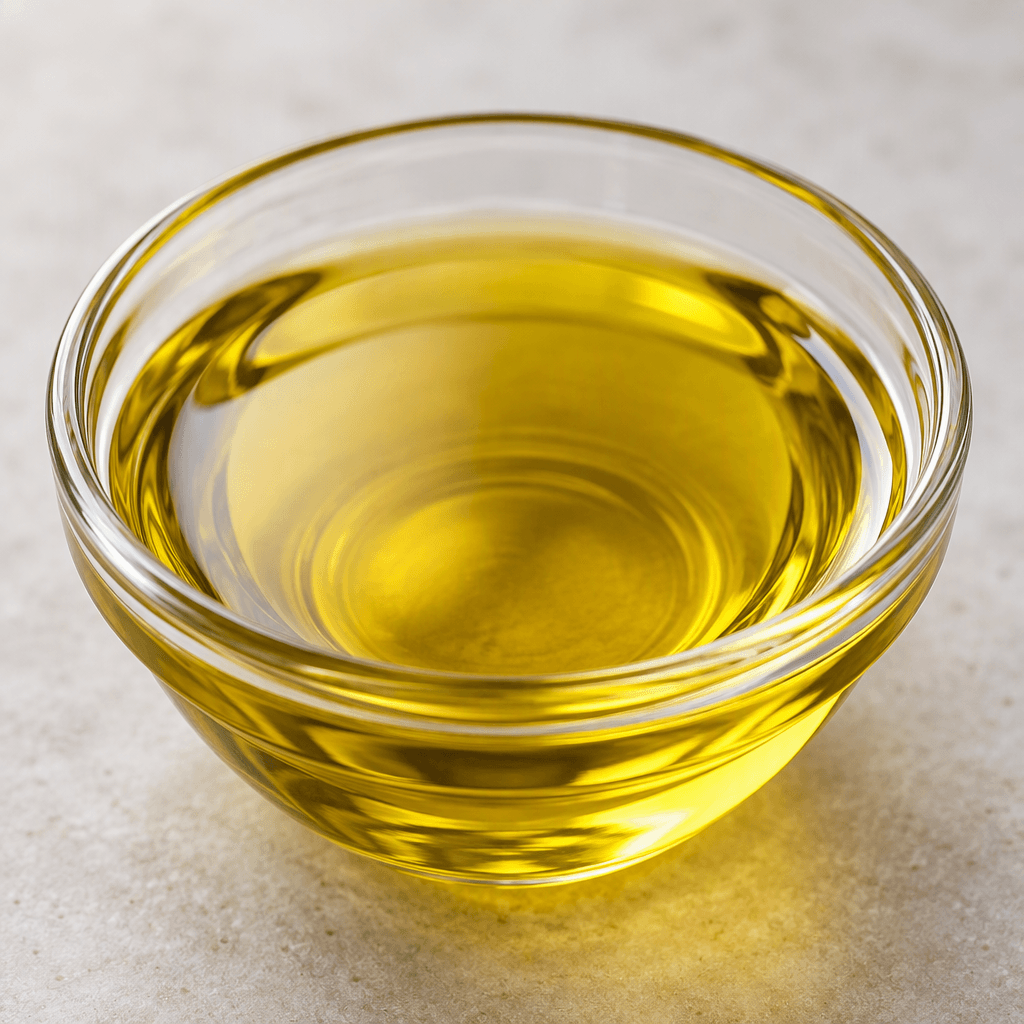
Dressing oil Calories
High in fat
CALORIES
GI
POTASSIUM
FIBER
Quick answer
1 tablespoon (medium) of Dressing oil (14 g) has 124 calories. That works out to 884 calories per 100 g. It contains 0 g of carbs, 0 g of protein, 14 g of fat and 0 g of fiber. Its 2 mg of Vitamin E covers 13% of the Daily Value. Its glycemic index is 0 (low), so it raises blood sugar slowly.
What is Dressing oil?
Dressing oil is a general term for oil used in salad dressings rather than one specific oil. Depending on the recipe, it may be olive oil or a more neutral-tasting vegetable oil; the choice shapes the dressing’s flavour.
It is commonly whisked with vinegar or citrus juice and served over leafy salads, vegetables or grain bowls. Its smooth, fluid texture helps coat the ingredients, while olive oil brings a more pronounced, fruity taste. Nutritionally, it is almost entirely fat and energy-dense. For a lighter dressing, use a measured amount and balance it with lemon juice or vinegar, plus herbs or mustard if you like.
Dressing oil Nutrition Facts
Selected: 100 g
884
KCAL / 100G
Carbs
0g
· 0% DV
Protein
0g
· 0% DV
Fat
100g
· 128% DV
Fiber
0g
· 0% DV
DV is the share of the daily value covered, on a 2,000 kcal reference diet.
Calories come from: Carbs 0% · Protein 0% · Fat 100%
Dressing oil Vitamins & Minerals
Vitamins
Vitamin E
14mg · 93% DV
Vitamin K
60µg · 50% DV
Vitamin A
0µg · 0% DV
B1
0mg · 0% DV
Minerals
Calcium
0mg · 0% DV
Iron
0mg · 0% DV
Magnesium
0mg · 0% DV
Zinc
0mg · 0% DV
How Nutritious Is Dressing oil?
Nutrient density
Low
How many vitamins, minerals and how much fiber this food carries per calorie. A high score means a lot of nutrition for few calories.
Satiety score
Low
An EatBetter score computed from fiber, protein and calorie density. A high score means staying full longer on the same calories.
Both scores are calculated per 100 g and do not change with the selected portion. The satiety score is EatBetter's own calculation, not a clinical measure.
Dressing oil Glycemic Index
GLYCEMIC INDEX
GLYCEMIC LOAD
Accounts for portion size — a more realistic measure than GI alone.
How to Burn Off Dressing oil
To burn the 884 calories in 100 g:
🚶
Walking (5 km/h)
🏃
Running (8 km/h)
🚴
Cycling
🏊
Swimming
Times are calculated with the MET equation for a 70 kg adult. Actual burn varies with your weight, age and pace.
Is Dressing oil Processed?
NOVA 3
Processed
1. Unprocessed
2. Minimally Processed
3. Processed
4. Ultra-Processed
NOVA classifies foods into 4 groups by industrial processing. NOVA 1 (unprocessed) is the healthiest.
Does Dressing oil Contain Allergens?
No known major allergens
Which Diets Is Dressing oil Good For?
Vegan
✓ Suitable
Vegetarian
✓ Suitable
Gluten-Free
✓ Suitable
Dairy-Free
— Not suitable
Mediterranean
✓ Suitable
Paleo
✓ Suitable
Whole30
— Not suitable
DASH
— Not suitable
Keto
✓ Suitable
Low FODMAP
— Not suitable
Dressing oil Fat Profile
SATURATED
14g
MONOUNSATURATED
73g
POLYUNSATURATED
10g
Omega 6:3 ratio 30:1
Above the ideal 4:1 (30:1).
Compare Dressing oil
Foods Similar to Dressing oil
Frequently Asked Questions About Dressing oil
What is dressing oil used for?
Dressing oil is used as the oil component in salad dressings and vinaigrettes. The name describes its use, not one fixed oil, so its flavor and ingredients can vary from product to product.
Is dressing oil the same as salad dressing?
No. Dressing oil is an oil used to make a dressing, while salad dressing is the finished mixture, often combining oil with vinegar or citrus, seasonings, and sometimes mustard.
How do you make a vinaigrette with dressing oil?
Whisk dressing oil with vinegar or lemon juice, then season to taste. Mustard can help the mixture stay combined. Shake or whisk it again just before serving, since oil and an acidic liquid naturally separate.
Can you cook with dressing oil?
Usually, dressing oil is intended for cold sauces rather than high-heat cooking. If a product does not specify that it is suitable for heating, use it in dressings, marinades, or as a finishing oil instead.
Why does dressing oil separate from vinegar?
Dressing oil separates from vinegar because oil and water-based liquids do not mix on their own. Whisking or shaking combines them temporarily; mustard can help keep the vinaigrette together for longer.
Can dressing oil be used as a marinade?
Yes. Mix dressing oil with an acidic ingredient and seasonings to coat vegetables, fish, or meat before cooking. Keep raw-meat marinade separate from food that is ready to eat.
Should dressing oil be refrigerated after opening?
Plain dressing oil is generally best kept tightly closed in a cool, dark cupboard. A prepared dressing containing fresh ingredients such as garlic or herbs should be refrigerated instead.
How do you keep dressing oil from making salad soggy?
Add dressing oil shortly before serving, rather than letting it sit on the greens. Toss the salad lightly and add more only if needed; delicate leaves soften especially quickly once dressed.
Can dressing oil be used on pasta?
Yes. Toss dressing oil with warm pasta for a simple coating, or mix it with vinegar, herbs, and other dressing ingredients for a pasta salad. Add it gradually so the pasta is coated without becoming greasy.
How can you tell if dressing oil has gone rancid?
Rancid dressing oil may smell stale, bitter, or paint-like and can taste unpleasant. Discard it if its smell or taste has changed, and slow deterioration by keeping the bottle sealed away from heat and light.
Have another question about Dressing oil?
Ask the AI nutrition coach — calories, portions, alternatives and more, answered in seconds in the app.

Scan calories with your camera
Instant AI nutrition analysis

Nutrition data compiled from USDA FoodData Central and scientific sources.