

Ready & Packaged Foods
All →Vegetables & Legumes
All →Desserts & Confectionery
All →Meat & Protein
All →Grains & Bakery
All →Beverages
All →Milk & Dairy
All →

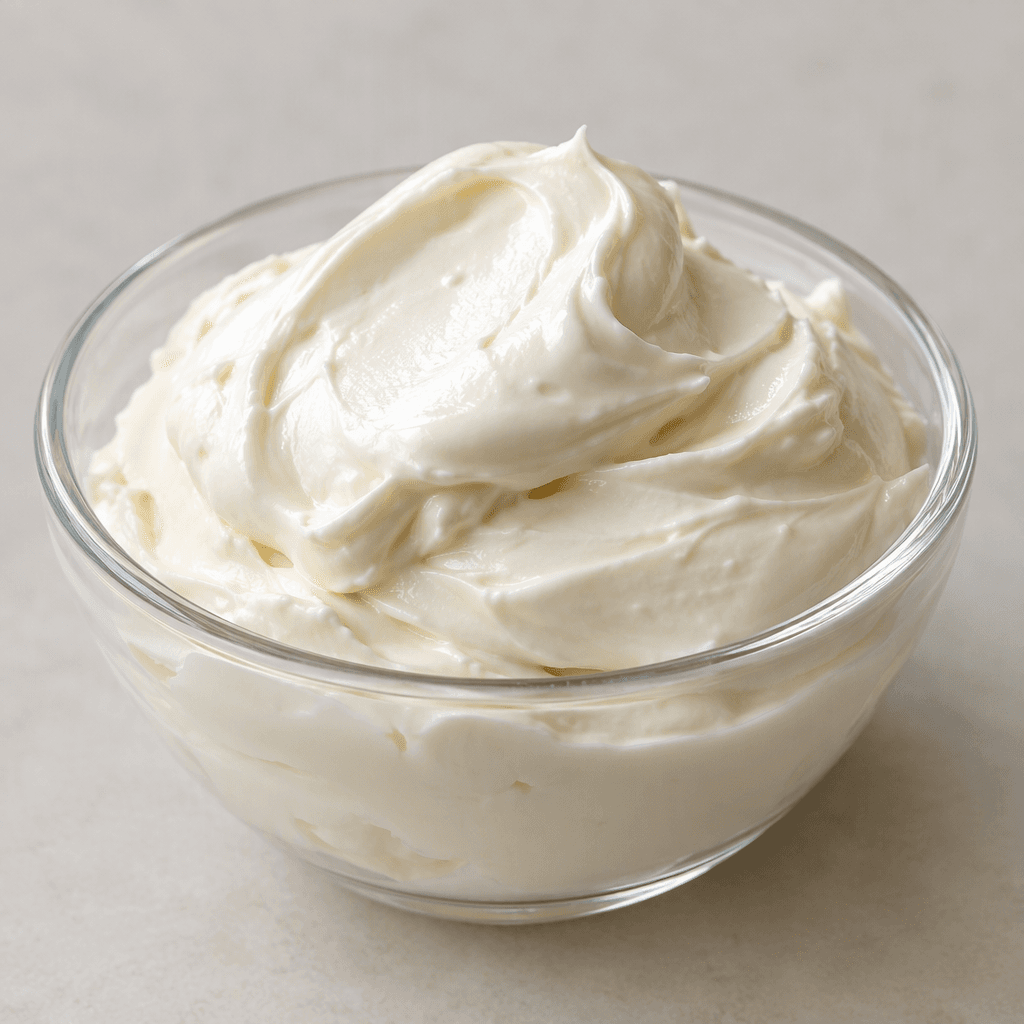
Double Cream Calories
Very high fat cream, rich and thick texture
In season: Spring · Summer · Autumn · Winter
CALORIES
GI
POTASSIUM
FIBER
Quick answer
2 tablespoon (medium) of Double Cream (30 g) has 137 calories. That works out to 455 calories per 100 g. It contains 0.8 g of carbs, 0.6 g of protein, 14.4 g of fat and 0 g of fiber. Its 111 µg of Vitamin A covers 12% of the Daily Value. Its glycemic index is 35 (low), so it raises blood sugar slowly.
What is Double Cream?
Double cream is a rich dairy cream made from the fatty part of milk. The name is especially familiar in Britain, where it is sold as a thick cream for pouring, whipping or spooning; elsewhere, similar high-fat creams may be labelled differently. Its smooth, dense texture and mild milky taste make it useful in both sweet and savoury cooking.
Serve it with berries, puddings or cake, or stir a little into soup, pasta sauce or a pan sauce for extra body. It is very high in fat—48 g per 100 g—so a modest spoonful adds plenty of richness. For a lighter dish, use less and loosen the sauce with milk or stock.
Double Cream Nutrition Facts
Selected: 100 g
455
KCAL / 100G
Carbs
2.6g
· 1% DV
Protein
2.1g
· 4% DV
Fat
48g
· 62% DV
Fiber
0g
· 0% DV
DV is the share of the daily value covered, on a 2,000 kcal reference diet.
Calories come from: Carbs 2% · Protein 2% · Fat 96%

Log this food in EatBetter
100,000+ people use it
- Get your daily calorie target
- Snap your meal, log it in seconds
- See every vitamin and mineral

📸 Scan the code to get the app free.

Double Cream Vitamins & Minerals
Vitamins
Vitamin A
370µg · 41% DV
B12
0.6µg · 25% DV
B2
0.24mg · 18% DV
B5
0.5mg · 10% DV
Minerals
Iodine
16µg · 11% DV
Phosphorus
60mg · 9% DV
Calcium
80mg · 8% DV
Potassium ⭐
100mg · 3% DV
Zinc
0mg · 0% DV
How Nutritious Is Double Cream?
Nutrient density
Medium
How many vitamins, minerals and how much fiber this food carries per calorie. A high score means a lot of nutrition for few calories.
Satiety score
Low
An EatBetter score computed from fiber, protein and calorie density. A high score means staying full longer on the same calories.
Both scores are calculated per 100 g and do not change with the selected portion. The satiety score is EatBetter's own calculation, not a clinical measure.
Double Cream Glycemic Index
GLYCEMIC INDEX
GLYCEMIC LOAD
Accounts for portion size — a more realistic measure than GI alone.
How to Burn Off Double Cream
To burn the 455 calories in 100 g:
🚶
Walking (5 km/h)
🏃
Running (8 km/h)
🚴
Cycling
🏊
Swimming
Times are calculated with the MET equation for a 70 kg adult. Actual burn varies with your weight, age and pace.
Is Double Cream Processed?
NOVA 2
Minimally Processed
1. Unprocessed
2. Minimally Processed
3. Processed
4. Ultra-Processed
NOVA classifies foods into 4 groups by industrial processing. NOVA 1 (unprocessed) is the healthiest.
Does Double Cream Contain Allergens?
Contains these allergens:
Which Diets Is Double Cream Good For?
Vegan
— Not suitable
Vegetarian
✓ Suitable
Gluten-Free
— Not suitable
Dairy-Free
— Not suitable
Mediterranean
✓ Suitable
Paleo
— Not suitable
Whole30
— Not suitable
DASH
— Not suitable
Keto
✓ Suitable
Low FODMAP
— Not suitable
Double Cream Fat Profile
SATURATED
30.5g
MONOUNSATURATED
13.5g
POLYUNSATURATED
1.2g
Omega 6:3 ratio 1.5:1
Below the ideal 4:1 — a good omega balance.
Compare Double Cream
Foods Similar to Double Cream
Frequently Asked Questions About Double Cream
What is double cream?
Double cream is a thick, rich dairy cream with a high fat content. It is commonly used to enrich sauces and desserts, and its fat level makes it suitable for whipping into a soft or firm topping.
What is the difference between double cream and heavy cream?
Double cream is a British-style cream with about 48% fat, while heavy cream is a term more commonly used in the United States and usually has a lower fat content. The names and exact standards vary by country, so they are not always interchangeable.
Can you whip double cream?
Yes, cold double cream whips well and can become thick enough to hold its shape. Chill the bowl and beaters for easier whipping, and stop once it reaches the texture you want to avoid over-whipping it into butter.
Can you use double cream in pasta sauce?
Yes, double cream works well in pasta sauce, adding a rich, velvety texture. Stir it into the sauce over gentle heat rather than letting it boil hard, which can make the sauce separate.
Can double cream be used in coffee?
Yes, you can add double cream to coffee for a richer, creamier drink. Because it is thick and high in fat, start with a small splash and stir it in well, especially when adding it to hot coffee.
Can you freeze double cream?
Yes, double cream can be frozen, but it may separate or turn grainy after thawing. It is usually better for cooked sauces and soups after freezing than for whipping or pouring over desserts.
How long does double cream last after opening?
Opened double cream should be kept refrigerated in a tightly closed container. Follow the use-by guidance on its package, and discard it if it develops an unusual smell, appearance, or texture rather than relying on a fixed number of days.
Can double cream be heated without splitting?
Yes, double cream can be heated, but gentle heat gives the smoothest result. Avoid a vigorous boil, and add it gradually to acidic ingredients such as tomato or lemon-based sauces while stirring.
Can double cream replace clotted cream?
No, double cream is not the same as clotted cream: clotted cream is thicker and has a distinct cooked, buttery character. Whipping double cream can make a rich topping, but it will not reproduce clotted cream’s texture or flavour.
Can you use double cream instead of single cream?
Yes, double cream can usually replace single cream in cooked recipes, but it makes the result thicker and richer. Add a little less at first, or loosen it with milk if the dish becomes too heavy.
Have another question about Double Cream?
Ask the AI nutrition coach — calories, portions, alternatives and more, answered in seconds in the app.

Scan calories with your camera
Instant AI nutrition analysis

Nutrition data compiled from USDA FoodData Central and scientific sources.