

Ready & Packaged Foods
All →Vegetables & Legumes
All →Desserts & Confectionery
All →Meat & Protein
All →Grains & Bakery
All →Beverages
All →Milk & Dairy
All →

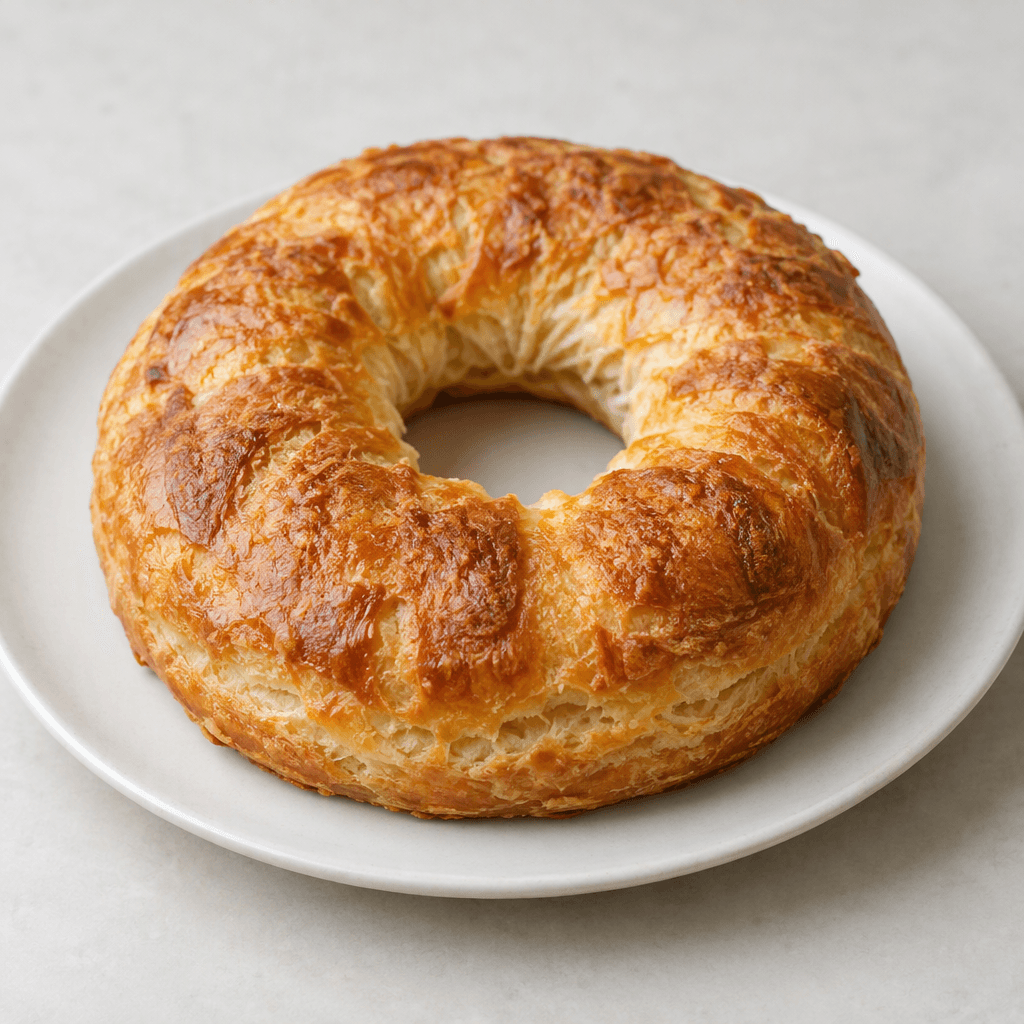
Donut Calories
Sweet, fried dough ring
In season: Spring · Summer · Autumn · Winter
CALORIES
GI
POTASSIUM
FIBER
Quick answer
1 piece (medium) of Donut (55 g) has 226 calories. That works out to 410 calories per 100 g. It contains 27 g of carbs, 3.1 g of protein, 12.1 g of fat and 0.7 g of fiber. Its 0.1 mg of B1 covers 8% of the Daily Value. Its glycemic index is 76 (high), so it raises blood sugar quickly.
What is Donut?
A donut is a sweet ring-shaped pastry made from dough that is fried until golden. The ring form is especially associated with the United States, where donuts became a familiar bakery and coffee-shop treat, though fried dough sweets have a much wider history.
The outside is lightly crisp while the centre stays soft and airy. In the US, donuts are commonly picked up for breakfast or enjoyed as a snack with coffee; elsewhere, they’re often a café treat or something to share. They are energy-dense, with relatively little fibre: 100 g provides 410 calories. For a lighter snack, choose one plain or lightly topped donut and pair it with unsweetened coffee or tea.
Donut Nutrition Facts
Selected: 100 g
410
KCAL / 100G
Carbs
49g
· 18% DV
Protein
5.7g
· 11% DV
Fat
22g
· 28% DV
Fiber
1.2g
· 4% DV
DV is the share of the daily value covered, on a 2,000 kcal reference diet.
Calories come from: Carbs 47% · Protein 5% · Fat 48%
Donut Vitamins & Minerals
Vitamins
B1
0.18mg · 15% DV
B2
0.13mg · 10% DV
B3
1.3mg · 8% DV
B5
0.3mg · 6% DV
Minerals
Sodium
340mg · 15% DV
Selenium
6µg · 11% DV
Phosphorus
52mg · 7% DV
Iron
1mg · 6% DV
How Nutritious Is Donut?
Nutrient density
Low
How many vitamins, minerals and how much fiber this food carries per calorie. A high score means a lot of nutrition for few calories.
Satiety score
Low
An EatBetter score computed from fiber, protein and calorie density. A high score means staying full longer on the same calories.
Both scores are calculated per 100 g and do not change with the selected portion. The satiety score is EatBetter's own calculation, not a clinical measure.
Donut Glycemic Index
GLYCEMIC INDEX
GLYCEMIC LOAD
Accounts for portion size — a more realistic measure than GI alone.
How to Burn Off Donut
To burn the 410 calories in 100 g:
🚶
Walking (5 km/h)
🏃
Running (8 km/h)
🚴
Cycling
🏊
Swimming
Times are calculated with the MET equation for a 70 kg adult. Actual burn varies with your weight, age and pace.
Is Donut Processed?
NOVA 4
Ultra-Processed
1. Unprocessed
2. Minimally Processed
3. Processed
4. Ultra-Processed
NOVA classifies foods into 4 groups by industrial processing. NOVA 1 (unprocessed) is the healthiest.
Does Donut Contain Allergens?
Contains these allergens:
Which Diets Is Donut Good For?
Vegan
— Not suitable
Vegetarian
— Not suitable
Gluten-Free
— Not suitable
Dairy-Free
— Not suitable
Mediterranean
— Not suitable
Paleo
— Not suitable
Whole30
— Not suitable
DASH
— Not suitable
Keto
— Not suitable
Low FODMAP
— Not suitable
Donut Fat Profile
SATURATED
7.5g
MONOUNSATURATED
8.6g
POLYUNSATURATED
4.3g
Omega 6:3 ratio 105:1
Above the ideal 4:1 (105:1).
Compare Donut
Foods Similar to Donut
Frequently Asked Questions About Donut
What are donuts made of?
Most donuts are made from flour, yeast or baking powder, sugar, eggs, milk, and fat. The dough is shaped, usually fried, then finished with a glaze, sugar, or filling; recipes vary by donut style.
Why do donuts have holes?
The hole helps the center of a ring-shaped donut cook through at roughly the same pace as the outside. Filled donuts are often made without a hole because the center is meant to hold jam, custard, or another filling.
How do you make donuts at home?
To make yeast donuts, mix a dough with flour, yeast, milk, eggs, sugar, and butter, let it rise, then cut and fry the rings. Cool them before adding glaze or sugar so the coating sticks without melting away.
How should you store donuts?
Keep plain or glazed donuts in an airtight container at room temperature to help prevent them from drying out. Refrigerate donuts with cream or other perishable fillings, since those fillings need to stay chilled.
Can you freeze donuts?
Yes, donuts freeze well, especially plain ones without delicate toppings. Wrap them individually or place them in an airtight freezer container, then thaw at room temperature; freezing and thawing can soften crisp coatings or alter icing.
Why are my homemade donuts greasy?
Donuts often turn greasy when the frying oil is too cool, because the dough absorbs more oil before it cooks. Keep the oil temperature steady, fry in small batches, and drain the finished donuts briefly on paper towels.
What is the difference between cake donuts and yeast donuts?
Cake donuts are made with a chemically leavened batter or dough and tend to be denser and crumbly. Yeast donuts are proofed before frying, giving them a lighter, airier texture and a more bread-like interior.
Are donuts and doughnuts the same thing?
Yes, “donut” and “doughnut” refer to the same pastry. “Doughnut” is the traditional spelling, while “donut” is a shorter spelling widely used in the United States and in shop names.
Where did donuts originate?
The modern donut is most closely associated with the United States, but its roots are not exclusive to one country. Dutch settlers brought fried-dough treats to America, where the ring-shaped donut developed and became popular.
Can you bake donuts instead of frying them?
Yes, you can bake donuts in a donut pan, but they will usually be more cake-like and less crisp than fried donuts. Lightly grease the pan, avoid overmixing the batter, and add glaze after the baked donuts have cooled.
Have another question about Donut?
Ask the AI nutrition coach — calories, portions, alternatives and more, answered in seconds in the app.

Scan calories with your camera
Instant AI nutrition analysis

Nutrition data compiled from USDA FoodData Central and scientific sources.