

Ready & Packaged Foods
All →Vegetables & Legumes
All →Desserts & Confectionery
All →Meat & Protein
All →Grains & Bakery
All →Beverages
All →Milk & Dairy
All →

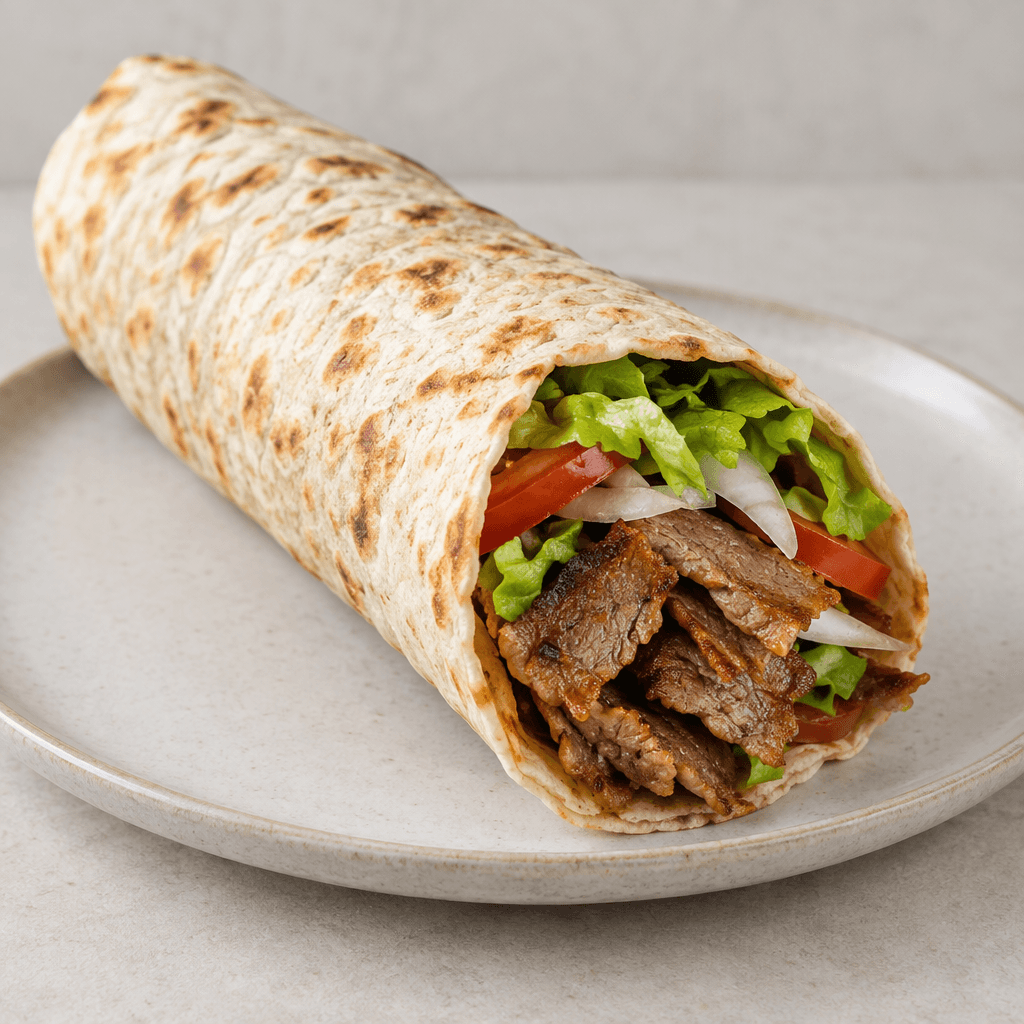
Doner wrap Calories
High-protein street food wrap made with flatbread, doner meat, vegetables, and often sauce
CALORIES
GI
POTASSIUM
FIBER
Quick answer
1 piece (medium) of Doner wrap (250 g) has 595 calories. That works out to 238 calories per 100 g. It contains 51 g of carbs, 29.5 g of protein, 30.3 g of fat and 4.5 g of fiber. Its 2.3 µg of B12 covers 94% of the Daily Value. Its glycemic index is 52 (medium), so it raises blood sugar at a moderate pace.
What is Doner wrap?
A doner wrap brings thin flatbread together with meat cooked on a rotating spit, usually sliced into the bread with vegetables and often a sauce. It draws on the doner kebab tradition associated with Türkiye and is now a familiar takeaway in many countries, with fillings and sauces adapted to local tastes.
It is typically served warm and wrapped for an easy lunch, quick dinner or late-night bite. Crisp vegetables balance the savoury meat, while sauces make the filling richer. The combination provides protein, but the bread and sauce also contribute carbohydrates and fat; per 100 g, it has 11.8 g of protein. For a lighter option, ask for extra salad and less sauce, or pair it with a simple side salad.
Doner wrap Nutrition Facts
Selected: 100 g
238
KCAL / 100G
Carbs
20.4g
· 7% DV
Protein
11.8g
· 24% DV
Fat
12.1g
· 16% DV
Fiber
1.8g
· 6% DV
DV is the share of the daily value covered, on a 2,000 kcal reference diet.
Calories come from: Carbs 34% · Protein 20% · Fat 46%
Doner wrap Vitamins & Minerals
Vitamins
B12
0.9µg · 38% DV
B3
3.4mg · 21% DV
B6
0.19mg · 11% DV
Biotin
3µg · 10% DV
Minerals
Selenium
14µg · 25% DV
Sodium
520mg · 23% DV
Phosphorus
146mg · 21% DV
Zinc
2mg · 18% DV
How Nutritious Is Doner wrap?
Nutrient density
Medium
How many vitamins, minerals and how much fiber this food carries per calorie. A high score means a lot of nutrition for few calories.
Satiety score
Medium
An EatBetter score computed from fiber, protein and calorie density. A high score means staying full longer on the same calories.
Both scores are calculated per 100 g and do not change with the selected portion. The satiety score is EatBetter's own calculation, not a clinical measure.
Doner wrap Glycemic Index
GLYCEMIC INDEX
GLYCEMIC LOAD
Accounts for portion size — a more realistic measure than GI alone.
How to Burn Off Doner wrap
To burn the 238 calories in 100 g:
🚶
Walking (5 km/h)
🏃
Running (8 km/h)
🚴
Cycling
🏊
Swimming
Times are calculated with the MET equation for a 70 kg adult. Actual burn varies with your weight, age and pace.
Is Doner wrap Processed?
NOVA 3
Processed
1. Unprocessed
2. Minimally Processed
3. Processed
4. Ultra-Processed
NOVA classifies foods into 4 groups by industrial processing. NOVA 1 (unprocessed) is the healthiest.
Does Doner wrap Contain Allergens?
Contains these allergens:
Which Diets Is Doner wrap Good For?
Vegan
— Not suitable
Vegetarian
— Not suitable
Gluten-Free
— Not suitable
Dairy-Free
— Not suitable
Mediterranean
✓ Suitable
Paleo
— Not suitable
Whole30
— Not suitable
DASH
— Not suitable
Keto
— Not suitable
Low FODMAP
— Not suitable
Doner wrap Fat Profile
SATURATED
3.4g
MONOUNSATURATED
4.8g
POLYUNSATURATED
1.7g
Omega 6:3 ratio 28.4:1
Above the ideal 4:1 (28.4:1).
Compare Doner wrap
Foods Similar to Doner wrap
Frequently Asked Questions About Doner wrap
What is in a Doner wrap?
A Doner wrap usually contains thinly sliced doner meat rolled in flatbread with vegetables such as lettuce, tomato, and onion. Sauces and extras vary by shop; pickled vegetables, yogurt sauce, or chilli sauce are common additions.
How is a Doner wrap made?
A Doner wrap is made by filling flatbread with cooked doner meat, vegetables, and optional sauce, then rolling it up. At home, warm the meat thoroughly and heat the bread briefly so it stays pliable without becoming brittle.
What meat is used in a Doner wrap?
A Doner wrap can be made with beef, lamb, chicken, or a mixture, depending on the recipe and restaurant. If the meat type matters to you, ask the seller, since the name alone does not identify which version is being served.
What is the difference between a Doner wrap and a shawarma wrap?
A Doner wrap is a Turkish-style wrap filled with doner meat, while shawarma is associated with Middle Eastern cooking traditions and its own seasonings and serving styles. Both use meat cooked on a vertical spit, so the names are related but not interchangeable.
What sauce goes in a Doner wrap?
A Doner wrap may have chilli sauce, garlic or yogurt sauce, or a creamy sauce, but there is no single standard. Some shops serve it without sauce, letting the meat and vegetables provide the flavour; ask for sauce on the side if you prefer.
What do you serve with a Doner wrap?
A Doner wrap is often served with salad, pickles, fries, or a yogurt-based drink. For a lighter pairing, choose fresh salad or pickled vegetables; fries are a common side when you want a more filling meal.
Can you make a Doner wrap at home?
Yes, you can make a Doner wrap at home with cooked doner meat, flatbread, vegetables, and sauce. Warm the bread just enough to fold, add the filling in a line, and roll it tightly with the seam underneath.
Can you reheat a Doner wrap?
Yes, you can reheat a Doner wrap, although the bread may soften and fresh vegetables can become limp. For a better texture, remove cold salad first, heat the meat and bread until hot, then add the vegetables back.
How long does a Doner wrap last in the fridge?
A Doner wrap is best eaten fresh, but leftovers can be refrigerated promptly and eaten the next day. Store it covered and reheat it until hot throughout; if it has been left at room temperature for hours, discard it rather than saving it.
Is a Doner wrap healthy?
A Doner wrap can provide protein, but its overall balance depends on the meat, sauce, and amount of vegetables. For a more balanced choice, ask for extra salad and less sauce, and pair it with a lighter side instead of fries.
Have another question about Doner wrap?
Ask the AI nutrition coach — calories, portions, alternatives and more, answered in seconds in the app.

Scan calories with your camera
Instant AI nutrition analysis

Nutrition data compiled from USDA FoodData Central and scientific sources.