

Ready & Packaged Foods
All →Vegetables & Legumes
All →Desserts & Confectionery
All →Meat & Protein
All →Grains & Bakery
All →Beverages
All →Milk & Dairy
All →

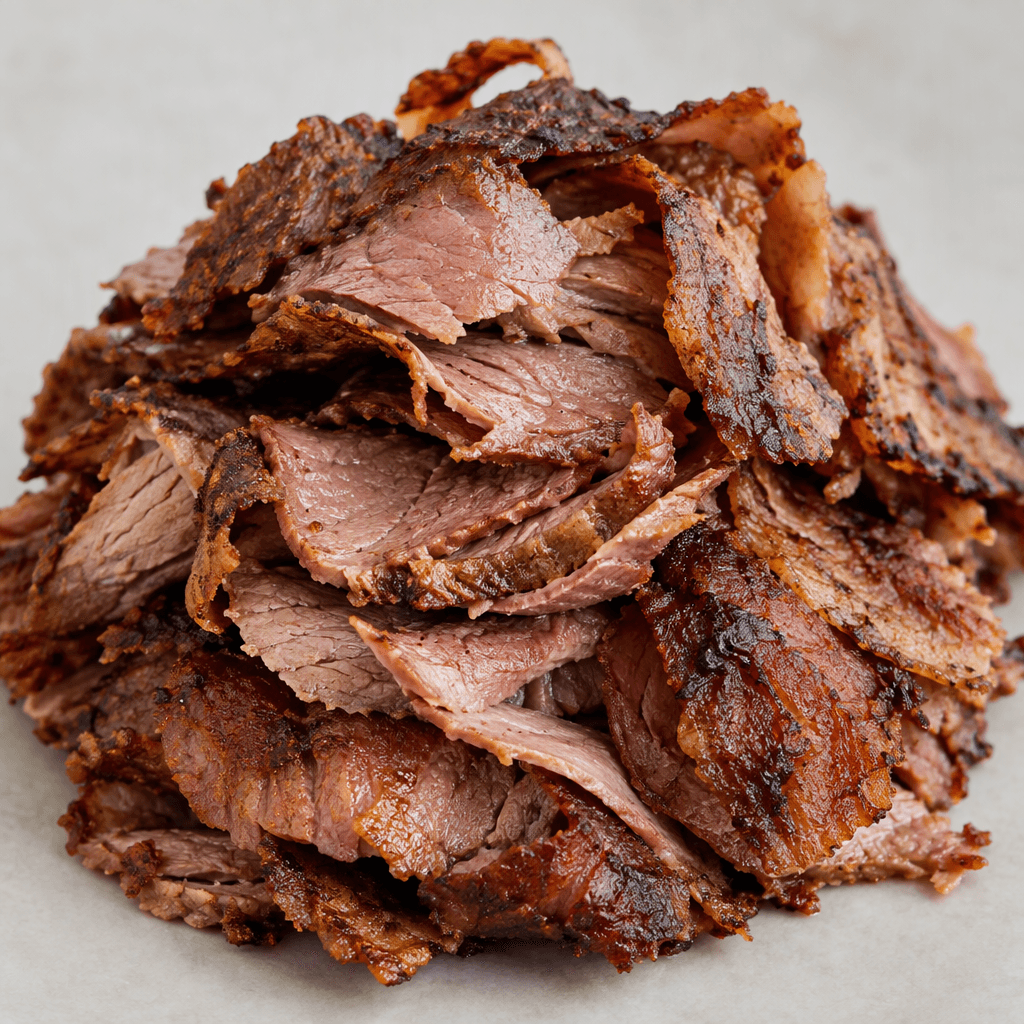
Doner Calories
Traditional doner is high in protein and fat, rich in iron and B vitamins.
In season: Spring · Summer · Autumn · Winter
CALORIES
GI
POTASSIUM
FIBER
Quick answer
1 serving (medium) of Doner (120 g) has 258 calories. That works out to 215 calories per 100 g. It contains 3.8 g of carbs, 19.8 g of protein, 18.2 g of fat and 0.4 g of fiber. Its 1.4 µg of B12 covers 60% of the Daily Value. Its glycemic index is 0 (low), so it raises blood sugar slowly.
What is Doner?
Doner is made by stacking seasoned meat on a vertical spit and roasting it slowly, then shaving off the browned outer layers as it cooks. In Turkey, it is commonly made with lamb, beef or chicken. The thin slices are tender and juicy, with crisp, deeply browned edges and a savoury, spiced flavour.
In its home country, doner is served in flatbread or a roll, wrapped as dürüm, or over rice; salad and yoghurt are common accompaniments. It is also familiar as a sandwich or wrap in many places where English is spoken. Doner is a filling meat dish, rich in protein and fat; a 100 g portion provides 16.5 g of protein. For a lighter plate, choose a smaller portion with salad and go easy on sauces.
Doner Nutrition Facts
Selected: 100 g
215
KCAL / 100G
Carbs
3.2g
· 1% DV
Protein
16.5g
· 33% DV
Fat
15.2g
· 19% DV
Fiber
0.3g
· 1% DV
DV is the share of the daily value covered, on a 2,000 kcal reference diet.
Calories come from: Carbs 6% · Protein 31% · Fat 63%
Doner Vitamins & Minerals
Vitamins
B12
1.2µg · 50% DV
B3
3.8mg · 24% DV
B2
0.18mg · 14% DV
B5
0.7mg · 14% DV
Minerals
Zinc
3mg · 27% DV
Phosphorus
170mg · 24% DV
Selenium
11µg · 20% DV
Sodium
370mg · 16% DV
How Nutritious Is Doner?
Nutrient density
High
How many vitamins, minerals and how much fiber this food carries per calorie. A high score means a lot of nutrition for few calories.
Satiety score
Medium
An EatBetter score computed from fiber, protein and calorie density. A high score means staying full longer on the same calories.
Both scores are calculated per 100 g and do not change with the selected portion. The satiety score is EatBetter's own calculation, not a clinical measure.
Doner Glycemic Index
GLYCEMIC INDEX
GLYCEMIC LOAD
Accounts for portion size — a more realistic measure than GI alone.
How to Burn Off Doner
To burn the 215 calories in 100 g:
🚶
Walking (5 km/h)
🏃
Running (8 km/h)
🚴
Cycling
🏊
Swimming
Times are calculated with the MET equation for a 70 kg adult. Actual burn varies with your weight, age and pace.
Is Doner Processed?
NOVA 2
Minimally Processed
1. Unprocessed
2. Minimally Processed
3. Processed
4. Ultra-Processed
NOVA classifies foods into 4 groups by industrial processing. NOVA 1 (unprocessed) is the healthiest.
Does Doner Contain Allergens?
No known major allergens
Which Diets Is Doner Good For?
Vegan
— Not suitable
Vegetarian
— Not suitable
Gluten-Free
✓ Suitable
Dairy-Free
— Not suitable
Mediterranean
✓ Suitable
Paleo
✓ Suitable
Whole30
— Not suitable
DASH
— Not suitable
Keto
✓ Suitable
Low FODMAP
— Not suitable
Doner Fat Profile
SATURATED
6.1g
MONOUNSATURATED
6.8g
POLYUNSATURATED
0.9g
Omega 6:3 ratio 3.1:1
Below the ideal 4:1 — a good omega balance.
Compare Doner
Foods Similar to Doner
Frequently Asked Questions About Doner
What is doner made of?
Doner is made from seasoned meat stacked in layers on a vertical spit, most often lamb, beef, chicken, or a combination. The cooked outer surface is shaved into thin slices while the meat inside continues to roast.
Is doner the same as shawarma or gyro?
No. Doner, shawarma, and gyro are related spit-roasted meat dishes, but they come from different culinary traditions and often use different seasonings and serving styles. Doner is the Turkish version, commonly served in bread, a wrap, or on a plate.
How is doner cooked?
Doner is cooked as a tall stack of seasoned meat rotating beside a heat source. The browned outer layer is sliced off as it cooks, keeping the remaining stack on the spit to roast further.
What is the difference between doner kebab and doner wrap?
Doner kebab refers to the spit-roasted meat, while a doner wrap is that meat rolled in flatbread with accompaniments such as vegetables or sauce. A plate of doner may instead come with bread, rice, or salad.
Is doner Turkish?
Yes, doner is a Turkish dish, traditionally made by stacking seasoned meat on a vertical spit and shaving off the roasted surface. Similar spit-roasted dishes exist across the region, but doner is associated with Turkish cooking.
What is the difference between chicken doner and beef doner?
Chicken doner uses chicken, while beef doner uses beef; lamb or mixed-meat versions are also common. The meat choice changes the flavor and texture, and the cooking time must suit the type and thickness of the slices.
How do you make doner at home?
You can make a home-style doner by seasoning thinly sliced meat, stacking it tightly, chilling or partially freezing it, and slicing it thinly for cooking. Brown the slices thoroughly in a hot pan; home equipment rarely reproduces a commercial vertical spit exactly.
What is usually served with doner?
Doner is commonly served in flatbread or a roll, or on a plate with rice, salad, or bread. Tomato, onion, and fresh greens are frequent accompaniments, while yogurt-based sauces and pickles vary by region and shop.
Is doner halal?
Doner can be halal, but the dish itself does not guarantee that the meat or preparation meets halal requirements. Ask the restaurant about its meat sourcing and preparation if halal certification matters to you.
How should leftover doner be stored and reheated?
Refrigerate leftover doner promptly in a covered container and use it within a few days. Reheat it in a pan or microwave until steaming hot throughout, and do not keep leftovers that have been left out for an extended time.
Have another question about Doner?
Ask the AI nutrition coach — calories, portions, alternatives and more, answered in seconds in the app.

Scan calories with your camera
Instant AI nutrition analysis

Nutrition data compiled from USDA FoodData Central and scientific sources.