

Ready & Packaged Foods
All →Vegetables & Legumes
All →Desserts & Confectionery
All →Meat & Protein
All →Grains & Bakery
All →Beverages
All →Milk & Dairy
All →

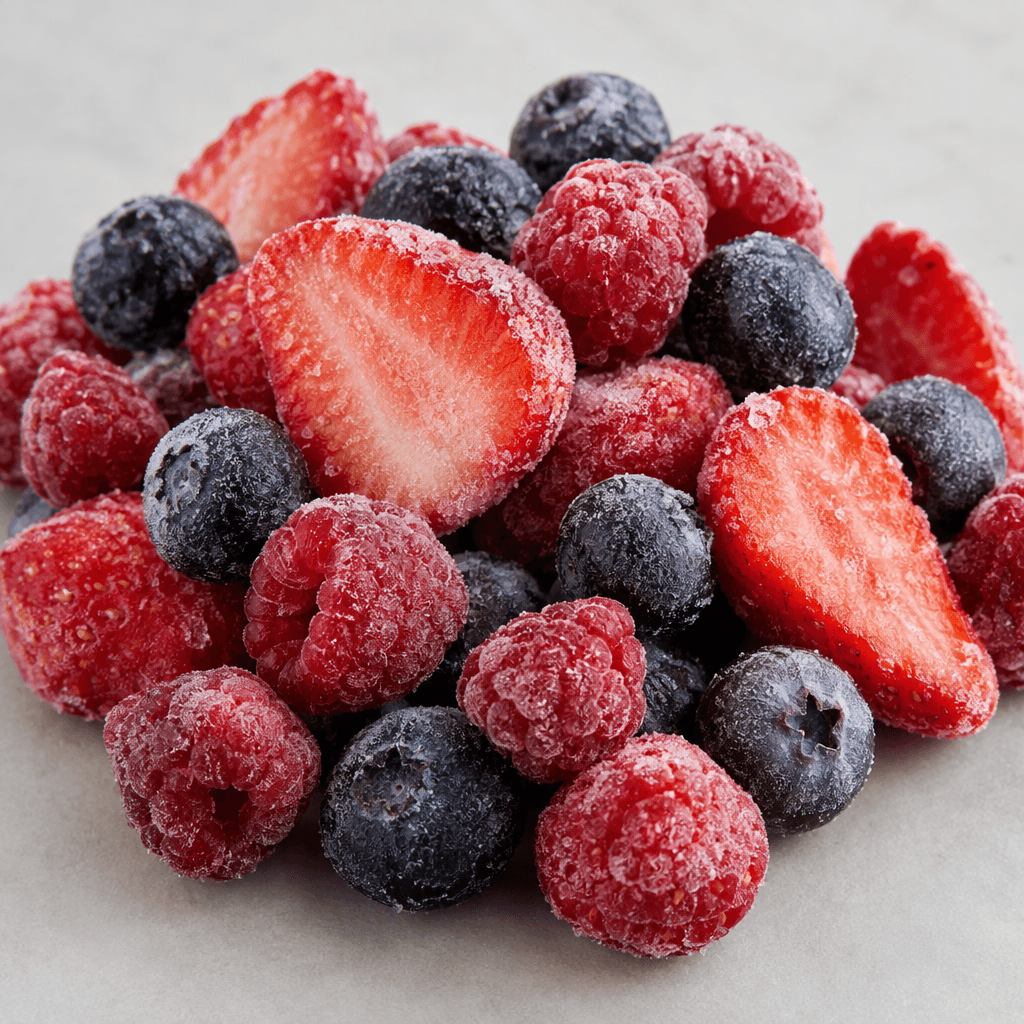
Mixed Frozen Fruits Calories
Rich in vitamins and fiber, convenient and refreshing
In season: Spring · Summer · Autumn · Winter
CALORIES
GI
POTASSIUM
FIBER
Quick answer
1 cup (medium) of Mixed Frozen Fruits (140 g) has 77 calories. That works out to 55 calories per 100 g. It contains 18.5 g of carbs, 1.1 g of protein, 0.4 g of fat and 3.8 g of fiber. Its 44.8 mg of Vitamin C covers 50% of the Daily Value. Its glycemic index is 40 (low), so it raises blood sugar slowly.
What is Mixed Frozen Fruits?
Mixed frozen fruits are pieces of fruit, often including berries such as strawberries, blueberries and raspberries, frozen for convenient storage and use. The exact mix varies by pack, and it is a handy way to keep fruit ready without relying on a particular season.
The pieces are firm while frozen and soften as they thaw, releasing some juice. Add them to yoghurt, porridge or smoothies, or spoon them over pancakes and desserts. In many places, they are also used straight from the freezer in blended drinks or cooked into a quick compote. Their flavour can range from sweet to tart, depending on the mix. They provide fibre and make a refreshing snack; pair a serving with yoghurt or oats for a more substantial breakfast.
Mixed Frozen Fruits Nutrition Facts
Selected: 100 g
55
KCAL / 100G
Carbs
13.2g
· 5% DV
Protein
0.8g
· 2% DV
Fat
0.3g
· 0% DV
Fiber
2.7g
· 10% DV
DV is the share of the daily value covered, on a 2,000 kcal reference diet.
Calories come from: Carbs 90% · Protein 5% · Fat 5%
Mixed Frozen Fruits Vitamins & Minerals
Vitamins
Vitamin C
32mg · 36% DV
Folate
18µg · 5% DV
B5
0.2mg · 4% DV
B6
0.06mg · 4% DV
Minerals
Potassium ⭐
160mg · 5% DV
Magnesium
12mg · 3% DV
Phosphorus
20mg · 3% DV
Calcium
18mg · 2% DV
How Nutritious Is Mixed Frozen Fruits?
Nutrient density
High
How many vitamins, minerals and how much fiber this food carries per calorie. A high score means a lot of nutrition for few calories.
Satiety score
Medium
An EatBetter score computed from fiber, protein and calorie density. A high score means staying full longer on the same calories.
Both scores are calculated per 100 g and do not change with the selected portion. The satiety score is EatBetter's own calculation, not a clinical measure.
Mixed Frozen Fruits Glycemic Index
GLYCEMIC INDEX
GLYCEMIC LOAD
Accounts for portion size — a more realistic measure than GI alone.
How to Burn Off Mixed Frozen Fruits
To burn the 55 calories in 100 g:
🚶
Walking (5 km/h)
🏃
Running (8 km/h)
🚴
Cycling
🏊
Swimming
Times are calculated with the MET equation for a 70 kg adult. Actual burn varies with your weight, age and pace.
Is Mixed Frozen Fruits Processed?
NOVA 2
Minimally Processed
1. Unprocessed
2. Minimally Processed
3. Processed
4. Ultra-Processed
NOVA classifies foods into 4 groups by industrial processing. NOVA 1 (unprocessed) is the healthiest.
Does Mixed Frozen Fruits Contain Allergens?
No known major allergens
Which Diets Is Mixed Frozen Fruits Good For?
Vegan
✓ Suitable
Vegetarian
✓ Suitable
Gluten-Free
✓ Suitable
Dairy-Free
— Not suitable
Mediterranean
✓ Suitable
Paleo
✓ Suitable
Whole30
— Not suitable
DASH
— Not suitable
Keto
— Not suitable
Low FODMAP
— Not suitable
Mixed Frozen Fruits Fat Profile
SATURATED
0.03g
MONOUNSATURATED
0.05g
POLYUNSATURATED
0.12g
Omega 6:3 ratio 1.7:1
Below the ideal 4:1 — a good omega balance.
Compare Mixed Frozen Fruits
Foods Similar to Mixed Frozen Fruits
Frequently Asked Questions About Mixed Frozen Fruits
How do you use Mixed Frozen Fruits?
Use Mixed Frozen Fruits straight from the freezer in smoothies, oatmeal, yogurt, sauces, or baked dishes. Adding them frozen is especially handy in recipes where a little extra fruit juice will not affect the texture.
Can you put Mixed Frozen Fruits in a smoothie without thawing them?
Yes, add Mixed Frozen Fruits to a smoothie while still frozen. They make the drink cold and thick, so start blending with enough liquid and add more if the blender struggles or the mixture is too dense.
How should you thaw Mixed Frozen Fruits?
Thaw Mixed Frozen Fruits in the refrigerator for a gentler, more even result. If you need them sooner, let them soften briefly in a covered container at room temperature, then use them promptly rather than leaving them out.
Can you eat Mixed Frozen Fruits straight from the freezer?
Yes, you can eat Mixed Frozen Fruits straight from the freezer if the package is intended to be eaten without cooking. Freezing does not reliably kill every harmful germ, so follow the package directions, especially for frozen berries.
Why do Mixed Frozen Fruits get mushy after thawing?
Mixed Frozen Fruits turn soft because ice crystals damage the fruit’s cells as it freezes. Once thawed, the pieces release juice and lose their fresh-fruit firmness, making them better for smoothies, sauces, and baking than for decorative toppings.
Can you bake with Mixed Frozen Fruits without thawing them first?
Yes, you can usually fold Mixed Frozen Fruits into batter while they are still frozen. This helps limit extra juice in the recipe; mix them in gently and expect the bake to need a little longer if the fruit is plentiful.
Do you need to wash Mixed Frozen Fruits before eating them?
Usually not; packaged Mixed Frozen Fruits are commonly washed and prepared before freezing. Check the package directions, and avoid rinsing unless instructed, since washing can make the berries soggy and dilute their flavor.
Are Mixed Frozen Fruits as nutritious as fresh fruit?
Often, yes: Mixed Frozen Fruits can retain much of the fruit’s nutrients because they are frozen soon after harvest. Choose an unsweetened mix if you want fruit without added sugar, and use it in place of fresh fruit in many recipes.
How should you store Mixed Frozen Fruits after opening the bag?
Keep Mixed Frozen Fruits tightly sealed in the freezer after opening. Press excess air from the bag or transfer the fruit to an airtight container to reduce ice buildup and help prevent the pieces from drying out.
Can you refreeze Mixed Frozen Fruits after thawing?
Yes, you can refreeze Mixed Frozen Fruits thawed in the refrigerator if they have stayed cold, though their texture may become softer. Do not refreeze fruit that has been left at room temperature for an extended time.
Have another question about Mixed Frozen Fruits?
Ask the AI nutrition coach — calories, portions, alternatives and more, answered in seconds in the app.

Scan calories with your camera
Instant AI nutrition analysis

Nutrition data compiled from USDA FoodData Central and scientific sources.