

Ready & Packaged Foods
All →Vegetables & Legumes
All →Desserts & Confectionery
All →Meat & Protein
All →Grains & Bakery
All →Beverages
All →Milk & Dairy
All →

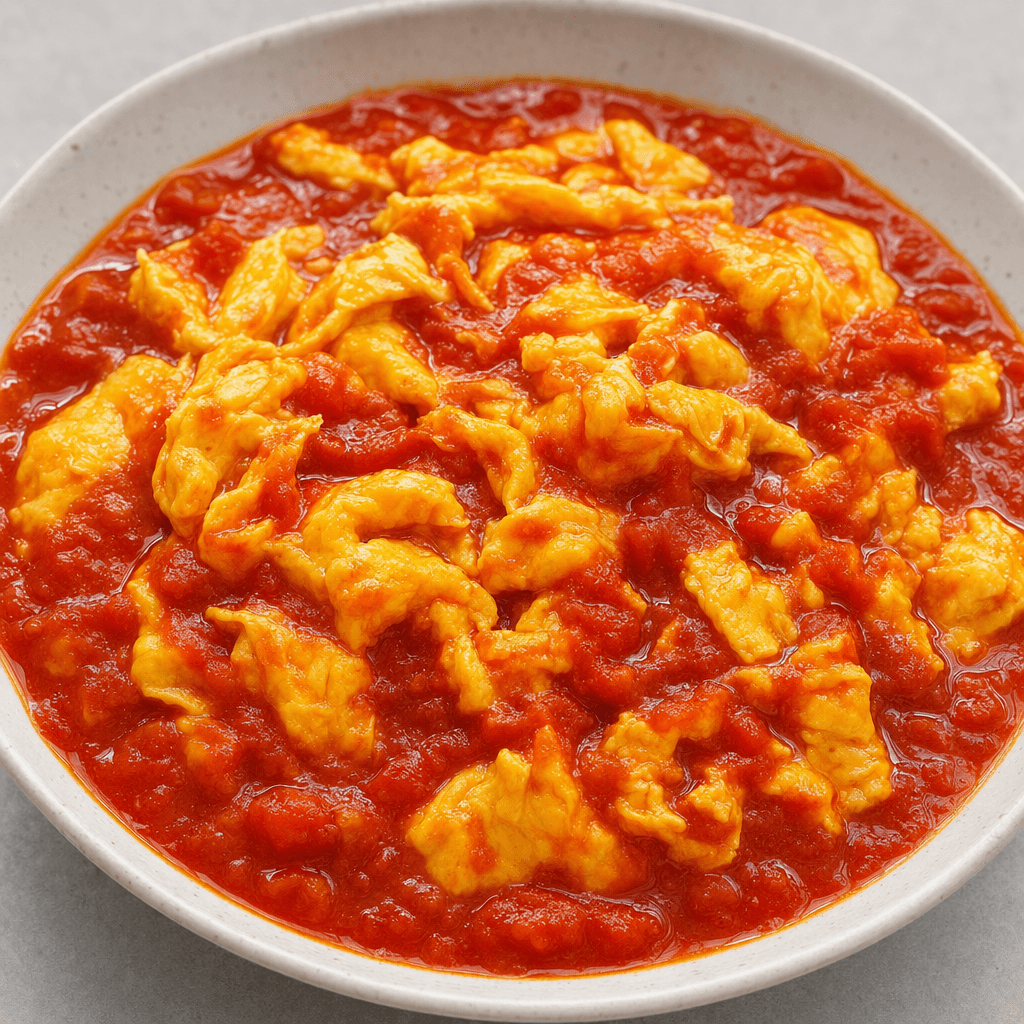
Eggs with tomato paste Calories
Protein and lycopene source, breakfast dish
In season: Spring · Summer · Autumn · Winter
CALORIES
GI
POTASSIUM
FIBER
Quick answer
1 serving (medium) of Eggs with tomato paste (120 g) has 132 calories. That works out to 110 calories per 100 g. It contains 6.2 g of carbs, 9 g of protein, 7.8 g of fat and 0.8 g of fiber. Its 12 µg of Biotin covers 40% of the Daily Value. Its glycemic index is 35 (low), so it raises blood sugar slowly.
What is Eggs with tomato paste?
Eggs with tomato paste is a simple Turkish-style pan dish: tomato paste is briefly cooked in oil, then eggs are added and set in the pan. The paste gives the eggs a deep red colour and concentrated savoury flavour, making this a familiar option for a quick home breakfast.
It is usually served hot, with bread for scooping up the soft egg and paste; in Turkey it may share the breakfast table with tea, olives and cheese. The eggs make it a useful source of protein, at 7.5 g per 100 g. For a lighter plate, use a modest amount of oil and add fresh vegetables on the side.
Eggs with tomato paste Nutrition Facts
Selected: 100 g
110
KCAL / 100G
Carbs
5.2g
· 2% DV
Protein
7.5g
· 15% DV
Fat
6.5g
· 8% DV
Fiber
0.7g
· 3% DV
DV is the share of the daily value covered, on a 2,000 kcal reference diet.
Calories come from: Carbs 19% · Protein 27% · Fat 54%
Eggs with tomato paste Vitamins & Minerals
Vitamins
Biotin
10µg · 33% DV
B12
0.7µg · 29% DV
B5
0.9mg · 18% DV
B2
0.18mg · 14% DV
Minerals
Selenium
12µg · 22% DV
Phosphorus
110mg · 16% DV
Zinc
1mg · 9% DV
Iodine
12µg · 8% DV
How Nutritious Is Eggs with tomato paste?
Nutrient density
High
How many vitamins, minerals and how much fiber this food carries per calorie. A high score means a lot of nutrition for few calories.
Satiety score
Medium
An EatBetter score computed from fiber, protein and calorie density. A high score means staying full longer on the same calories.
Both scores are calculated per 100 g and do not change with the selected portion. The satiety score is EatBetter's own calculation, not a clinical measure.
Eggs with tomato paste Glycemic Index
GLYCEMIC INDEX
GLYCEMIC LOAD
Accounts for portion size — a more realistic measure than GI alone.
How to Burn Off Eggs with tomato paste
To burn the 110 calories in 100 g:
🚶
Walking (5 km/h)
🏃
Running (8 km/h)
🚴
Cycling
🏊
Swimming
Times are calculated with the MET equation for a 70 kg adult. Actual burn varies with your weight, age and pace.
Is Eggs with tomato paste Processed?
NOVA 2
Minimally Processed
1. Unprocessed
2. Minimally Processed
3. Processed
4. Ultra-Processed
NOVA classifies foods into 4 groups by industrial processing. NOVA 1 (unprocessed) is the healthiest.
Does Eggs with tomato paste Contain Allergens?
Contains these allergens:
Which Diets Is Eggs with tomato paste Good For?
Vegan
— Not suitable
Vegetarian
✓ Suitable
Gluten-Free
— Not suitable
Dairy-Free
— Not suitable
Mediterranean
✓ Suitable
Paleo
— Not suitable
Whole30
— Not suitable
DASH
— Not suitable
Keto
— Not suitable
Low FODMAP
— Not suitable
Eggs with tomato paste Fat Profile
SATURATED
2.1g
MONOUNSATURATED
2.6g
POLYUNSATURATED
1.3g
Omega 6:3 ratio 13.3:1
Above the ideal 4:1 (13.3:1).
Compare Eggs with tomato paste
Foods Similar to Eggs with tomato paste
Frequently Asked Questions About Eggs with tomato paste
How do you make eggs with tomato paste?
Cook a little tomato paste in oil over medium-low heat until fragrant, then add the eggs and cook them to your preferred doneness. Stir the paste often so it does not scorch, and season to taste before serving.
Can you make eggs with tomato paste without fresh tomatoes?
Yes, eggs with tomato paste can be made without fresh tomatoes; the paste supplies the concentrated tomato flavor. Loosen it with a small splash of water if the pan looks dry, then add the eggs and cook gently.
What spices go well in eggs with tomato paste?
Black pepper, paprika, and red pepper flakes work well in eggs with tomato paste. Add dried spices while the paste cooks briefly in the pan so their flavor blooms, and use chili sparingly if you want a mild breakfast.
What do you serve with eggs with tomato paste?
Eggs with tomato paste are often served with crusty bread or flatbread, which is useful for scooping up the sauce. A simple side of sliced cucumber, olives, or greens balances the rich, savory eggs.
How do you keep eggs with tomato paste from turning rubbery?
Cook eggs with tomato paste over gentle heat and take the pan off the stove while the eggs are still slightly glossy. They continue cooking from residual heat, so waiting until they look completely firm can make them tough.
Can you add fresh tomatoes to eggs with tomato paste?
Yes, fresh tomatoes can be added to eggs with tomato paste for a looser, fresher-tasting sauce. Cook the chopped tomatoes until their excess liquid reduces before adding the eggs, or the finished dish may become watery.
Can you add cheese to eggs with tomato paste?
Yes, cheese makes eggs with tomato paste richer and saltier. Crumble feta over the eggs near the end of cooking, or add grated melting cheese and cover the pan briefly so it softens without overcooking the eggs.
Are eggs with tomato paste the same as menemen?
No, eggs with tomato paste are not exactly the same as menemen. Menemen typically centers on fresh tomatoes and green peppers cooked with eggs, while this dish gets its defining tomato flavor from tomato paste.
Can you meal-prep eggs with tomato paste?
You can prepare the tomato-paste mixture ahead, but eggs with tomato paste taste best when the eggs are cooked just before serving. Refrigerate the prepared base promptly, then reheat it in a pan and add fresh eggs.
Can you freeze eggs with tomato paste?
Freezing eggs with tomato paste is not recommended because cooked eggs can turn watery or rubbery after thawing. Make a fresh portion when possible, and refrigerate leftovers promptly rather than relying on the freezer.
Have another question about Eggs with tomato paste?
Ask the AI nutrition coach — calories, portions, alternatives and more, answered in seconds in the app.

Scan calories with your camera
Instant AI nutrition analysis

Nutrition data compiled from USDA FoodData Central and scientific sources.