

Ready & Packaged Foods
All →Vegetables & Legumes
All →Desserts & Confectionery
All →Meat & Protein
All →Grains & Bakery
All →Beverages
All →Milk & Dairy
All →

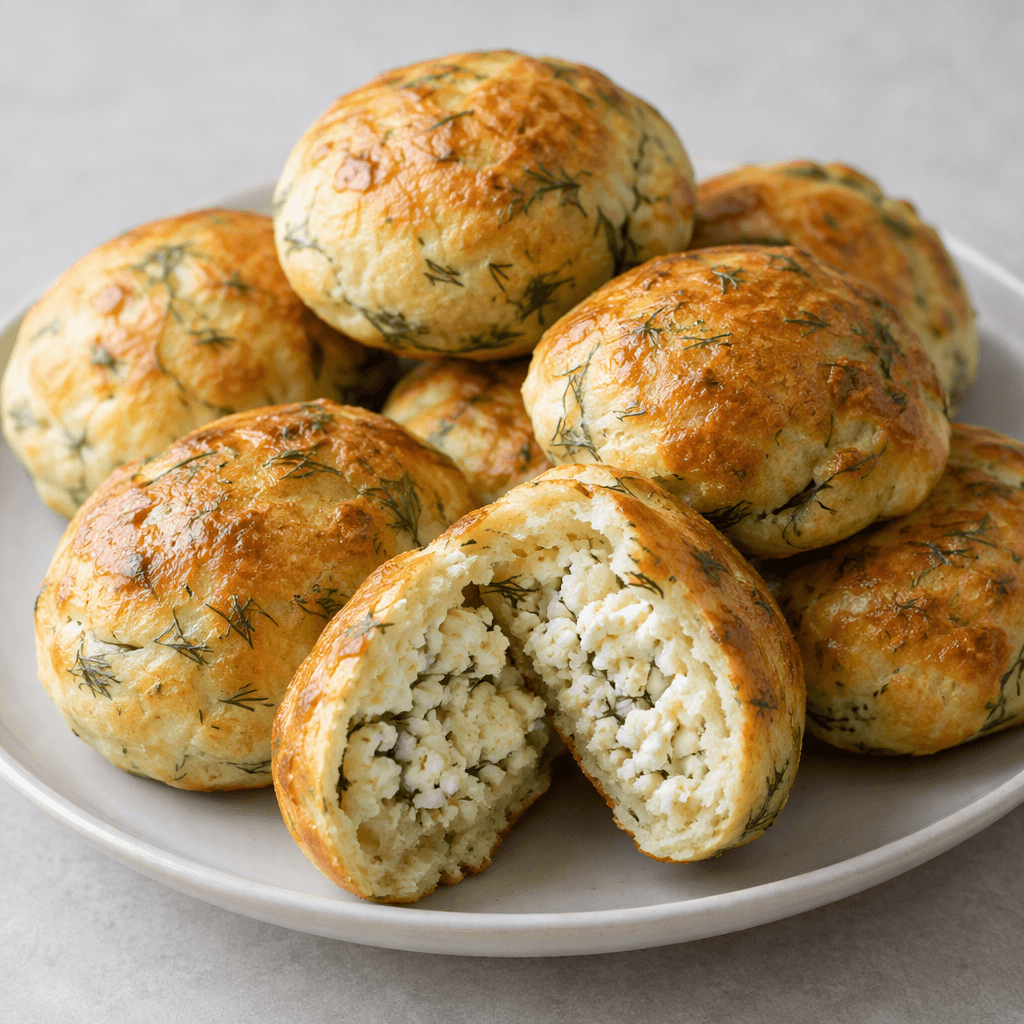
Dill Poğaça Calories
Savory dill pastry, Turkish cuisine
In season: Spring · Summer · Autumn · Winter
CALORIES
GI
POTASSIUM
FIBER
Quick answer
1 piece (medium) of Dill Poğaça (60 g) has 192 calories. That works out to 320 calories per 100 g. It contains 23.4 g of carbs, 4.3 g of protein, 8.4 g of fat and 1.3 g of fiber. Its 252 mg of Sodium covers 11% of the Daily Value. Its glycemic index is 65 (medium), so it raises blood sugar at a moderate pace.
What is Dill Poğaça?
Dill Poğaça is a Turkish savoury pastry made with a soft dough flavoured with chopped dill. It may be shaped plain or filled with cheese; the baked crust turns lightly golden while the inside stays tender and crumbly. You’ll find it in Turkish bakeries and home kitchens, with recipes varying from one household to another.
In Turkey, it is often served at breakfast, alongside tea, or as a handy snack between meals. For English-speaking readers elsewhere, it works well on a brunch table or as a savoury bake to share. It is mainly a flour-and-fat pastry, with moderate protein; pair it with fresh vegetables or a salad for a lighter, more balanced plate.
Dill Poğaça Nutrition Facts
Selected: 100 g
320
KCAL / 100G
Carbs
39g
· 14% DV
Protein
7.2g
· 14% DV
Fat
14g
· 18% DV
Fiber
2.2g
· 8% DV
DV is the share of the daily value covered, on a 2,000 kcal reference diet.
Calories come from: Carbs 50% · Protein 9% · Fat 41%
Dill Poğaça Vitamins & Minerals
Vitamins
B1
0.18mg · 15% DV
Vitamin K
13µg · 11% DV
B2
0.13mg · 10% DV
Vitamin A
85µg · 9% DV
Minerals
Sodium
420mg · 18% DV
Selenium
7.5µg · 14% DV
Phosphorus
82mg · 12% DV
Calcium
56mg · 6% DV
How Nutritious Is Dill Poğaça?
Nutrient density
Medium
How many vitamins, minerals and how much fiber this food carries per calorie. A high score means a lot of nutrition for few calories.
Satiety score
Low
An EatBetter score computed from fiber, protein and calorie density. A high score means staying full longer on the same calories.
Both scores are calculated per 100 g and do not change with the selected portion. The satiety score is EatBetter's own calculation, not a clinical measure.
Dill Poğaça Glycemic Index
GLYCEMIC INDEX
GLYCEMIC LOAD
Accounts for portion size — a more realistic measure than GI alone.
How to Burn Off Dill Poğaça
To burn the 320 calories in 100 g:
🚶
Walking (5 km/h)
🏃
Running (8 km/h)
🚴
Cycling
🏊
Swimming
Times are calculated with the MET equation for a 70 kg adult. Actual burn varies with your weight, age and pace.
Is Dill Poğaça Processed?
NOVA 3
Processed
1. Unprocessed
2. Minimally Processed
3. Processed
4. Ultra-Processed
NOVA classifies foods into 4 groups by industrial processing. NOVA 1 (unprocessed) is the healthiest.
Does Dill Poğaça Contain Allergens?
Contains these allergens:
Which Diets Is Dill Poğaça Good For?
Vegan
— Not suitable
Vegetarian
— Not suitable
Gluten-Free
— Not suitable
Dairy-Free
— Not suitable
Mediterranean
✓ Suitable
Paleo
— Not suitable
Whole30
— Not suitable
DASH
— Not suitable
Keto
— Not suitable
Low FODMAP
— Not suitable
Dill Poğaça Fat Profile
SATURATED
4.2g
MONOUNSATURATED
6.1g
POLYUNSATURATED
2.3g
Omega 6:3 ratio 23.3:1
Above the ideal 4:1 (23.3:1).
Compare Dill Poğaça
Foods Similar to Dill Poğaça
Frequently Asked Questions About Dill Poğaça
What is Dill Poğaça?
Dill Poğaça is a Turkish savory pastry made with dill folded into a soft dough. It may be plain or filled with cheese, and is commonly served for breakfast or alongside tea.
What filling goes in Dill Poğaça?
Crumbled white cheese or lor cheese is a common filling for Dill Poğaça. Some versions are left unfilled, while others combine cheese with herbs; drain wet cheese first so the pastry stays tender rather than soggy.
Why does Dill Poğaça turn out dense?
Dill Poğaça can turn dense if its dough is overworked or too much flour is added. Mix only until it comes together, keep the dough soft, and follow the recipe’s resting or leavening instructions.
Can you make Dill Poğaça without cheese?
Yes, Dill Poğaça can be made without cheese. Shape the dill dough plain, or add another savory filling such as olives; avoid wet fillings that can make the pastry difficult to seal.
How do you reheat Dill Poğaça without drying it out?
Reheat Dill Poğaça in a low oven for a few minutes, just until warm. Keep the pastries covered while they heat to help retain moisture; microwaving works for a quick serving but can make them chewy if overheated.
Can Dill Poğaça dough be made ahead?
Yes, you can prepare Dill Poğaça dough ahead and refrigerate it briefly in a covered container. Let it soften enough to shape before baking, and use the timing and chilling guidance in your particular recipe.
Can you freeze Dill Poğaça?
Yes, Dill Poğaça freezes well after baking. Cool the pastries completely, pack them airtight, and thaw before reheating in the oven; this helps the outside regain some of its freshly baked texture.
What kind of dill should you use for Dill Poğaça?
Fresh dill is the usual choice for Dill Poğaça because its bright flavor is easy to distribute through the dough. Chop it finely and dry it well after washing so extra water does not change the dough’s consistency.
Why does the filling leak out of Dill Poğaça?
The filling often leaks from Dill Poğaça when the dough edge is not sealed or the cheese is too wet. Use a modest amount of well-drained filling, pinch the seam closed, and place it underneath on the baking tray.
What can you serve with Dill Poğaça?
Dill Poğaça pairs well with tea, soup, or a simple salad. For a Turkish-style breakfast spread, serve it with olives and fresh vegetables; its savory dill flavor also works as a portable snack.
Have another question about Dill Poğaça?
Ask the AI nutrition coach — calories, portions, alternatives and more, answered in seconds in the app.

Scan calories with your camera
Instant AI nutrition analysis

Nutrition data compiled from USDA FoodData Central and scientific sources.