

Ready & Packaged Foods
All →Vegetables & Legumes
All →Desserts & Confectionery
All →Meat & Protein
All →Grains & Bakery
All →Beverages
All →Milk & Dairy
All →

Diet Bread Calories
Low-calorie, high-fiber, whole grain bread
In season: Spring · Summer · Autumn · Winter
CALORIES
GI
POTASSIUM
FIBER
Quick answer
1 slice (medium) of Diet Bread (35 g) has 74 calories. That works out to 210 calories per 100 g. It contains 13.3 g of carbs, 3 g of protein, 1.1 g of fat and 2.8 g of fiber. Its 0.2 mg of Manganese covers 11% of the Daily Value. Its glycemic index is 55 (medium), so it raises blood sugar at a moderate pace.
What is Diet Bread?
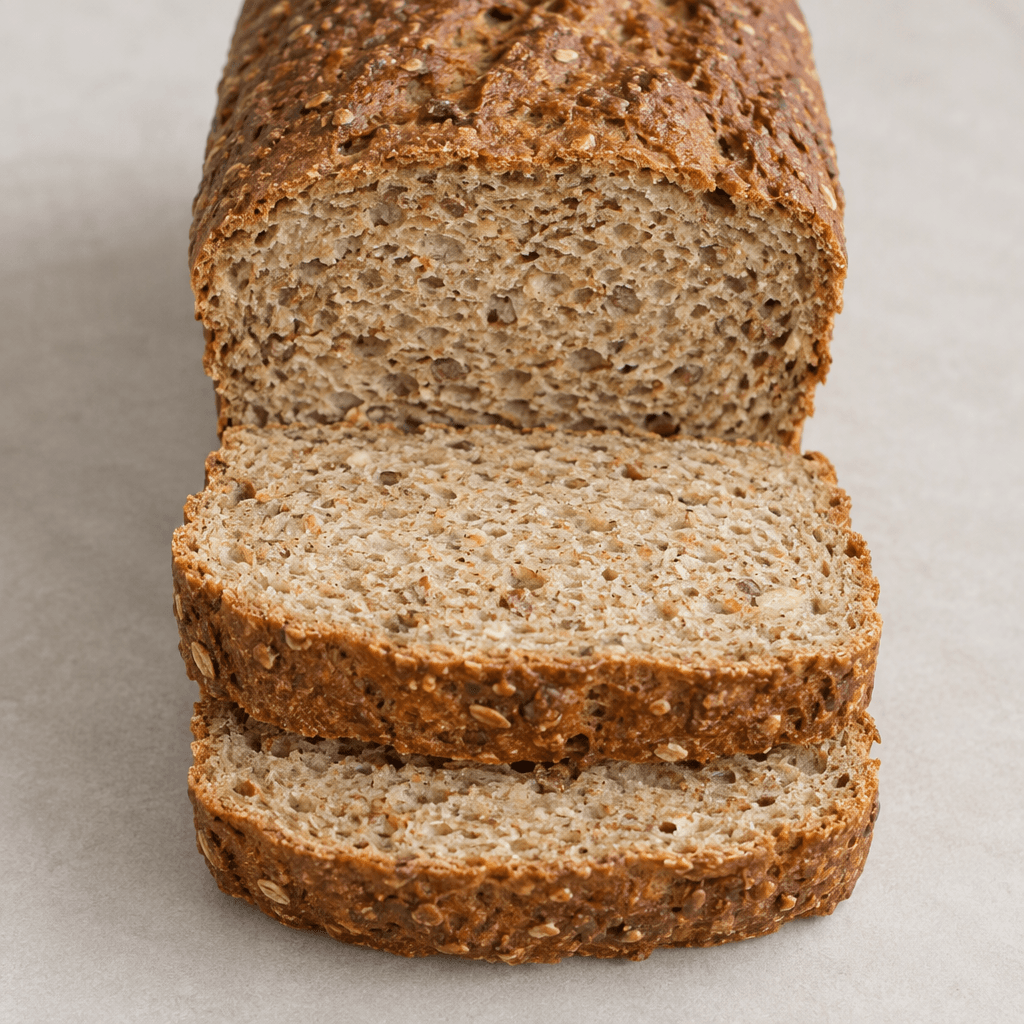
Diet bread is a loaf sold as a lighter, more fibre-rich alternative to standard bread. Recipes vary, but it is often made with whole-grain flour and has a compact crumb with a hearty, slightly nutty taste. The name does not point to one fixed recipe, so texture and ingredients differ between brands.
It is commonly sliced for toast or sandwiches, and its firm texture works well with savoury toppings such as eggs, cheese, vegetables or lean protein. With more fibre than many white breads, it can make a filling base for breakfast or lunch. For a lighter meal, keep the topping generous in vegetables and modest in rich spreads.
Diet Bread Nutrition Facts
Selected: 100 g
210
KCAL / 100G
Carbs
38g
· 14% DV
Protein
8.5g
· 17% DV
Fat
3.2g
· 4% DV
Fiber
8g
· 29% DV
DV is the share of the daily value covered, on a 2,000 kcal reference diet.
Calories come from: Carbs 71% · Protein 16% · Fat 13%
Diet Bread Vitamins & Minerals
Vitamins
B1
0.28mg · 23% DV
B3
2.1mg · 13% DV
B6
0.18mg · 11% DV
B2
0.13mg · 10% DV
Minerals
Manganese
1mg · 43% DV
Selenium
13µg · 24% DV
Phosphorus
110mg · 16% DV
Sodium
320mg · 14% DV
How Nutritious Is Diet Bread?
Nutrient density
Medium
How many vitamins, minerals and how much fiber this food carries per calorie. A high score means a lot of nutrition for few calories.
Satiety score
High
An EatBetter score computed from fiber, protein and calorie density. A high score means staying full longer on the same calories.
Both scores are calculated per 100 g and do not change with the selected portion. The satiety score is EatBetter's own calculation, not a clinical measure.
Diet Bread Glycemic Index
GLYCEMIC INDEX
GLYCEMIC LOAD
Accounts for portion size — a more realistic measure than GI alone.
How to Burn Off Diet Bread
To burn the 210 calories in 100 g:
🚶
Walking (5 km/h)
🏃
Running (8 km/h)
🚴
Cycling
🏊
Swimming
Times are calculated with the MET equation for a 70 kg adult. Actual burn varies with your weight, age and pace.
Is Diet Bread Processed?
NOVA 3
Processed
1. Unprocessed
2. Minimally Processed
3. Processed
4. Ultra-Processed
NOVA classifies foods into 4 groups by industrial processing. NOVA 1 (unprocessed) is the healthiest.
Does Diet Bread Contain Allergens?
Contains these allergens:
Which Diets Is Diet Bread Good For?
Vegan
✓ Suitable
Vegetarian
✓ Suitable
Gluten-Free
— Not suitable
Dairy-Free
— Not suitable
Mediterranean
✓ Suitable
Paleo
— Not suitable
Whole30
— Not suitable
DASH
— Not suitable
Keto
— Not suitable
Low FODMAP
— Not suitable
Diet Bread Fat Profile
SATURATED
0.6g
MONOUNSATURATED
0.8g
POLYUNSATURATED
1.1g
Omega 6:3 ratio 12.1:1
Above the ideal 4:1 (12.1:1).
Compare Diet Bread
Foods Similar to Diet Bread
Frequently Asked Questions About Diet Bread
What is diet bread made of?
Diet bread is commonly made with whole-grain flour and may include seeds or other grains. There is no single standard recipe for the name, so the loaf’s ingredients and texture can vary between bakeries and brands.
Does diet bread help with weight loss?
No, diet bread does not cause weight loss by itself. Its fiber can make it more filling than some refined breads, and using it as a replacement may help with portion control, but the rest of the meal still matters.
Is diet bread suitable for people with diabetes?
Diet bread can be a useful whole-grain option, but it still contains carbohydrates and can raise blood glucose. The effect depends on the portion and the meal; ask your clinician or dietitian for advice tailored to your diabetes plan.
How is diet bread different from whole-wheat bread?
Diet bread is a broad product name, while whole-wheat bread specifically uses whole-wheat flour. Some diet breads are made with whole wheat, but others use rye or a blend of grains, so the names are not interchangeable.
Can you use diet bread for sandwiches?
Yes, diet bread works well for sandwiches. Its denser crumb can hold fillings such as egg, cheese, hummus, or vegetables without falling apart, though very moist fillings may soften the slices if assembled well ahead of eating.
Does diet bread keep you full longer?
Often, yes. Diet bread’s fiber and dense texture can make it more satisfying than a light, refined slice. Pairing it with a protein-rich filling, such as eggs or beans, can make a sandwich more substantial.
Can diet bread be frozen?
Yes. Freeze diet bread in slices or small portions in a well-sealed freezer bag, separating slices with parchment if you want to take out just one at a time. Toast slices straight from frozen or thaw them before serving.
How should you store diet bread to prevent mold?
Keep diet bread sealed in a clean bread box or airtight bag in a cool, dry place. Warm, humid conditions encourage mold; if you spot mold on a loaf, discard the whole loaf rather than cutting away the affected spot.
Is diet bread a good choice for children?
Yes, children can eat diet bread as part of varied meals, unless they have a wheat or gluten allergy or another specific dietary restriction. Its firmer texture may suit sandwiches or toast, but it need not replace every other grain food.
Does toasting diet bread make it healthier?
No. Toasting changes diet bread’s moisture, texture, and flavor, but it does not turn it into a more nutritious food. What you add on top—such as butter, nut butter, or a sweet spread—can change the overall meal.
Have another question about Diet Bread?
Ask the AI nutrition coach — calories, portions, alternatives and more, answered in seconds in the app.

Scan calories with your camera
Instant AI nutrition analysis

Nutrition data compiled from USDA FoodData Central and scientific sources.